The visionaries behind Grounds
Over nearly two centuries, many notable architects have built on Thomas Jefferson’s groundbreaking concept for his University.

Any architectural history of UVA starts with Thomas Jefferson, of course. His concept for the Academical Village, now a UNESCO World Heritage Site, was crafted across decades, nurtured through his passion, his knowledge of architecture, his world travels and his ideas about education.
Jefferson’s vision was revolutionary, says noted architectural historian Richard Guy Wilson, UVA professor emeritus. During that period, most universities were simply one large block of a building, Wilson said.
But Jefferson believed that learning should extend beyond lecture halls, Wilson says. “His idea was that education wasn’t just simply the professor blabbering away in a classroom, but is the environment that surrounds you, both going in the classroom and coming out.”
Today, the Academical Village remains central to UVA’s identity and mission. But since the Rotunda opened nearly 200 years ago, Grounds has hardly remained static, and its shape has sometimes responded to the trends of the day as leading architects brought their own mark to the campus.
In the 1850s, for example, buildings and grounds director William A. Pratt began to veer from Jefferson’s neoclassical approach to more trendy styles, according to UVA’s Historic Preservation Framework Plan, a history of UVA’s post-Jefferson buildings and landscapes. That move away later resulted in an “Eclectic Period,” featuring Brooks Hall with its mansard roof and animal carvings, and the University Chapel with its flying buttresses.
The City Beautiful and associated University Beautiful movements, which hit their stride in the 1880s and 1890s, represented a shift back to the classical and early governmental architecture in the United States, Wilson says. On Grounds, it came in the form of McKim, Mead & White’s redesign of the Rotunda and the original South Lawn buildings.
By the early 1900s, UVA was growing. Amid this need for expansion, President Edwin Alderman created an Architectural Commission in 1921, filling it with notable architects of the time, to bring some “harmony to the architecture,” Wilson said. Commission members jointly designed buildings such as Scott Stadium, Memorial Gymnasium, Thornton Hall, Clark Hall and Brown College.
By the middle of the 1900s, the Architectural Commission had disbanded, but more construction—along with a more modern take on architecture, in some cases—arrived.
At each of these points and across UVA’s history, notable architects left their marks at UVA. Here are some of the luminaries whose work graces Grounds, as well as where you will find their work out in the rest of the world.
John Rochester Thomas
Elsewhere: Hall of Records and Calvary Baptist Church in New York City
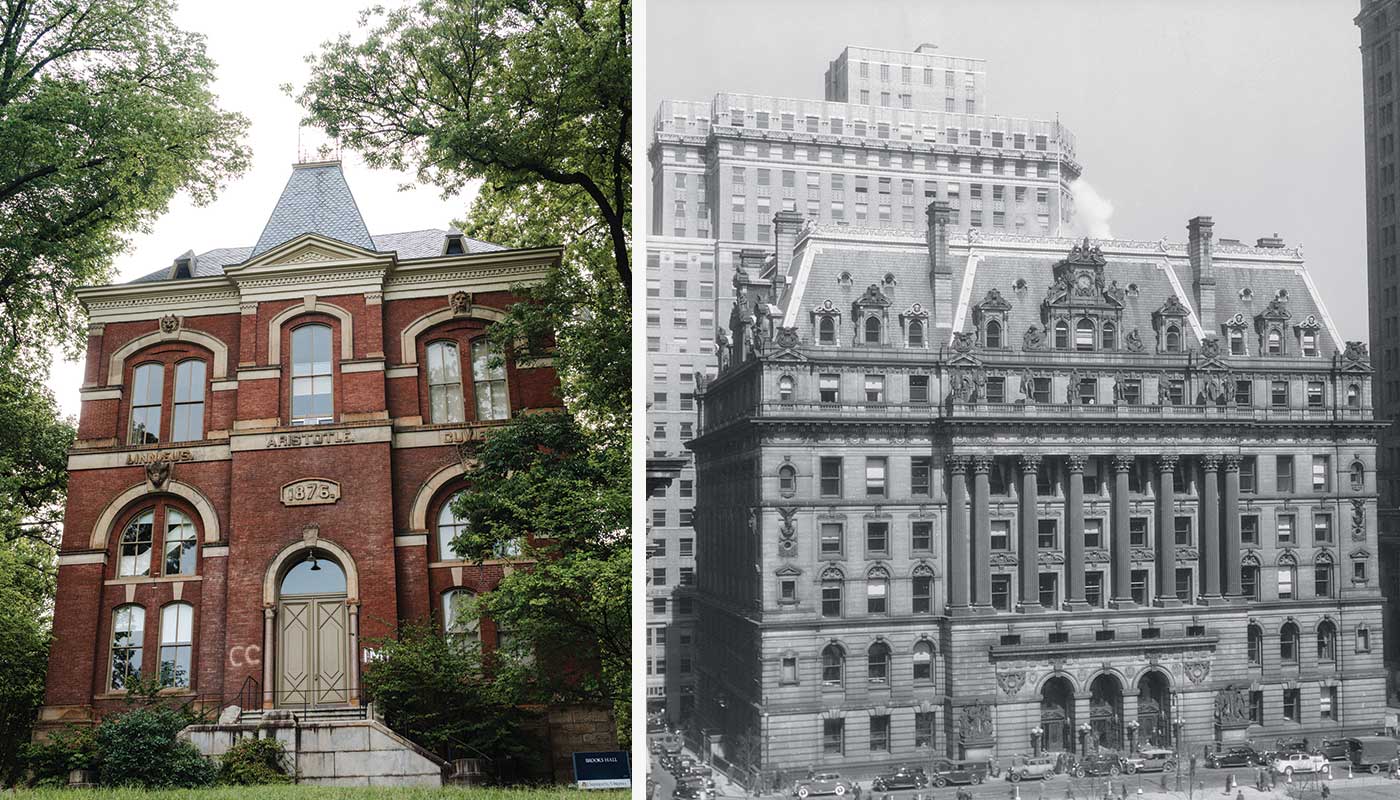
John Rochester Thomas of Rochester, New York, was a major architect of his time, called “America’s leading architect” in the 1899 edition of the National Cyclopaedia of American Biography, according to Brooks’ Virginia Landmarks Register listing. Designed in the Second Empire style, Brooks Hall was first used as a natural history exhibition hall.
Charles Emmett Cassell
Elsewhere: Chamber of Commerce Building and First Church of Christ, Scientist, in Baltimore
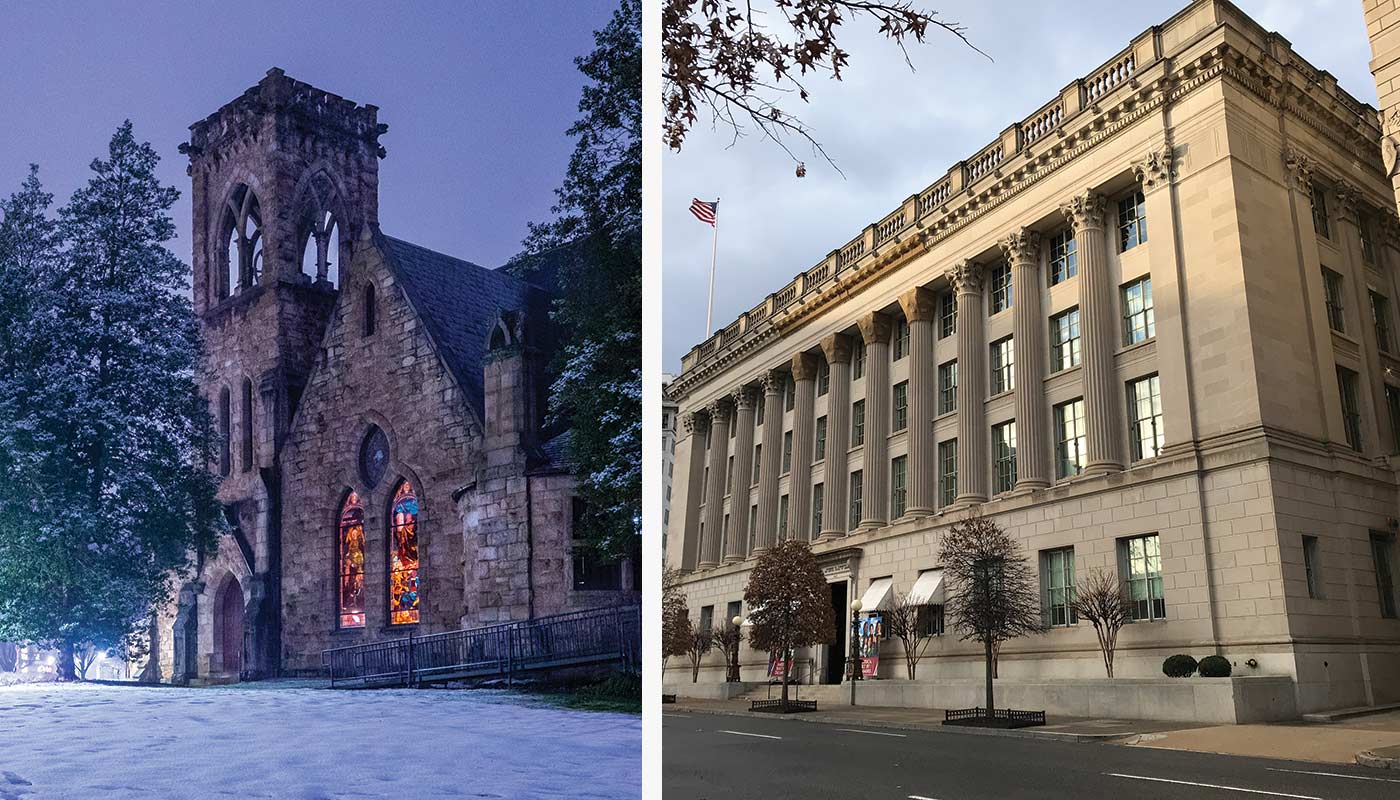
Baltimore architect Charles Emmett Cassell (Engr 1853), who graduated from UVA when he was 15, designed the UVA Chapel, the first building at UVA built exclusively for worship. Designed in a Gothic Revival style, a form of picturesque architecture, with flying buttresses, pointed windows and natural stone, the Chapel stands in stark contrast to the nearby Rotunda.
McKim, Mead & White
Elsewhere: Low Memorial Library, Columbia University; buildings at University of North Carolina, Chapel Hill
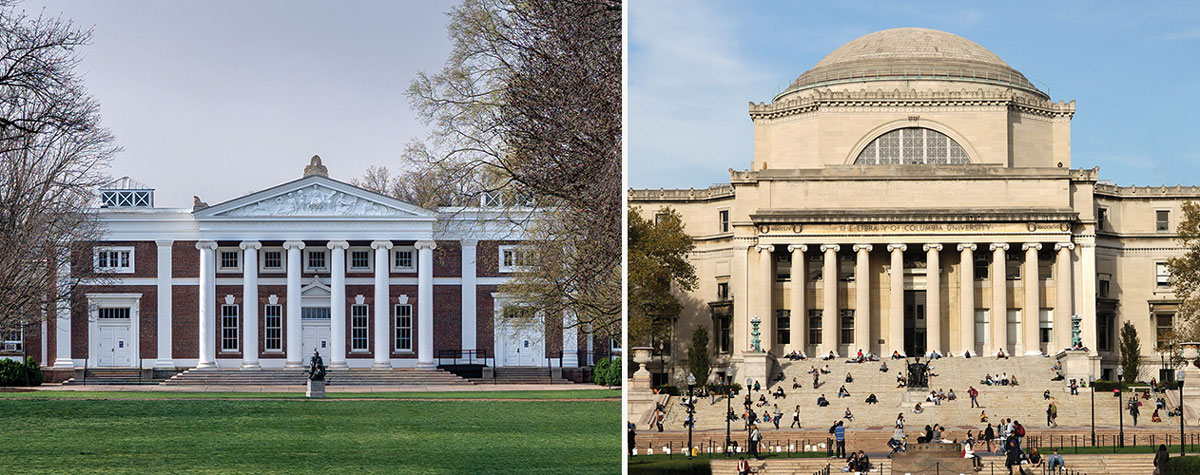
New York architecture firm McKim, Mead & White—made up of Charles McKim, William Rutherford Mead and Stanford White—was at the forefront of the City Beautiful movement. After the fire in 1895 destroyed the Rotunda, UVA’s Board of Visitors was on the hunt for a firm “not of local repute only but of broad and national consideration.” McKim, Mead & White designed the buildings that close off the South Lawn—Old Cabell, Cocke and Rouss halls—and rebuilt and redesigned the Rotunda.
Paul Pelz
Elsewhere: Library of Congress, popular lighthouses
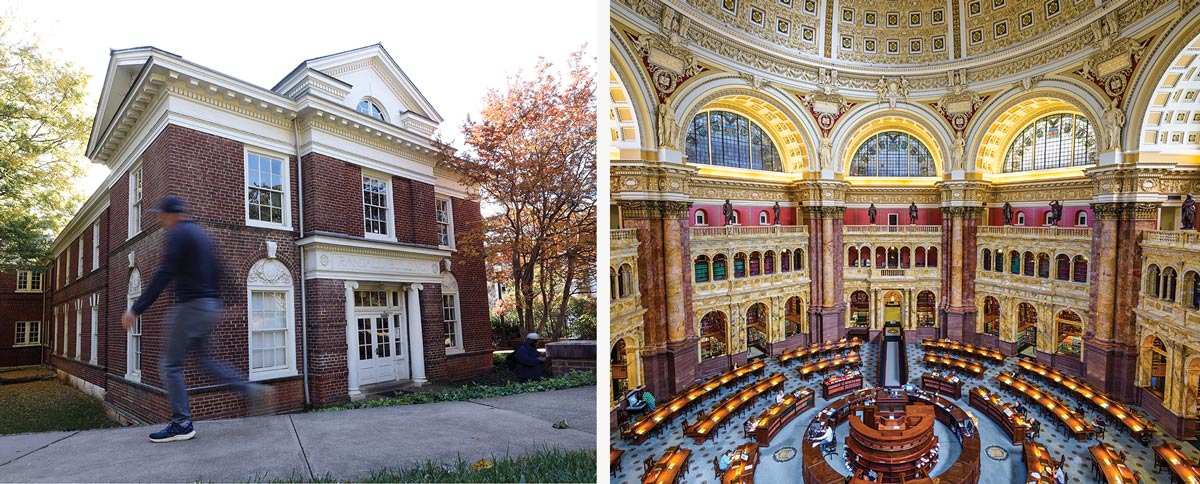
Paul Pelz, an architect and engineer, was considered the primary architect behind the Library of Congress. His other work includes a design used to build lighthouses on the Atlantic Ocean and Gulf Coast—in Currituck and Bodie Island in North Carolina, Morris Island in South Carolina, St. Augustine in Florida, and Sand Island in Alabama, according to the United States Lighthouse Society.
Fiske Kimball
Elsewhere: Shack Mountain, preservation projects at Monticello, Colonial Williamsburg and national parks
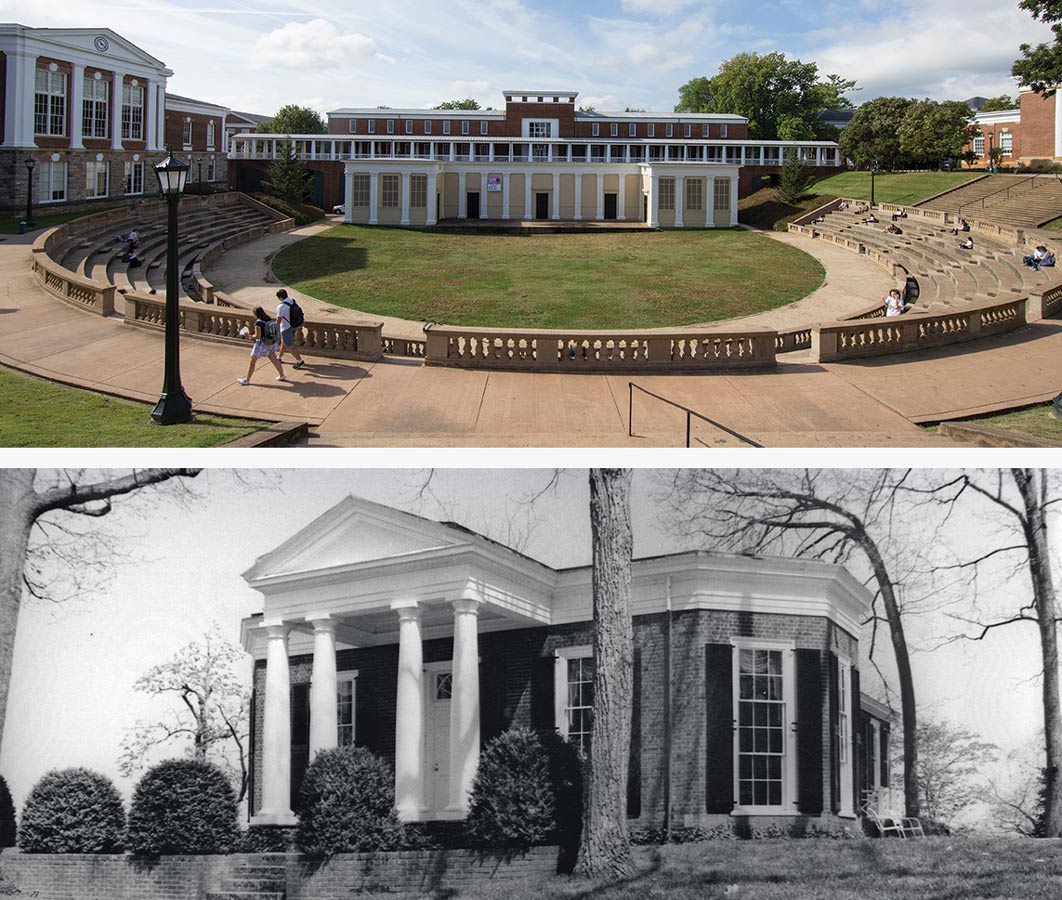
Architect and architectural historian Fiske Kimball had many titles. Before he arrived at UVA in 1919, Kimball was author of the first book on Jefferson’s architecture, Thomas Jefferson, Architect, a project that was sparked by the initial research of his wife, Jefferson scholar Marie Goebel Kimball. At UVA, Kimball was chairman of UVA’s architecture department and a member of the Architectural Commission. After leaving UVA in 1923, Kimball went on to establish a fine arts department for New York University and serve as director of the Philadelphia Museum of Art. But he kept coming back to Charlottesville and his retirement home, Shack Mountain.
Robert E. Lee Taylor
Elsewhere: Baltimore Trust Company Building (now the Bank of America Building); Dunbar Junior and Senior High School
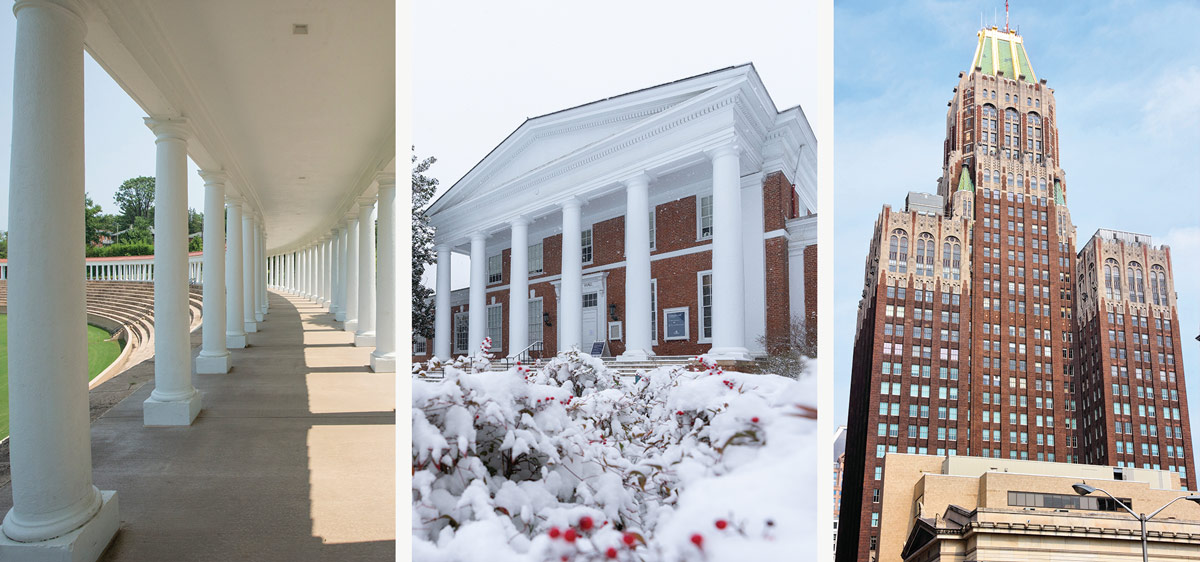
Robert E. Lee Taylor, who graduated in 1901, was a UVA football and baseball star who studied architecture at MIT and also served on UVA’s Architectural Commission. Taylor was a popular architect from Baltimore with the firm Taylor & Fisher, whose work was mostly located in the Baltimore, Richmond and Northern Virginia areas.
John Kevan Peebles
Elsewhere: Wings of the Virginia State Capitol and Maury-Brooke Hall at VMI
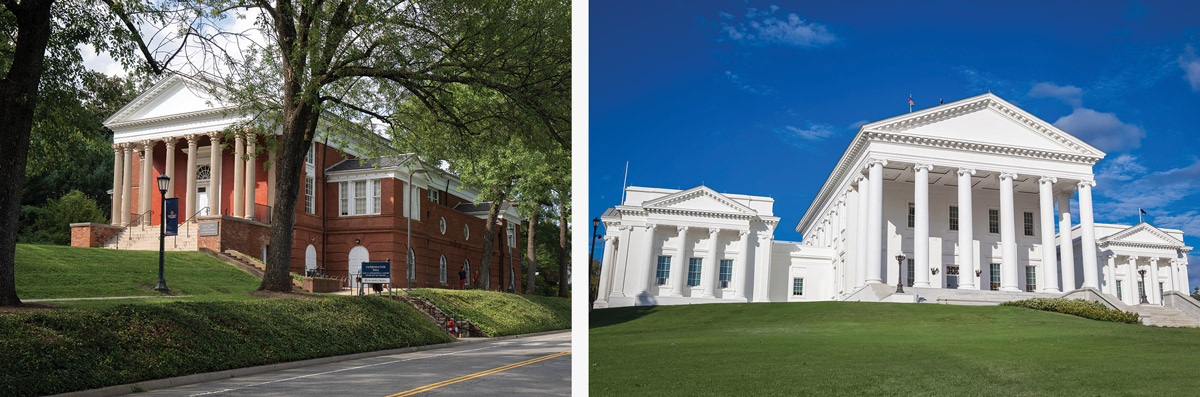
Norfolk architect John Kevan Peebles (Engr 1888, 1890) was a member of UVA’s Architectural Commission. A prolific architect, he was part of the firm Peebles & Ferguson, which also designed the Virginia Museum of Fine Arts in Richmond, among many other projects.
Eggers & Higgins
Elsewhere: Silliman College at Yale and the Dirksen Senate Office Building
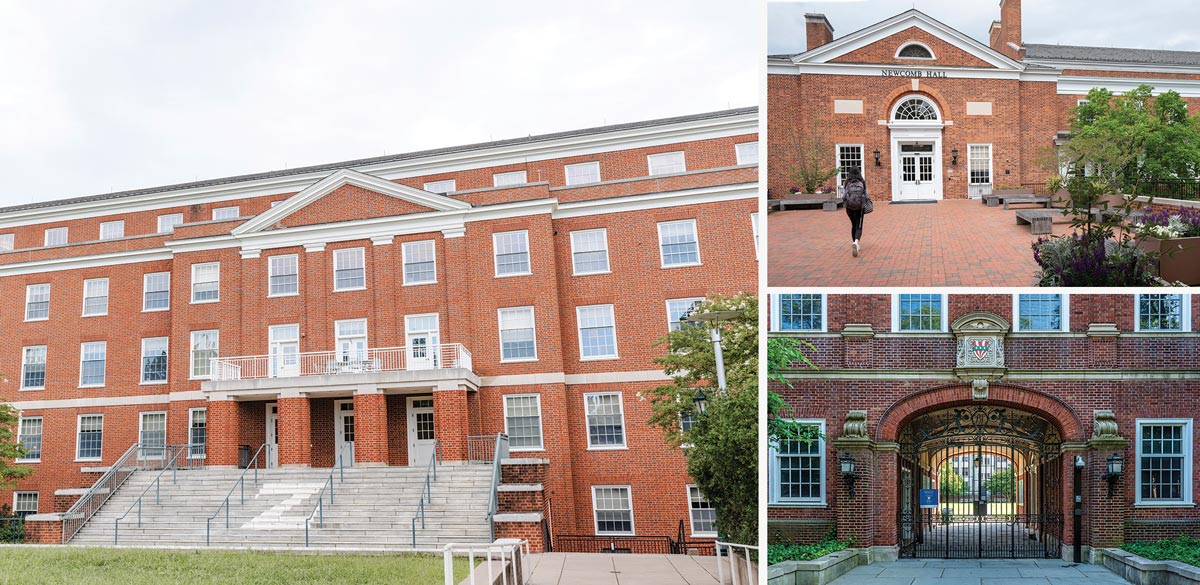
To keep up with demands on classrooms and student spaces, UVA brought in D.C.-based firm Eggers & Higgins to design New Cabell Hall, Newcomb Hall and the McCormick Road dorms. The firm, led by Otto R. Eggers and Daniel P. Higgins, was the successor firm to architect John Russell Pope, who had designed a number of major buildings in Washington, D.C. After Pope’s death, Eggers & Higgins completed his work on the Jefferson Memorial and National Gallery of Art, among other projects.
Ballou and Justice
Elsewhere: Richmond City Hall and the Pollak Building at VCU
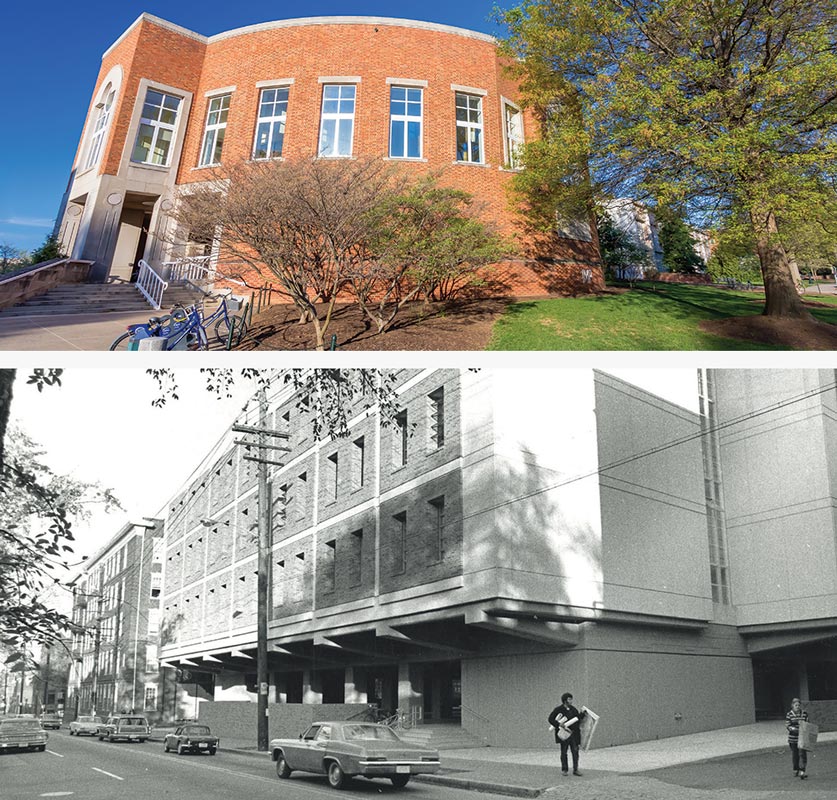
Richmond architects Ballou and Justice, along with Stainback and Scribner of Charlottesville, designed Gilmer, the first big example of modern architecture at UVA. At the time, the modern style, according to UVA’s preservation history, was deemed appropriate, in particular, for the innovative fields of science and technology. Architects Louis Ballou and Charles Justice led the firm, which also was hired to design restoration plans for the Rotunda in 1966. The firm continues to operate as Ballou Justice Upton Architects.
Pietro Belluschi and Kenneth DeMay
Elsewhere: MetLife Building in New York City (Belluschi), Commonwealth Building in Portland, Oregon (Belluschi), and Harbour Town Lighthouse at the Sea Pines Resort on Hilton Head (DeMay)
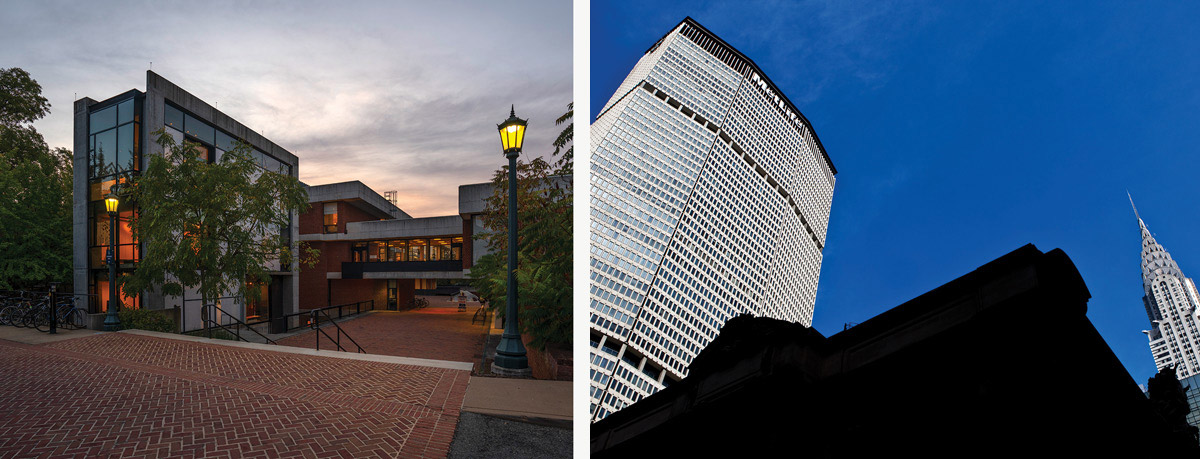
The design of Campbell Hall, along with the neighboring Fiske Kimball Fine Arts Library, was a group effort, including the firms Rawlings and Wilson of Richmond, and Sasaki, Dawson and DeMay Associates of Cambridge, Massachusetts. Two professionals, however, played leading roles in the work: Pietro Belluschi and Kenneth DeMay. Belluschi was a prolific architect who also was dean of architecture and planning at MIT. DeMay was sought after for campus planning and golf projects. The two teamed up on other projects as well, including the Engineering Sciences Center at the University of Colorado Boulder in the 1960s.
Michael Graves
Elsewhere: Humana Building in Louisville, Kentucky; Swan and Dolphin resorts at Walt Disney World
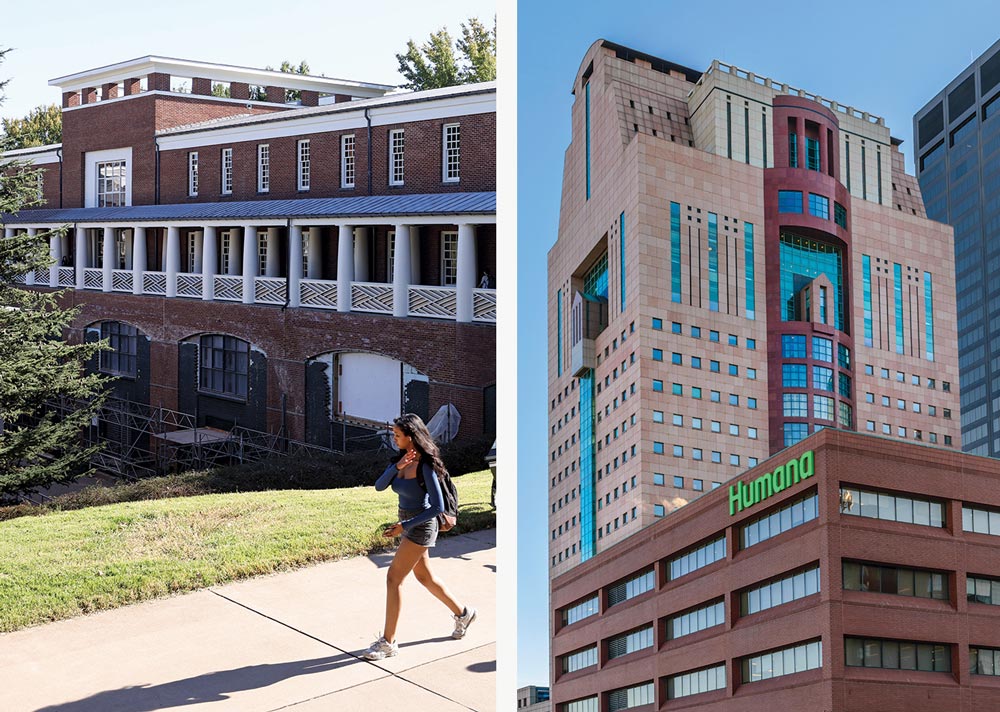
Celebrated postmodernist architect Michael Graves was a leading architect and designer, longtime architecture professor at Princeton, and winner of the 1999 National Medal of Arts from President Bill Clinton. His firm’s work is found across the globe, including the Ministry of Health, Welfare and Sport in The Hague and multiple projects at Disney parks. Graves also was known for his design of household products, including items for the bathroom and kitchen, and collaborated with major brands such as Target and Alessi.
Robert A.M. Stern
Elsewhere: Tour Carpe Diem outside of Paris and the International Quilt Museum in Lincoln, Nebraska
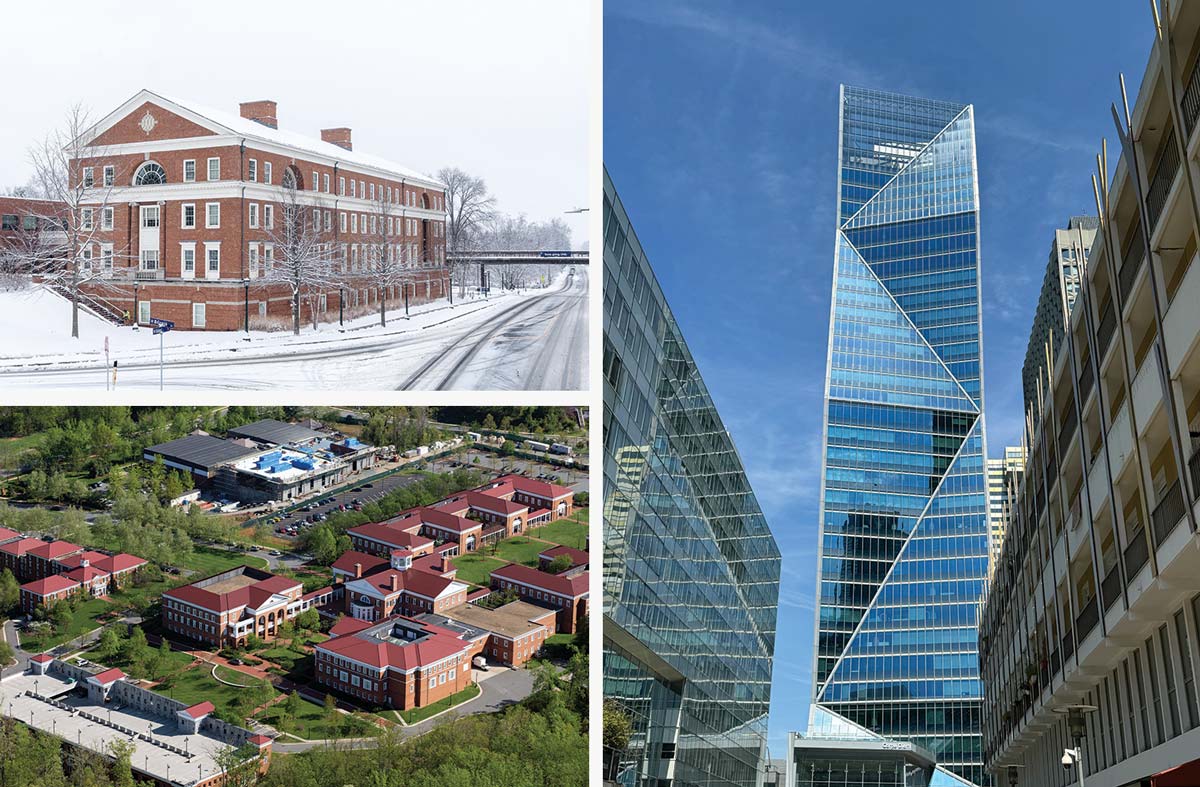
Known for his modern traditionalist designs, Robert A.M. Stern and his eponymous firm are behind the design of notable buildings around the world—from institutional buildings to major luxury residential towers. Stern served as dean of Yale’s architecture school from 1998 to 2016