Old music, new crowds: UVA’s cover band scene
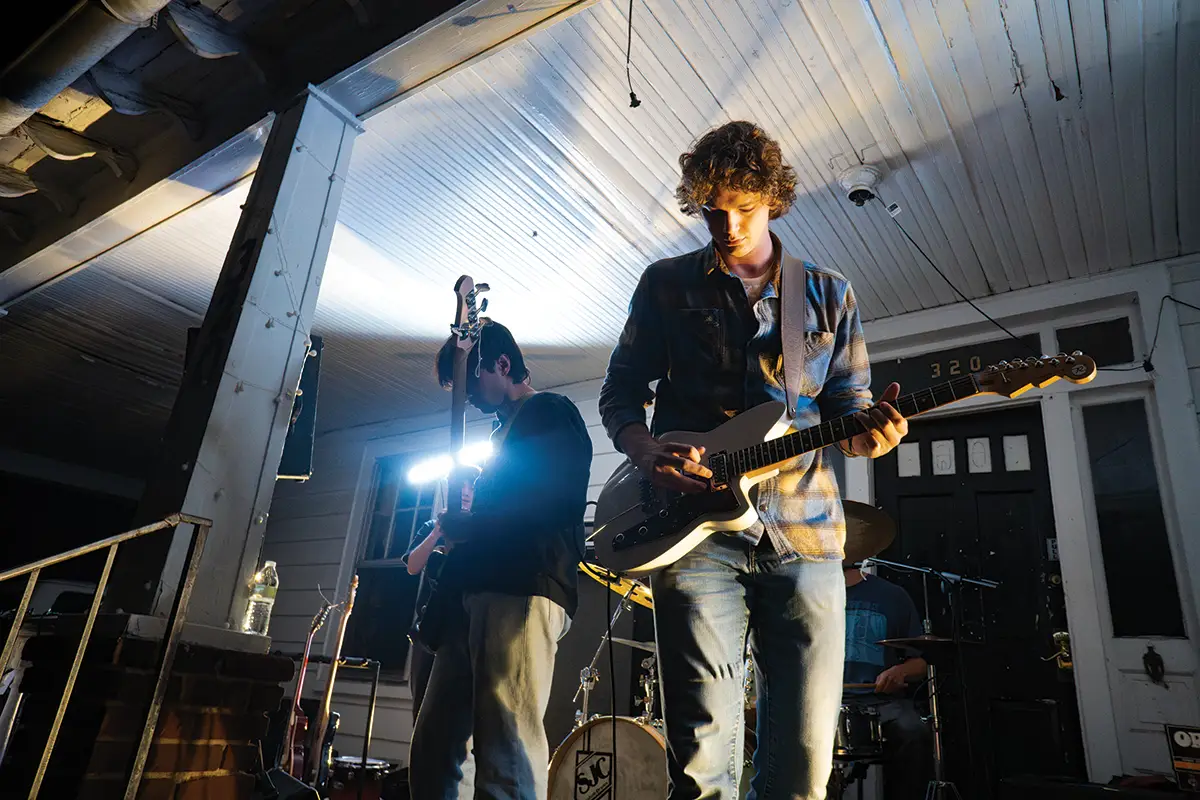
Kabir Suri (Engr class of ’27) has played bass guitar in his cover band, Mona Lisa, all over Grounds, but he most loves performing on a porch just across the street from his residence.
Students gather in the yard to rock out to familiar hits spanning decades and genres. After playing for the crowd, Suri crosses the street and climbs onto his roof to watch the rest of the show with his roommates and friends. “The whole neighborhood can come over and watch it,” he says.
Shows performed by cover bands make up their own corner of the student social scene and can be found in basements, yards, fraternity houses and bars. Carter Horner (Col class of ’27), who plays in the band Kerry Hill, says he often sees around 100 people in attendance at any given moment, but crowds can grow much larger throughout the night: “It’s an ongoing show, and you can come at any time and leave at any time. It’s a very fluid experience.”
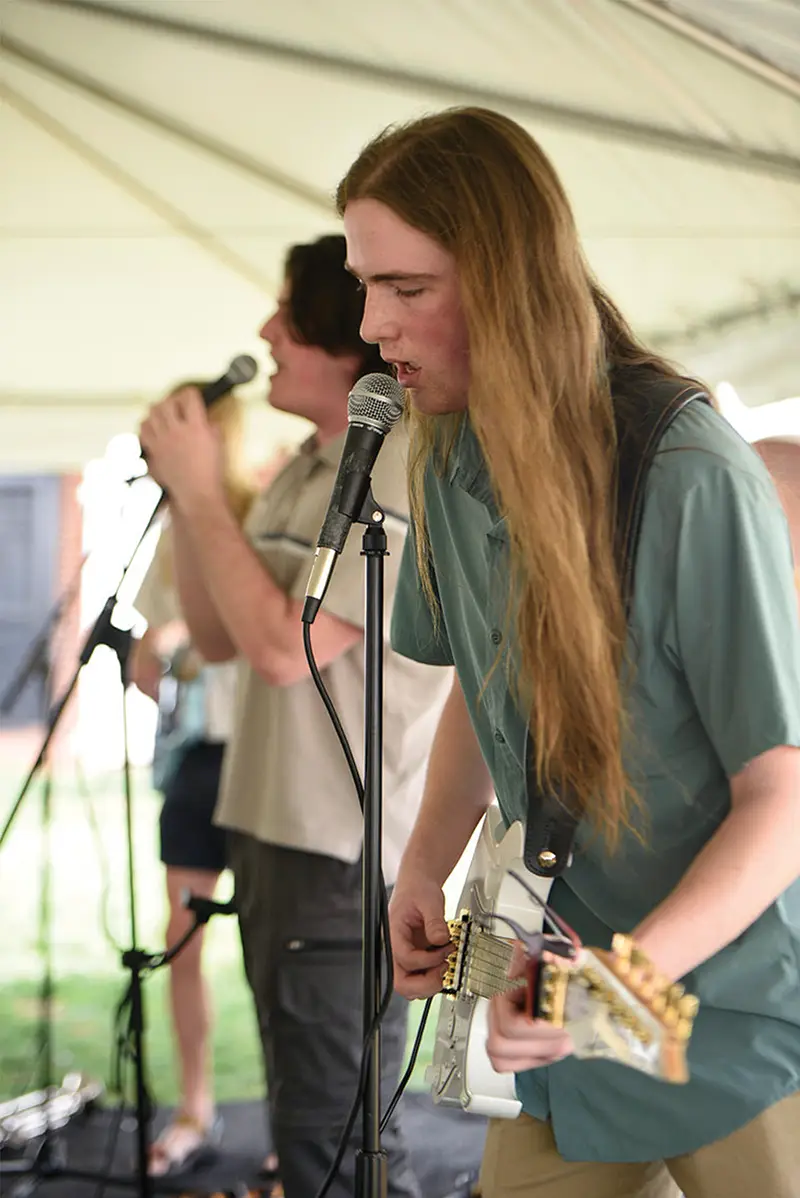
The genres and eras of music played at these shows can be just as fluid. Suri says that while he started out playing country music, his band also delves into rock and even experimental psychedelic songs. Kerry Hill’s lineup this year includes music from the Eagles, one of the biggest bands of the 1970s, and the Strokes, who have been active since the late ’90s. Isabel Xiao (Col class of ’27) frequently performs early-2000s hits by Amy Winehouse and Carrie Underwood, but she most loves “stuff you can really headbang to,” like Led Zeppelin.
The variety of genres allows for a broad appeal, rather than dividing audiences, the students say. Horner, who is also the events director for the student music group University Records, frequently co-hosts events with other groups. He says Indieheads shows attract fans of alternative music, while student radio station WXTJ creates a space for lovers of jazz and funk. “These collaborative shows are a way to mix audiences and those groups,” he says. “It’s a great way to bring together the broader music community at the university.”
The musicians describe a feeling of intimacy around playing for peers, particularly with songs that audience members know and love. Horner remembers being nervous about adding a hastily practiced Weezer song to his set, only for an acquaintance in the audience to start moshing, transforming the energy of the crowd—and the performance. “You’re right there up front,” Horner says. “It’s a relatively small setting, but it’s loud, and you get to just be in that moment with everyone around you.”
Stephanie Rasinski (Col class of ’22) remembers working toward providing a sense of community trust around the shows when she was an Indieheads leader. “I got a ton of ‘This is a great alternative to frat parties because I feel safe,’” from peers in the audience, she says. “The music scene was lovely, because everyone … just liked the experience of being near live music.”