John Casteen, UVA’s seventh president and among its longest serving, dies
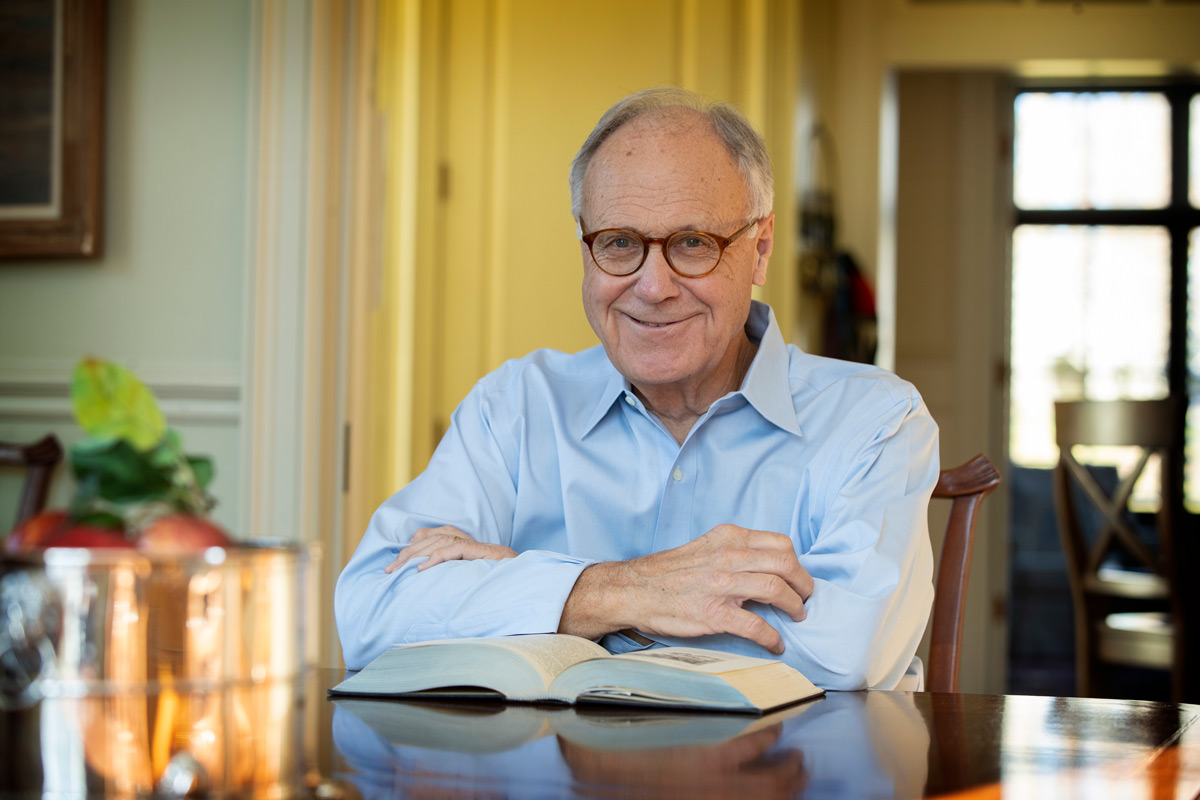
This was Virginia Magazine’s original news story about Casteen’s passing. See “Virginia’s visionary” (Summer 2025) for the full obituary.
John T. Casteen III (Col class of ’65, Grad class of ’66, class of ’70), a first-generation college student born in Portsmouth, Virginia, who rose to become one of UVA’s most influential and longest serving presidents, died March 18 at his home in Keswick, Virginia. He was 81 and had recently been diagnosed with pancreatic cancer.
Throughout his tenure, Casteen worked to shield Grounds from the effects of plummeting state support, increase financial aid for students through AccessUVA, bolster UVA’s research and science programs, and build a more diverse university community. When Casteen retired in 2010, former UVA Rector W. Heywood Fralin (Col class of ’62) dubbed him “the father of our modern university.”
“John Casteen is simply inseparable from the story of UVA,” said UVA President James E. Ryan (Law class of ’92) in a statement upon Casteen’s death. “As president, he transformed UVA into a world-class university. As a teacher, mentor, colleague and friend, he was beloved.”
Casteen earned his bachelor’s, master’s and doctorate in English at UVA, specializing in Anglo-Saxon poems and Icelandic sagas. His advisers included Edgar F. Shannon Jr., an English professor who served as UVA president from 1959 to 1974.
Casteen taught English at the University of California, Berkeley, before returning to UVA in 1975 to become dean of admissions, working to implement Shannon’s vision of a fully coeducated and integrated student body, according to an obituary in the Cavalier Daily written by two of his children, John T. Casteen IV (Col class of ’93) and Elizabeth Ingeborg Casteen.
In 1982, Casteen left Grounds to serve first as secretary of education under Virginia Gov. Charles “Chuck” Robb (Law class of ’73) and later as president of the University of Connecticut. He returned to UVA in 1990 to take the helm. Serving for 20 years, he is UVA’s second longest-serving president after Edwin Alderman.
During Casteen’s early years as president, state legislators began making deep cuts to UVA’s funding. By the time he retired in 2010, the state’s share of UVA’s operating budget had fallen from 23 percent in 1990 to 6.7 percent.
“The advice from state officials at the time was that we plan to be a less prominent university, which we did not intend to do,” Casteen told Virginia Magazine in 2010. In response, Casteen became a tireless fundraiser for UVA, traveling up to 25 weeks a year. Through his efforts, UVA’s endowment grew from $488 million to $5.1 billion.
Casteen also worked to make UVA open and affordable to more students. To support low-income students, Casteen founded AccessUVA in 2003, a program that meets 100 percent of undergraduate students’ demonstrated financial need. The minority undergraduate student population grew during his tenure—from 18 percent to 26 percent—and the number of international students roughly quadrupled. Also under his watch, UVA’s library system, health system and medical research space expanded significantly.
According to his obituary, Casteen is survived by a “large and blended family” that includes UVA alumni Casteen IV, an associate professor at UVA and director of studies at Brown College; stepdaughters Alexandra Foote (Col class of ’04) and Elizabeth Robinson (Col class of ’07, Educ class of ’07); and 12 grandchildren. In lieu of flowers, the family is requesting donations of any amount to AccessUVA.