Building Big Careers
Meet eight School of Architecture alumni whose groundbreaking work is changing the world
Graduating from UVA’s School of Architecture can be intense. But for these eight architects—and countless others—all those hours in the studio paid off. Here are some of the UVA-trained architects who are making major waves in the design world.
Chris Cornelius
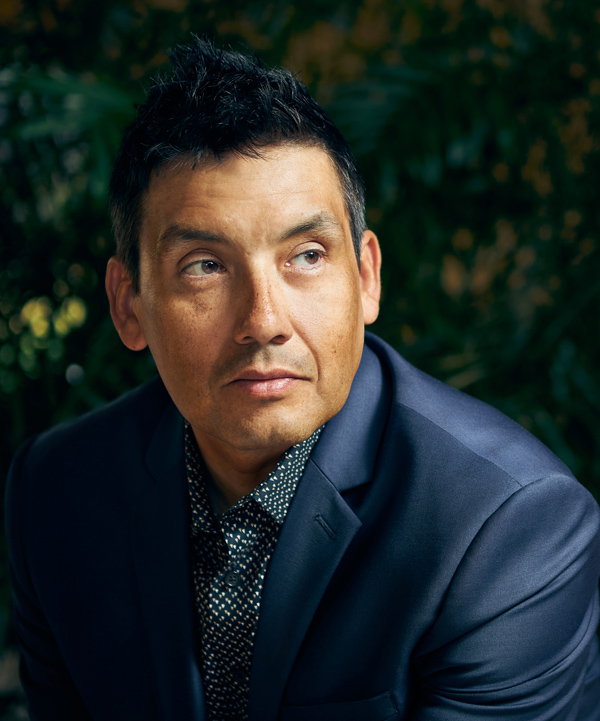
Crowing up on the Oneida Reservation in Wisconsin, Chris Cornelius (Arch class of ’00) noticed the differences between his neighborhood and those of his non-Indigenous friends. His community had no trees, fences or sidewalks, but it did have endless copies of the same small ranch house, built by the U.S. Department of Housing and Urban Development. By contrast, his friends’ neighborhoods had far more variety.
“It became important to me, early on, to think about architecture as a way of improving life for Indigenous people,” says Cornelius, a citizen of the Oneida Nation.
Those early influences were the beginnings of an award-winning career. Cornelius is founding principal of design firm studio:indigenous and professor and chair of the University of New Mexico’s architecture school.
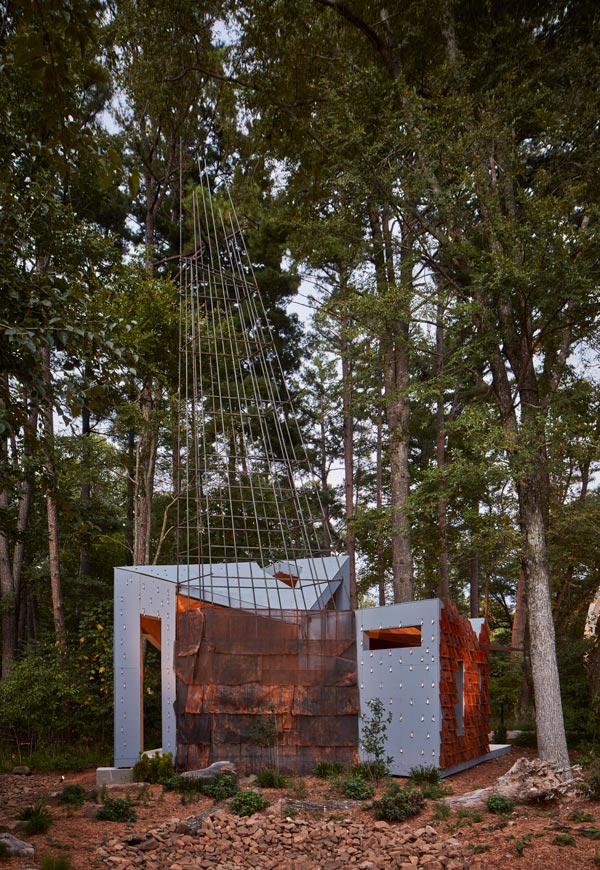
One of his latest projects is Not My HUD House, a full-scale prototype that was part of a 2022 exhibition at the Crystal Bridges Museum of American Art in Arkansas. The design is a critique of those cramped HUD-built homes and a proposal for a better solution that reflects Indigenous communities’ needs.
His prototype includes high, open ceilings with light coming in at different levels and an entrance from the east, which is important in some Indigenous cultures. A modular design allows for the home to grow and shrink with the space needs of its inhabitants, who often live in multigenerational households.
“The fundamental thing was that the space inside is really given meaning by the people that inhabit it,” says Cornelius, who is planning to meet with HUD to talk about the project and potentially build a house based on the design.
There are few Indigenous architects, and when Cornelius entered UVA, his hope was to move architecture for Indigenous people beyond buildings that look like stereotypical iconography. At UVA, professors encouraged his ideas instead of critiquing them for being different, inspiring his design career and leading him to teach. “That place changed my life,” he says.
Zena Howard

As a Black child living in the 1960s South, Zena Howard (Arch class of ’88) remembers avoiding certain spaces because of her race. “For a good part of my childhood … [the issue] was always, ‘Do I belong, or is this a danger to me?’” she says. “We need to erase that moving forward.”
Today Howard is known for shaping architecture through remembrance design, which responds to inequality and injustice by restoring lost cultural connections and honoring collective memory.
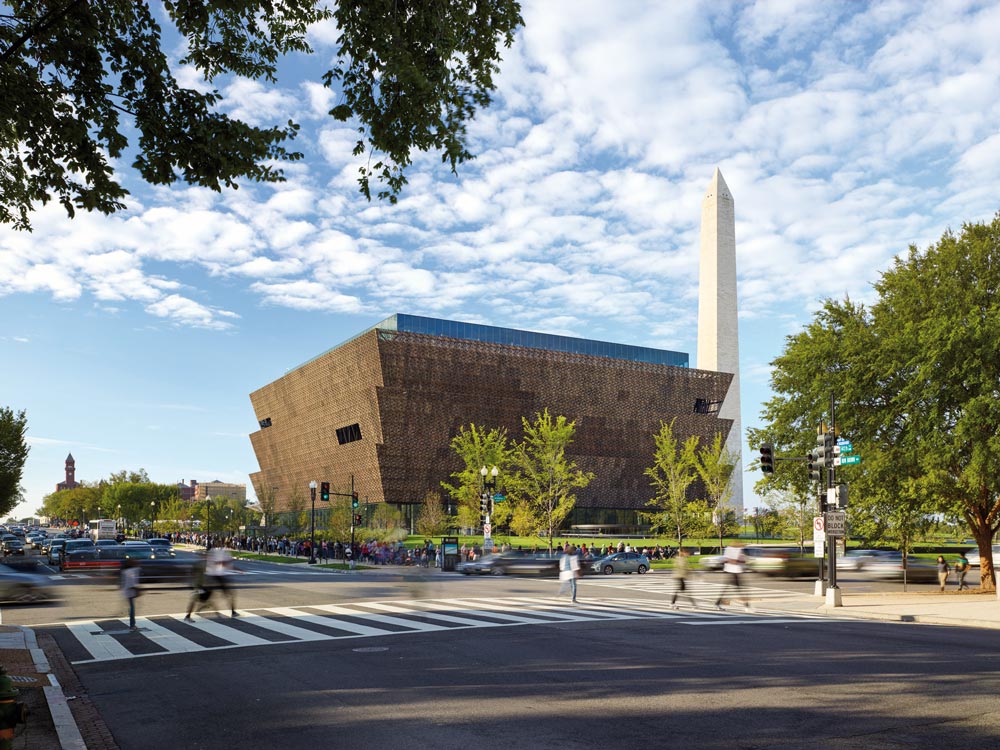
That comes through in one of her most well-known projects: the Smithsonian Institution’s National Museum of African American History and Culture. Among its unique elements, the museum, which opened in 2016, includes a porch, signaling that it’s open to all. She was the senior project manager.
Now Howard is a principal with Perkins&Will, one of the largest architecture firms in the world, where she established and leads its cultural and civic practice.
One of her current projects—Destination Crenshaw—is focused on honoring the history and culture of Crenshaw Boulevard in South Los Angeles. Plans for the 1.3-mile open-air museum came after LA Metro ran a light rail extension at ground level along the corridor instead of underground or elevated, as it had done elsewhere. That plan saved money, but it had the potential to harm what’s considered the heart of Black LA. In response, Howard and others are turning that stretch of road into a destination.
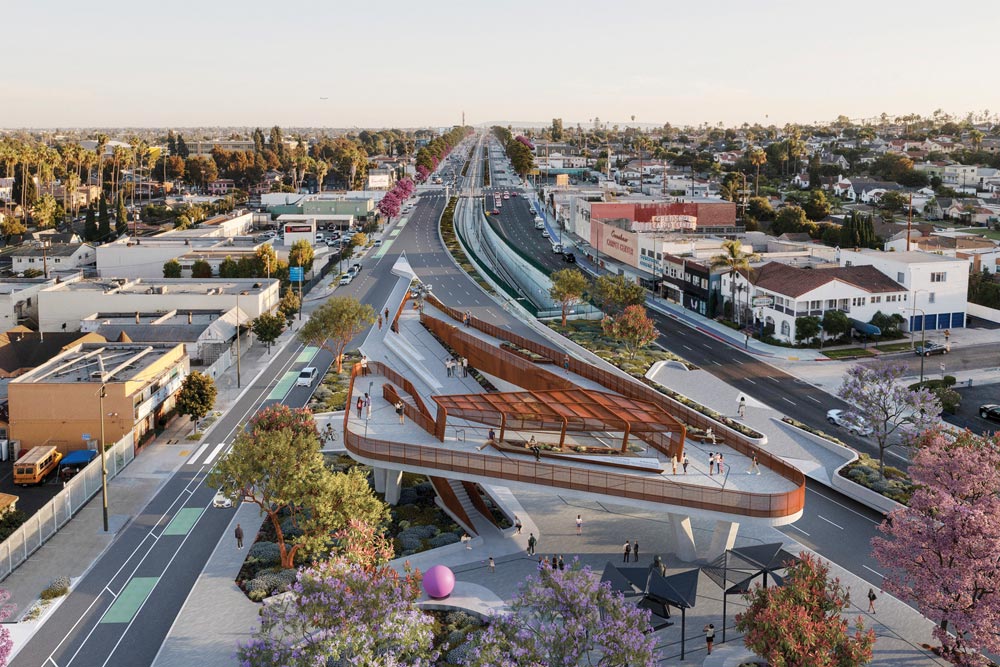
The design refers to Black life in America with structures that represent the giant star grass of the African diaspora and paving patterns that represent the migrations of Africans in the United States. Sankofa Park, the project’s first phase, will open in early 2025 and will be the flagship gathering spot with shade, seats and art.
“My career has just been a discovery,” Howard says as she reflects on the unexpected turns her work has taken. “It’s been an exploration.”
Jeffrey Murphy
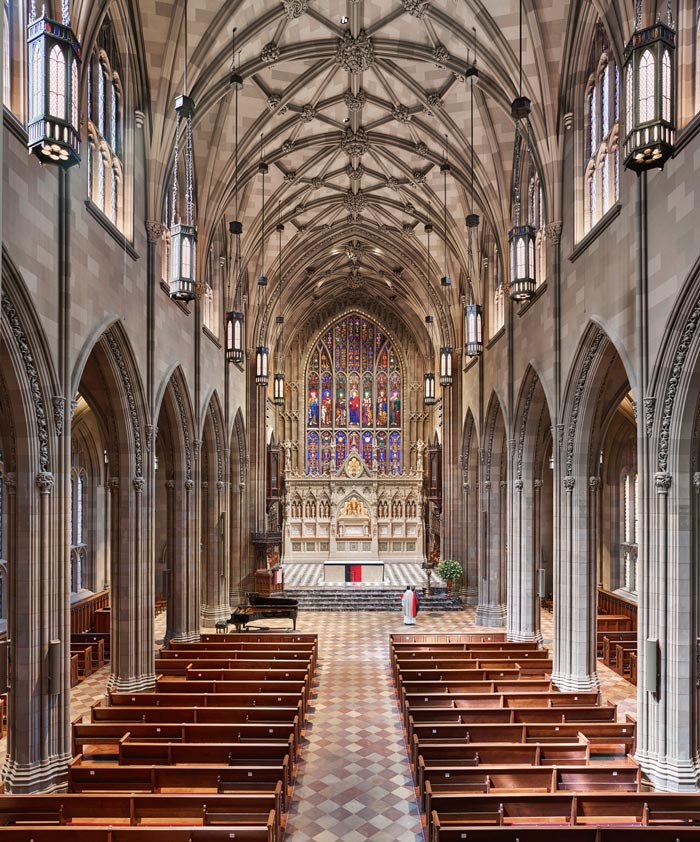
With centuries of history, Trinity Church Wall Street had fallen into disrepair by the time Jeffrey Murphy (Arch class of ’82) and his team were brought in to overhaul it. Electrical wires and various devices cluttered the space, obscuring the architecture of the 170-year-old building, the third church on the site along Broadway in New York City. It hadn’t been renovated in 70 years.
“What we did was a big editing job,” says Murphy, founding partner of MBB Architects.
The result, which was mostly complete by 2022, is a more welcoming building for churchgoers with better lighting and pews and accessible features. Murphy and his team also made the church more sustainable, reestablishing the insulation and exterior glazing on the stained glass to reduce its energy use. And, like a puzzle, they found ways to add back in the modern-day necessities without obscuring the architecture.
MBB also made an addition: a steel and glass awning that provides some cover during stormy weather. “We consider ourselves to be modernist architects, but we do a lot of restoration,” Murphy says. “This is a really good opportunity to introduce a sort of modern element that really stood in contrast to the historic building.”
The intensive project required teams of experts—mechanical engineers, stained glass specialists and organ voicing experts among them. Murphy says he thrives in that collaborative environment, which isn’t all that dissimilar from his time as an architecture student at UVA.
Coming from a family of builders, Murphy found inspiration among the architecture school’s talented students and the community-based projects they worked on, including schools and community centers. One of his latest projects is on Grounds, expanding the Center for Politics.
“You can’t make great architecture in a silo,” Murphy says. “The friendly, collaborative environment that UVA had at the time really impressed me and influenced how I even work today.”
Pankaj Vir Gupta
Pankaj Vir Gupta (Arch class of ’93) has always been in architecture’s orbit. Growing up in New Delhi, he often tagged along with his parents, both architects, to construction sites. An interest in writing and English literature originally brought him to UVA, but the architecture of Grounds helped lure him back to the family profession.
Today Gupta splits his time between India and the United States. In 2003, he co-founded India-based vir.mueller architects with his business partner and wife, Christine Mueller. Since 2012, he’s also been an architecture professor at UVA, where he founded and is a co-director of the Yamuna River Project, a long-term research program aimed at revitalizing the waterway that runs through New Delhi.
Gupta and Mueller have focused their design work on public projects—from school campuses to public toilets. “I was always, at the back of my mind, thinking about the scale of India, the scale of people who had no access to high-quality design in public space,” Gupta says.
The firm’s latest project is drawing international attention: a sunken museum that sits at the threshold of Humayun’s Tomb, a UNESCO World Heritage Site in Delhi. The monument, built in the late 1500s, celebrates the second Mughal emperor.
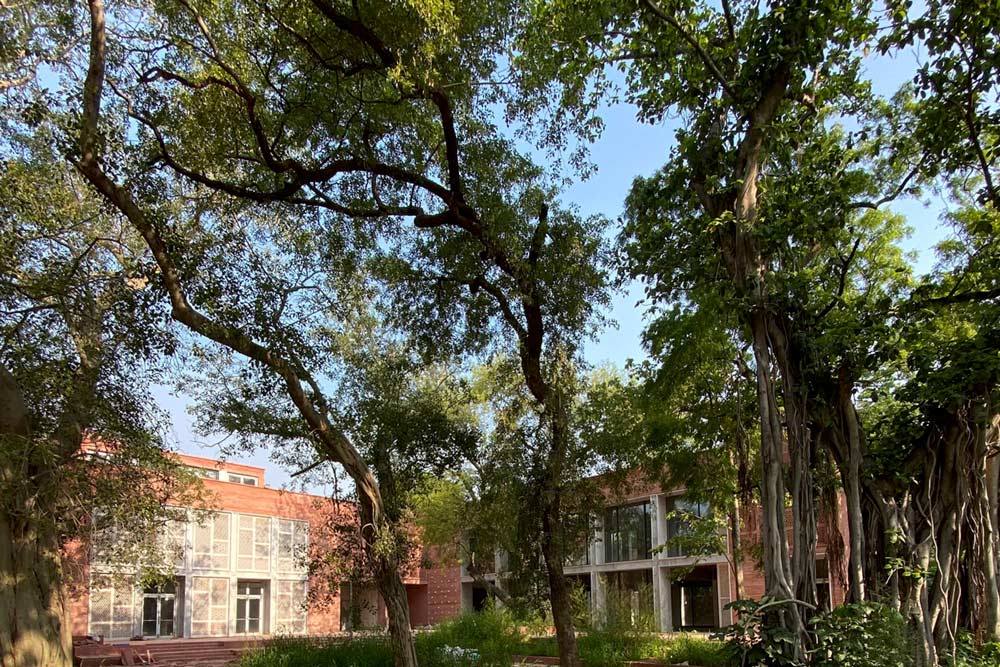
The museum, commissioned by the Aga Khan Trust for Culture, is mostly subterranean because of World Heritage Site requirements. Gupta took inspiration from the centuries of subterranean buildings in India where generations have gone for cooler shelter, gathering spaces and water.
The design is also mindful of the site’s trees. Galleries were woven around the existing root bases so trees weren’t damaged, Gupta says. Visitors to the museum, which opened this summer, are often perplexed, wondering if the building is actually new because the trees are so mature. To Gupta, that spells success.
“We were not interested in an architecture that was chest-thumping at all,” he says. “We were really interested and always aware that this is a building for the people … for whom this is a refuge in a very honest way to connect to their history and their past.”
Hallie Boyce
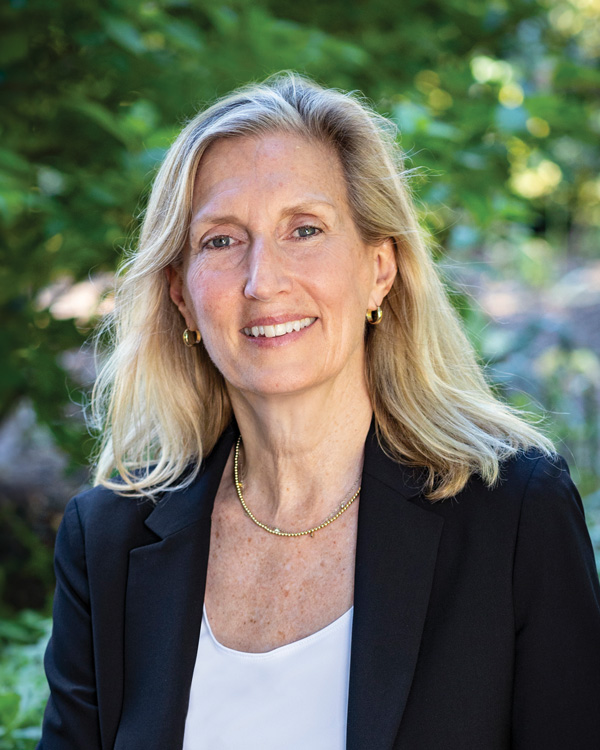
Hallie Boyce (Arch class of ’92) grew up on a small farm outside Baltimore, running free across the Maryland countryside. Those early experiences have informed a career in landscape architecture that focuses on community-based design, equity and environmental justice.
“My philosophy is that … landscape architecture can and should be a catalyst for positive change in the world, particularly in communities that have been marginalized,” says Boyce, a partner at landscape architecture, urban design and planning firm OLIN.
Boyce’s work focuses on public spaces and institutions, and her design philosophy is on display in one of her latest projects—the 11th Street Bridge Park in Washington, D.C. The park will create a pedestrian connection between the two sides of the Anacostia River—the highly developed Capitol Riverfront on the west side and the much less developed, lower-income neighborhoods on the east side.
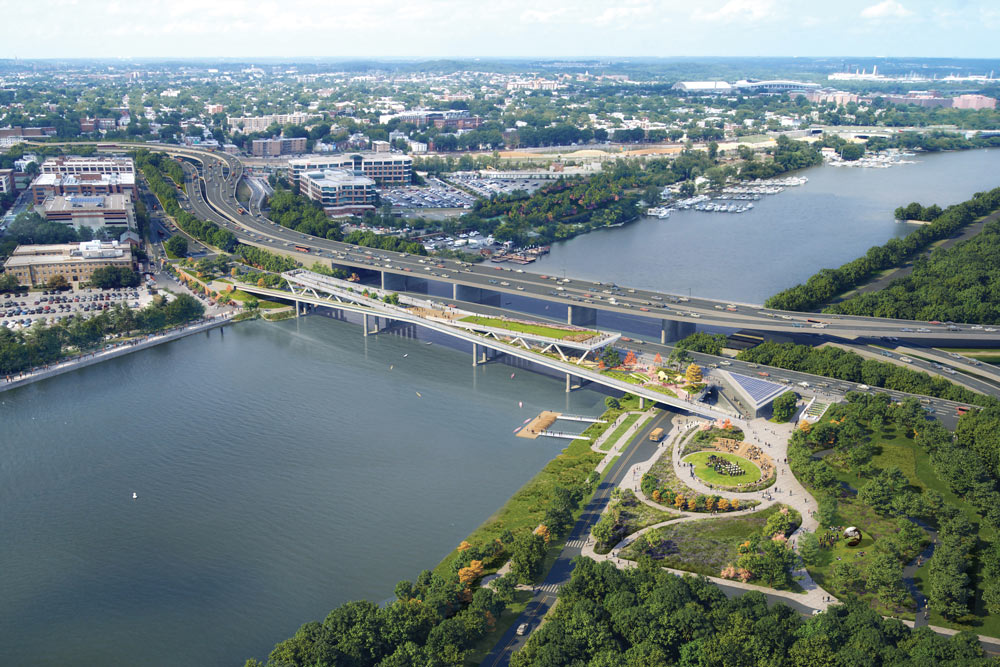
The crossing comes with a difficult history, including the displacement of 23,000 people, mostly Black and Jewish, to the east side so the west side could be developed.
Planning for the 11th Street Bridge Park has been a community-wide effort that started before Boyce and her team got involved. The resulting design brings people in, up and over the river with places to pause. There’s a playground, cafe, green amphitheater, environmental education center, public art, and a canoe and kayak launch. A heavy planting of trees will provide shade and help boost water quality. Construction will start in early 2025.
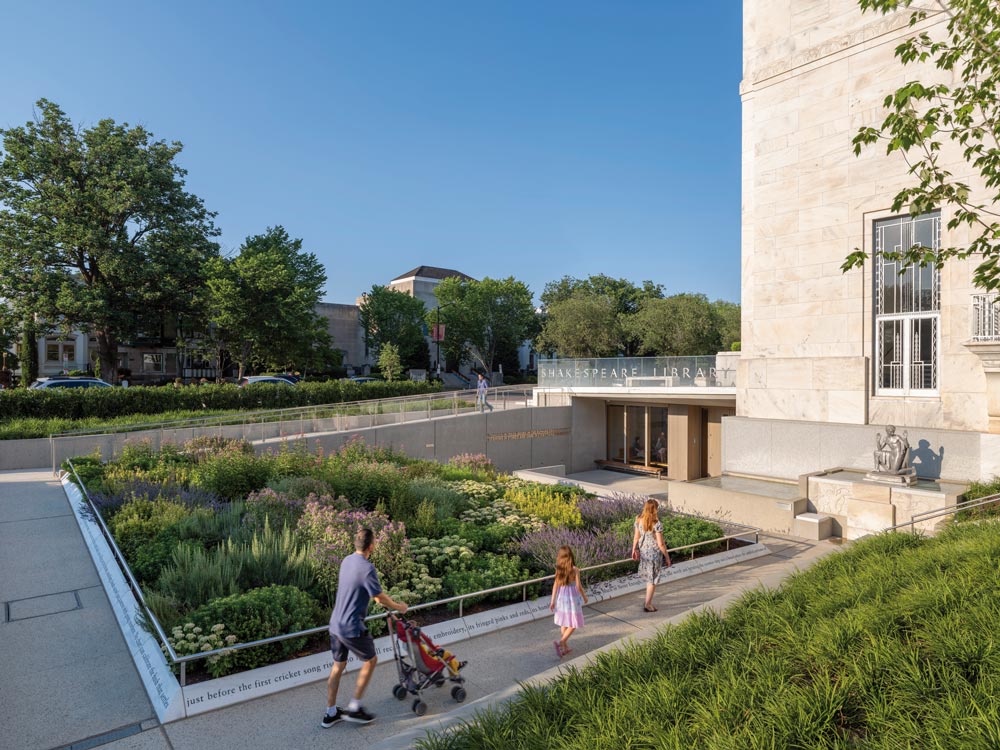
Boyce’s work has taken her to high-profile spots, including the U.S. Embassy in London and Capitol Hill’s Folger Shakespeare Library.
“What really excites me … on 11th Street is hearing from the community about what they want to see, do and enjoy, and what really moves them,” she says. “And then trying to make places that are enduring and durable, so that they’re strongly beloved.”
Margaret Cavenagh
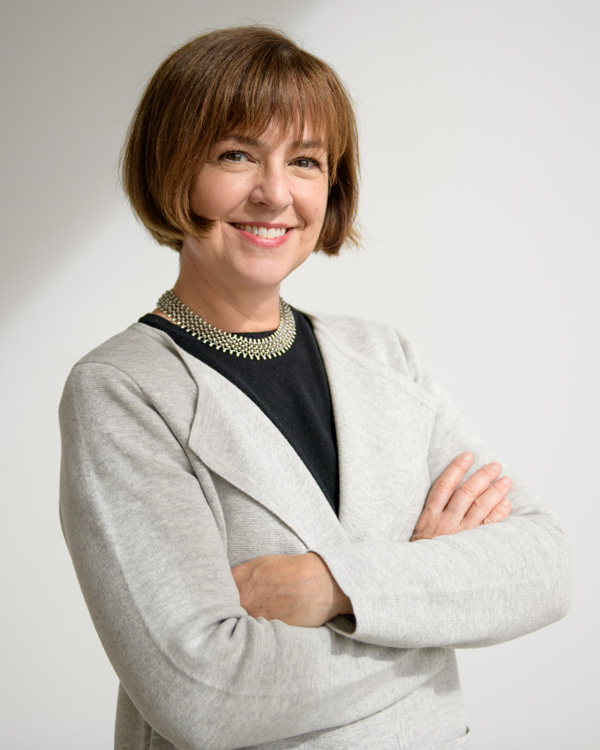
As a child, Margaret Cavenagh (Arch class of ’88) was always rearranging her bedroom. By sixth grade, she knew she wanted to be an architect. In high school, she says, her track coach made her run extra laps after she skipped practice to hear architect Sylvia Smith (Arch class of ’79) speak.
Today, Cavenagh is a design principal at Studio Gang, leading the firm’s interior architecture practice. Her work involves every aspect of a building’s interior, from how the space will be designed and programmed to the fittings, fixtures and other materials that will be used.
“There’s something really beautiful about the ability to change an environment with texture, color, lighting, the way the space smells, the way it feels,” she says.
Cavenagh’s recent projects include the Arkansas Museum of Fine Arts in Little Rock, which was completed in 2023. The project’s challenge was to bring continuity to a 1930s-era building with a hodgepodge of additions.
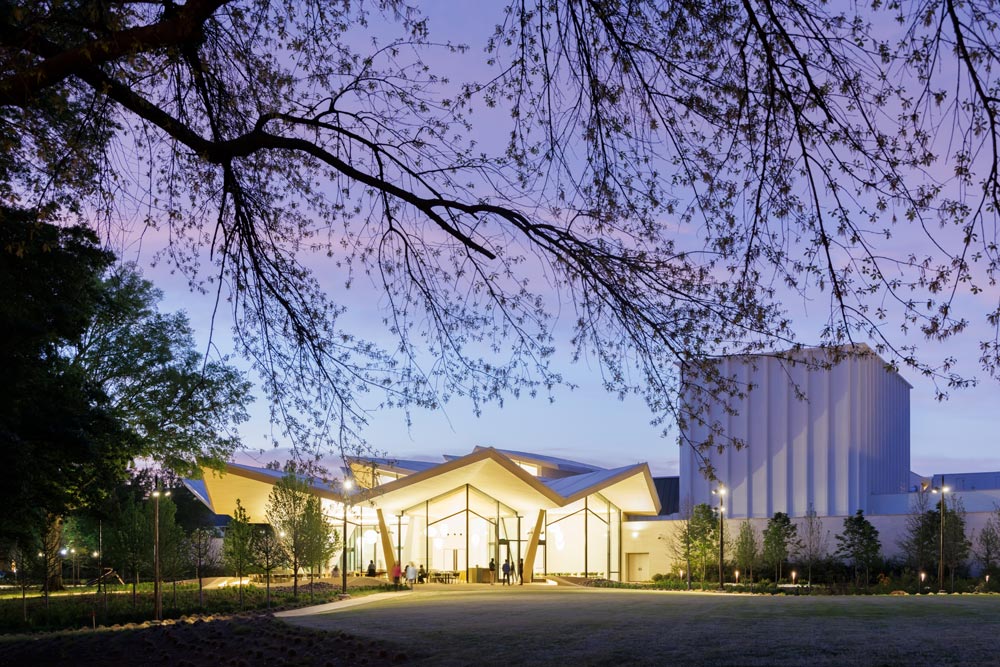
The result is a complete overhaul of the existing spaces, along with a new public gallery and Cultural Living Room with flexible space for events and contemplation. Cavenagh and her team sought to bring light and softness to the complex.
She deployed plaster walls, for example, because of their luster and texture. Inside the mostly glass Cultural Living Room, she curated a collection of seating options of all sizes that were beautiful from every angle and could also be easily moved to make room for events. “Everything had to feel soft and welcoming,” she says.
Her latest projects include the Spelman College Center for Innovation & the Arts, a new building that will serve the historically Black women’s college in Atlanta.
“I like to design spaces that, activated, feel really joyful and happy,” she says. “They’re beautiful. And they change over the day to night, depending on the light coming through them.”
Olle Lundberg
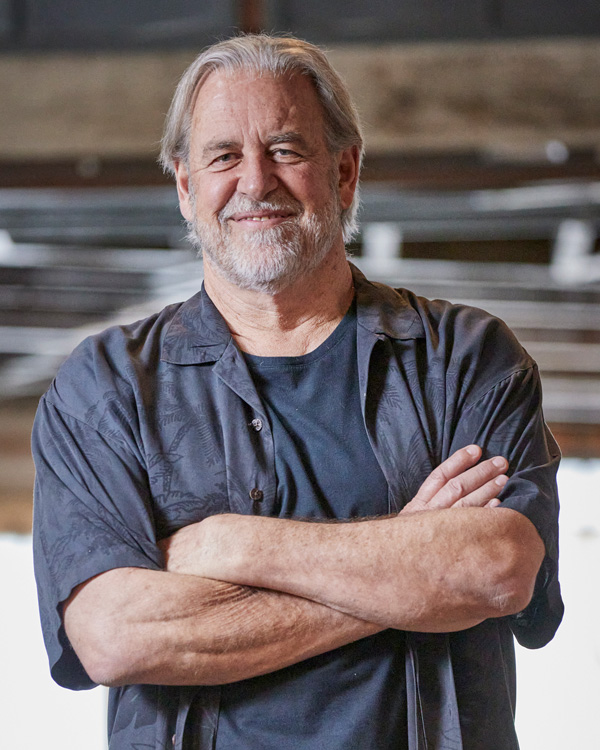
Three decades ago, Olle Lundberg (Arch class of ’79) got a call from a friend who’d found a slab of wood measuring 6 feet wide and 17 feet tall from a single redwood tree at an estate sale in Mendocino, California. “I’ve already bought it for you. Bring a truck and get it,” Lundberg remembers his friend saying.
It would take 30 years, but Lundberg, founder of architecture firm Lundberg Design and a longtime maker whose firm’s shop also builds custom creations, has found a new home for it in one of his current projects: St. Helena Community Church in California’s Napa Valley.
The slab will serve as a wall that will allow for two altars—one that faces the sanctuary and another that faces an outdoor courtyard. The project also involves tearing out the plaster walls to reveal the building’s redwood framing.
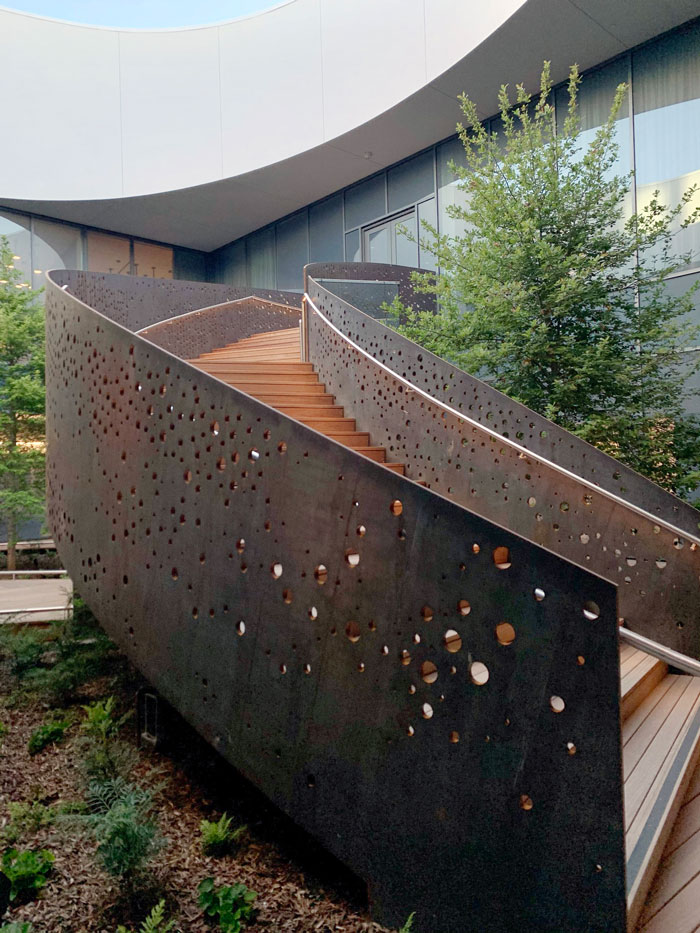
“Everything that we build, on some level, I try as much as possible to reference back to the base material—what we’re borrowing from the earth,” Lundberg says.
By the time he got to UVA, Lundberg had already dabbled a bit in construction, including renovating an abandoned chapel that he lived in while at Washington and Lee University.
Now based in the San Francisco area, Lundberg’s clients have included high-end restaurants and major technology companies, including Google. The firm was behind the design of the first Google Cloud office, which involved the renovation of a sprawling 1960s-era facility that had housed an early supercomputer. Signatures of the design include a two-story courtyard capped with a sculptural circular window and a massive communal table made from a split redwood tree.
“I feel incredibly fortunate to have had the career I’ve had,” Lundberg says of his work so far. “[I’m doing] what I always wanted to do, which was to live a creative life around interesting people and do interesting work.”
Sylvia Smith

Sylvia Smith (Arch class of ’79) entered architecture at a particularly challenging time—during a recession and when few women were successfully pursuing the career. “It was tough going for a long time,” Smith says. “I’ve always felt like I had to work twice as hard to gain credibility and be taken seriously.”
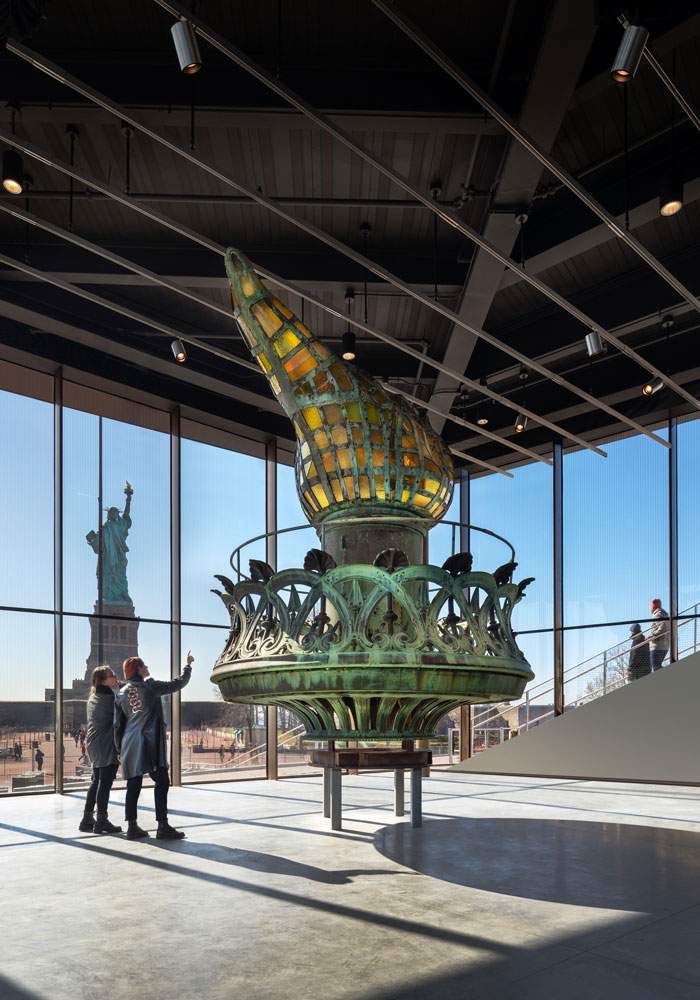
Today, 43 percent of architects are women, according to the National Council of Architectural Registration Boards. And Smith plowed through the obstacles, building an award-winning career that includes major projects such as the Statue of Liberty Museum. She is now partner emerita at the firm she joined in 1982, FXCollaborative. She launched the company’s culture and education studio, focusing on museums, schools and cultural projects.
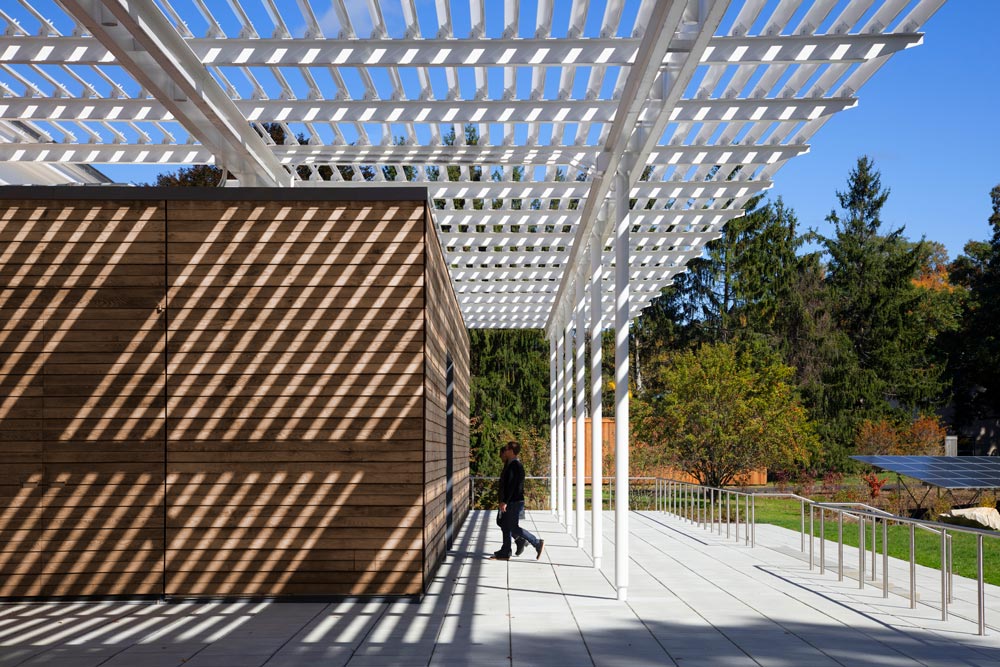
Recent work includes the David Rockefeller Creative Arts Center in Tarrytown, New York. The former orangery, built in 1908, presented plenty of challenges. The long, narrow building, with 24 interior columns, needed to be turned into a performance and rehearsal space where artists could create and present their works in progress. The renovation also had to maintain the spirit of the building and be sustainable.
In the end, Smith and her team eliminated six columns, working with a structural engineering firm to create trusses to support the building. A solar panel array helps it to achieve net-zero energy consumption. The project opened in 2022.
“The building itself had a character and quality that was unique,” Smith says. “So we did modern insertions and a modern vision, all using materials that were sympathetic to the original structure.”
Throughout her career, Smith had opportunities to veer in different directions, but she got hooked on immersing herself in the needs of her clients and producing designs that enhance their communities and culture.
“I like seeing the world through other people’s eyes,” she says. “I want … at the end of the day, for … the users to say, ‘I feel special when I’m here.’”