A whole new ballgame
A settlement aims to reform pay in college athletics. What will it mean for UVA?
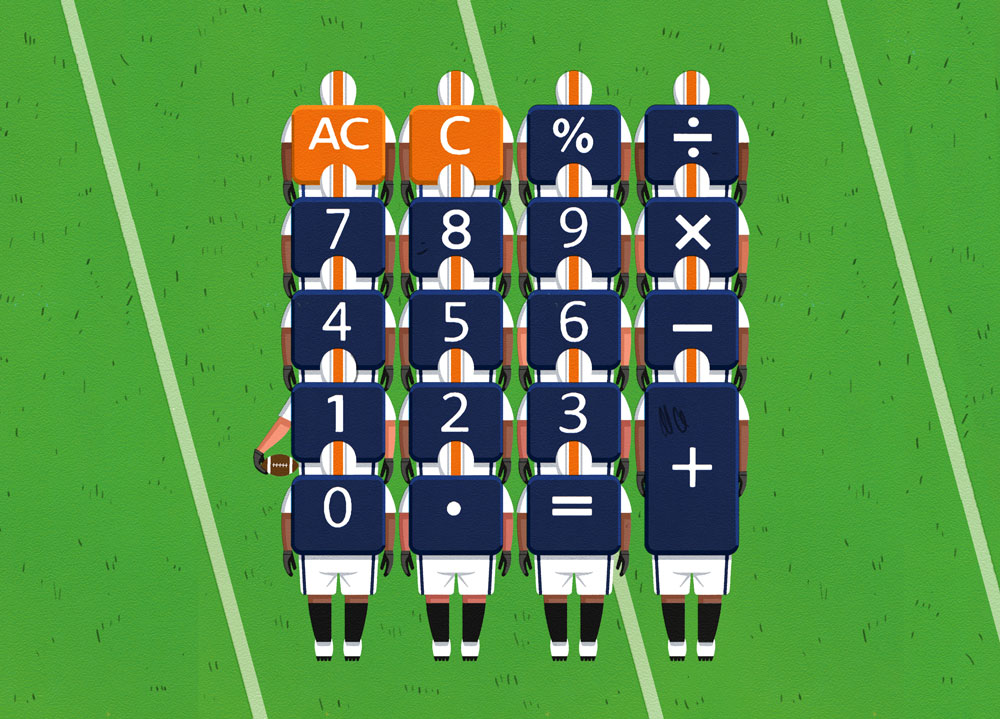
Bowing to mounting legal and legislative pressure, the NCAA in 2021 took a once-unimaginable leap: It permitted student-athletes to be paid. The rule change set aside a tenet of amateurism in place for 115 years and allowed athletes to monetize their personal brands through name, image and likeness (NIL) deals that would pay them for product endorsements, social media posts, appearances and more.
It didn’t take long for things to escalate.
Seeking a competitive advantage, more than 30 state legislatures, including Virginia’s, passed laws prohibiting the NCAA from placing restrictions on NIL payments. Athletes, who were supposed to be compensated for their marketability and not their playing ability, were paid by booster-funded collectives seeking the best talent for their school’s teams. Some highly sought-after high school recruits reportedly got seven-figure deals for signing with a particular school, while many established players were paid lavishly for transferring from one school to another.
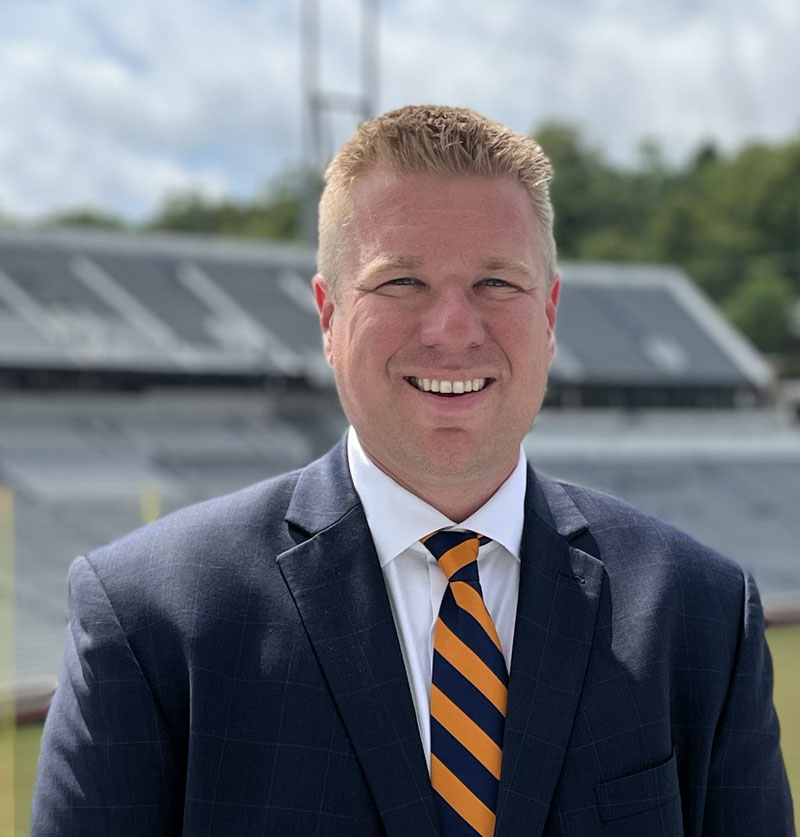
“What NIL was intended to be and what it turned out to be are two totally different things,” said Kevin Miller, executive director of the Virginia Athletics Foundation (VAF), the department’s fundraising arm.
The NCAA, on its back foot after many setbacks in courtrooms and statehouses, was powerless to do anything. Oversight “disappeared at a time when it was most needed,” said Gerald Starsia (Educ class of ’10), a recently retired associate professor in the School of Education and Human Development who taught classes in college athletics administration and leadership and still writes on the topic.
In the absence of NCAA regulation, the world of NIL became “the wild, wild, West,” outgoing UVA President Jim Ryan (Law class of ’92) said in June.
“There’s no rules. There’s no clarity about what kind of payments are being made and for what purpose,” Ryan said.
It’s not the sort of environment in which Virginia prefers to compete, which is why Ryan and Director of Athletics Carla Williams were optimistic about a series of reforms that will launch a new era of college sports that they believe could level the playing field.
“If it works, then this will be a saner era in college sports,” Ryan said.he changes come with the implementation of the terms of the settlement in House v. NCAA, the name given to three antitrust cases challenging restrictions on athlete benefits. The settlement was approved by a federal judge in June and went into effect July 1.
The biggest headline from the settlement is a provision that allows, but does not require, schools to pay athletes directly by sharing revenue with them, up to $20.5 million for the 2025-26 school year.
The settlement also increases the number of scholarships schools can provide, if they choose to, by eliminating scholarship limits and replacing them with roster caps. In football, for example, teams were limited to 85 scholarships, but most carried far more players than that. (Virginia listed 124 players on its 2024 roster.) Now teams will be limited to 105 players, but all can receive scholarships if a school can afford it. Although the move was intended to bring down costs associated with larger roster sizes, it has been criticized for limiting opportunities for non-scholarship, “walk-on” students.
House also awarded back damages of $2.8 billion over 10 years to Division I athletes who competed as far back as 2016 and were denied an opportunity to make NIL earnings.
Perhaps most crucially, as Ryan and Williams see it, the settlement places regulations on third-party NIL deals. Any agreement over $600 is subject to approval by a new clearinghouse, created to ensure that payments are for valid business purposes and in line with fair market value—and not merely a means of funneling extra cash to players to gain an unfair advantage.
By bringing payments in house, setting a cap, and regulating third-party NIL deals, the excesses of recent years can theoretically be reined in. For Virginia, a more closely regulated environment is a good thing, said Ryan, who followed the twists and turns of the case closely in his capacity as chair of the ACC Board of Directors.
“We play by the rules. We will be able to compete even more effectively than we are if everyone else is playing by the same rules. I’m sure of that.”
Williams said she was “ecstatic” about the settlement, and hopeful it will stabilize the industry and give UVA a “fighting chance” of competing in this new professionalized era.
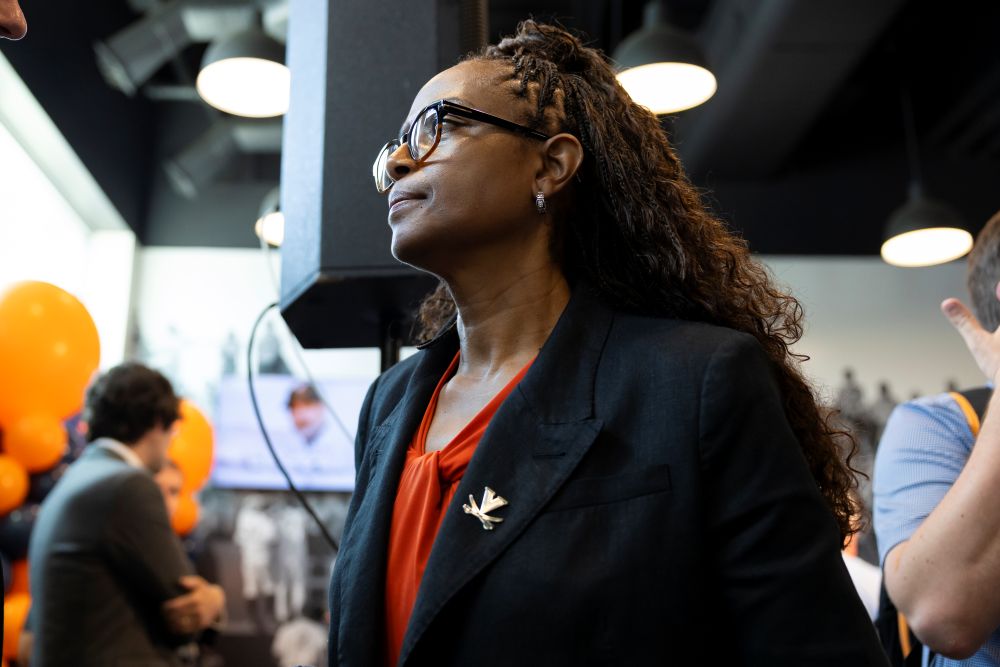
“Being at UVA is a harder path because we’re going to ensure that our student-athletes are students.”
The new era comes with challenges, however. One is how to pay for revenue sharing. Williams said Virginia will distribute the maximum of $20.5 million. That’s equivalent to roughly 14 percent of the department’s total expenditures of $145.6 million in fiscal 2023-24, the most recent year for which data is available. (Revenues for the year totaled $153.5 million, according to a report filed with the State Auditor of Public Accounts.)
There’s also the question of how to best spread the new payments among players and teams. Williams declined to specify how Virginia will do it, but most schools are expected to follow the formula used to determine back damages, with 75 percent going to football, 15 to 20 percent to men’s basketball, 5 to 10 percent to women’s basketball, and the rest to athletes in all other sports.
That approach returns revenue to athletes in the sports that generate it.
With football no longer paying the bill, figuring out how to fund the so-called “Olympic sports” is another challenge going forward. For Virginia, which has one of the most successful Olympic sports programs in the nation—with a combined 34 national championships among those teams—the question is particularly pressing.
Miller is working on a possible long-term solution, leading a push to endow Olympic sports scholarships, and possibly even coaching positions and operating costs, to take them off the annual books and free up money for revenue sharing.
“We have a long, proud history of success in the Olympic sports programs,” Miller said. “We want that to continue.”
Operating expenses for Olympic sports—all programs other than football and men’s and women’s basketball—totaled $42 million in 2023-24. Scholarships accounted for about $15.7 million of that total.
Virginia also has a history of endowment fundraising in other areas of the university, supporting professorships, academic scholarships and fellowships, research initiatives, and more. That’s why Williams and Miller say they believe this approach can succeed. As of May, VAF had secured $22.6 million in endowment commitments for 2025, a record for a calendar year. That’s enough to endow roughly 14 scholarships, given a cost of about $1.6 million each, Miller said.
Virginia currently offers 316 total scholarships, Williams said. Of those, more than 200 go to nonrevenue sports. Endowing them all is a “tall hill to climb,” Miller said.
“This is certainly not the job that most, if not all, athletics directors signed up for … Just like in (playing) sports, you have to pivot to compete.”
The VAF’s primary job is to fund the annual scholarship bill, which will grow as more scholarships are added. If Virginia offered the maximum number of scholarships allowed by the settlement for each of its 27 sports, it would total about 700 scholarships under the new roster limits. In women’s swimming, for example, the number of allowable scholarships has gone from 14 to 30. For baseball, the number has jumped from 11.7 to 34, and for men’s lacrosse, it has gone from 12.6 to 48. Other sports have similar increases.
Williams said the department will focus on endowing current scholarships before adding new ones. Still, the settlement allows schools to spend $2.5 million of the $20.5 million on new scholarships, and Virginia will use the funds to add 30 for women’s sports, she said. A recent gift is also funding an increase of scholarships in baseball.
Though UVA and its coaches would like to offer the maximum number of scholarships across all sports, that’s “impractical at the moment,” Williams said. As they have for decades, coaches will need to highlight the many other reasons student-athletes choose to come to Virginia beyond just scholarships, she added.
“This is a great university with a great history and a great tradition of academics, athletics and championships,” she said.
Like other schools, UVA is adapting on the fly. The settlement upends a funding mechanism that had been in place for decades and relied on football—and men’s basketball, to a lesser extent—to fund almost every other sport.
UVA football brought in $54.6 million in 2023-24 and had net revenue of $21.5 million. The biggest source of football revenue was media rights payments of $25.5 million, followed by ticket sales of $9.1 million. Coaching and support staff salaries were the biggest expense at about $13.4 million, followed by scholarships at $6.4 million.
Men’s basketball brought in $19.4 million and cleared $4.5 million, for a total of about $26 million in net revenue between football and men’s basketball. The program received $7.7 million in media rights and $2.6 million in contributions and had ticket sales of $5.6 million. Coaching and support staff salaries were the biggest expense, at $8.8 million.
The university’s other sports lost $24.1 million combined. The biggest source of revenue was contributions, which totaled about $18.2 million. None of the sports reported revenue from media rights. Ticket sales were about $1.8 million.
“If you look at athletics like it was a private business and you had 27 product lines and 25 of them were losing money, if you were the business owner you probably wouldn’t offer those product lines,” Miller said. “But that’s not how college athletics works, and I’m not suggesting that we need to cut sports by any means.”
A recent gift that will cover the annual expenses of the men’s tennis program in perpetuity provides an example of how the endowment model could work, Miller said.
In Ryan’s view, that means of funding is fairer than asking football to pay most of the tab for nearly all other sports.
“If some of the money generated by football goes back to the players, that seems fair to me,” Ryan said. “And if the university and fans step in to support nonrevenue sports, that seems to me just conceptually and ethically a much healthier way to think about it.”
UVA athletics is attempting to cover the increased costs that come with the settlement. Williams and Miller say UVA is exploring new revenue streams, such as premium seating experiences at Scott Stadium and John Paul Jones Arena. UVA is also seeking to host NCAA events, such as the 2026 men’s lacrosse championship, which will be held at Scott Stadium.
“Everything is on the table,” Miller said. “We’re looking at ways to generate revenue that we have not historically done to try to make ends meet during this critical time in our history.”
A new seating plan at John Paul Jones Arena that takes effect for the 2027-28 season, after current seating agreements expire, is expected to bring in $75 million over five years. A “large portion” of the money will go toward endowing operating expenses of men’s and women’s basketball and supporting Olympic sports, Miller said. It is the first new seating plan since the arena opened in 2006 and comes at a “fortuitous” time, he said.
The athletics department is also implementing budget cuts, Williams said, although she declined to provide specifics.
“We’re one of the most efficient athletic departments in the country, so any cut to our budget is significant and a sacrifice to our coaches and staff,” she said.
Across the department, donor contributions are the biggest source of revenue, at $38.7 million, followed by media rights at $33.2 million. Student fees accounted for $16.7 million, about 11 percent of the total of $153.5 million.
At $30.3 million, coaching salaries were the biggest expense in 2023-24, followed by scholarships ($24.4 million), direct overhead and administrative expenses ($22.8 million), and administrative and support staff salaries ($21.1 million).
“Everything is on the table. We’re looking at ways to generate revenue that we have not historically done.”
Although direct payments are new, UVA athletes, like those at other schools, were already being paid before the House settlement was approved.
In the early days of NIL, many athletes received often-nominal compensation of a few hundred dollars for product endorsements. In Virginia, the stakes were raised by the passage last year of House Bill 1505, which allowed universities to get involved in arranging NIL deals, without NCAA restrictions.
At UVA, such deals, funded by donors, were funneled through the athletics department’s official third-party collective, CavFutures Marketing Inc. Previously, CavFutures worked only with athletes who were already enrolled, helping them broker NIL deals and educating them on how to build a personal brand. After the passage of HB1505, the collective became involved in recruiting.
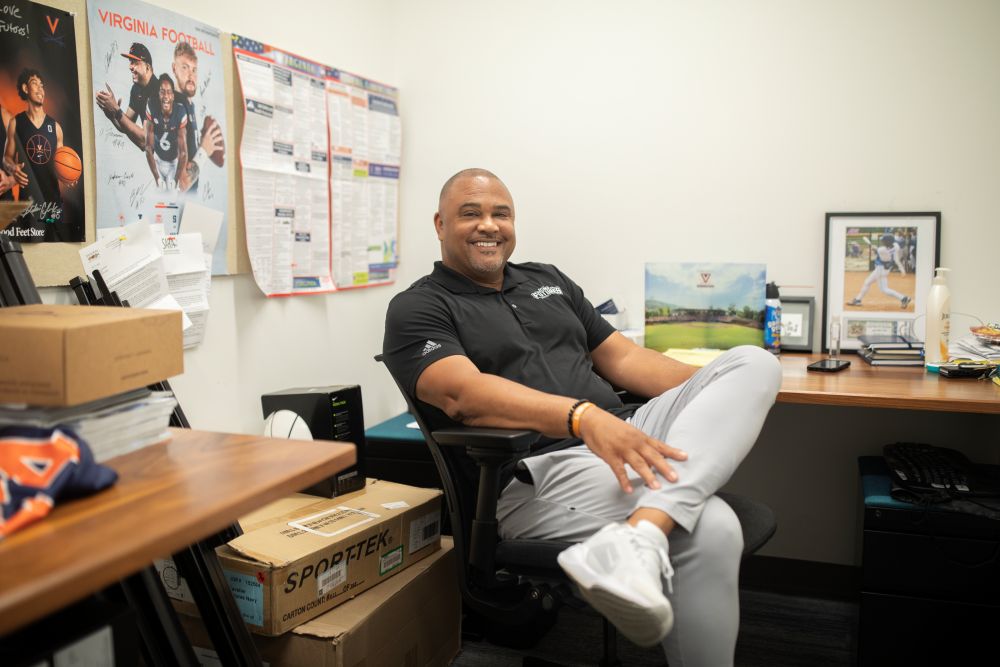
“That really changed the game for us,” said Lo Davis (Col class of ’91), the executive director of CavFutures. “We really for the last year have been heavily involved in discussing with agents, going back and forth with the students and parents and really offering the opportunity for them to come to UVA.”
The football program received two multimillion-dollar gifts from anonymous donors in December. Those funds were used to assemble a transfer class ranked by recruiting services as one of the top 25 in the country, Williams wrote in a letter to fans in June.
At the time, there were no reporting requirements for third-party deals, and Davis declined to say how much was spent through CavFutures. Men’s basketball also used collective funds to acquire players. One report from CBS Sports put the team’s NIL budget at around $8 million.
Exact figures are hard to come by. As Ryan and others have noted, player agents have been known to exaggerate the size of the deals they negotiate for clients. Still, some of the reported amounts being paid elsewhere are eye-popping. Former Tulane quarterback Darian Mensah, for example, is said to have signed an $8 million deal payable over two years for transferring to Duke.
There have been no reports of UVA athletes receiving deals as lucrative. But there are clues as to what some players’ NIL values were on the open market.
On3.com—which covers college football and basketball with a focus on recruiting, transfers and NIL—uses a proprietary algorithm to publish NIL valuations that it asserts are the leading index in the industry and a “baseline value” that helps athletes, schools and brands negotiate contracts.
On3.com put the NIL value of football offensive lineman Monroe Mills (Educ class of ’30), who transferred to UVA from Louisville, at $1.1 million. Quarterback Chandler Morris, who transferred from North Texas, was valued at $370,000. Former UVA quarterback Anthony Colandrea, who transferred to the University of Nevada, Las Vegas, received a valuation of $1 million.
In men’s basketball, incoming transfers Ugonna Onyenso (Col class of ’27) and Malik Thomas were valued at $694,000 and $654,000, respectively. Former Cavalier Isaac McKneely, who transferred to Louisville, was valued at $1.2 million.
“I’m glad UVA is accepting that this is the new reality. We’ve worked too hard to be left behind.”
Going forward, revenue-share deals between schools and players must be disclosed to the newly formed College Sports Commission, which will oversee compliance. Third-party NIL deals will be reviewed by a commission clearinghouse called NIL Go, run by the accounting firm Deloitte.
Many NIL collectives are expected to dissolve, Davis said. CavFutures in late July added “marketing” to its name to better reflect its role as a broker of deals that provide another means for athletes to make money.
“I’m glad UVA is accepting that this is the new reality,” he said. “We’ve worked too hard to be left behind. Whether it’s the health system, the law school or McIntire, we tout ourselves as being the best of the best. Why can’t it be the same for athletics?”
Williams said that accepting the new reality is the only option if UVA wants to stay competitive in major college sports.
“This is certainly not the job that most, if not all, athletics directors signed up for when they got in the business,” Williams said. “Just like in (playing) sports, you have to pivot to compete.
“The goal is to compete and we have to compete for championships in all of our sports, and so we’ve worked really hard to put short-term and long-term plans in place and activate those as the rules have allowed.”
Planning for the long term is difficult in such a rapidly evolving environment. One of the uncertainties about the settlement is whether it can withstand legal challenges.
The ink on the settlement approval was barely dry when a group of female athletes, including UVA volleyball player Kate Johnson (Col class of ’26), filed an appeal, arguing that the damages portion of the settlement violates the Title IX gender equity statute because it awards the bulk of the money to male athletes. Title IX requires institutions that receive federal money to provide equal opportunities for men and women in college athletics.
How or whether Title IX applies to the settlement remains unclear and “will most likely be resolved in the courts, in administrative proceedings or through federal legislation,” the Knight Commission on Intercollegiate Athletics, an independent group focused on reform in college athletics, wrote in a brief on the settlement.
The commission’s brief added that the settlement does not resolve conflicts between NCAA rules and state laws regarding NIL restrictions and athlete compensation.
The question of whether athletes should be classified as employees was also not resolved, and remains the subject of another federal court case, Johnson v. NCAA. One argument being made by advocates of employment status is that the revenue-sharing contracts now being signed by players are de facto employment contracts. If considered employees, athletes could potentially gain collective bargaining rights.
The NCAA has maintained that college athletes should be considered students, not employees. In one publicized case, Dartmouth men’s basketball players voted to unionize, and were recognized as employees under the National Labor Relations Act by a regional director of the National Labor Relations Board (NLRB). Dartmouth refused to recognize the union and appealed to the full NLRB. The union representing the players filed an unfair labor practice complaint but dropped it after the November 2024 presidential election.
Finally, there’s the possibility that the revenue sharing cap or the restrictions on third-party NIL deals could be challenged on antitrust grounds. The settlement calls for disputes about third-party NIL deals to be resolved through arbitration, but some could also wind up in court.
“I’m definitely expecting lawsuits,” said Madeline Walsh (Educ class of ’23), who worked as director of marketing at CavFutures and as assistant director of NIL at the University of California, Los Angeles, and follows the sector closely. “Third-party donors were not party to the [House] suit, so they can say that has nothing to do with them.”
Mit Winter, a prominent sports attorney based in Kansas City, Missouri, who advises athletes and universities on NIL issues, said that because the revenue share cap was not collectively bargained, “it’s a cap that has no antitrust protection at the moment.”
Major conferences have circulated a memo for member schools to sign that would bind them to the terms of the settlement.
Wiliams said UVA plans to abide by the terms and is counting on other schools to do so as well. Getting Congress to pass legislation codifying the settlement would be helpful in that regard, she said.
It’s far from clear that Congress will act. Lack of certainty has been one of the few constants in college sports in recent years, and that could continue for the foreseeable future.
“Anyone who says they know what college sports is going to look like five years from now has not been paying attention to the last five years,” Ryan said.