The empty plate
UVA experts in the field of hunger discuss the growing crisis
Victoria Borges
Ever gone to bed hungry? Ever done it twice in a row? Across Virginia, one in nine people is food insecure—that is, has limited or inconsistent access to healthy meals—according to nonprofit Feeding America. More than 250,000 who are food insecure are children. Nationally, even before this year, food insecurity reached as high as 59 percent among elderly, Black, Hispanic and disabled households nationwide.
And that hunger hits Grounds, too. A community food pantry in Newcomb Hall fed more than a thousand students and staff last year, and students have raised funds for it and successfully advocated in Richmond for legislation: In April, Virginia Gov. Glenn Youngkin signed bills establishing the Hunger-Free Campus Food Pantry Grant Program.
Just this year, the U.S. Department of Agriculture has cut $1 billion meant to help food banks and schools procure food from local farmers, as well as $500 million for deliveries to food banks. Meanwhile, prices have continued to climb.
As the issue grows more serious, we talked to some alumni and faculty who have been working in the field about the scope of the problem and some potential solutions.
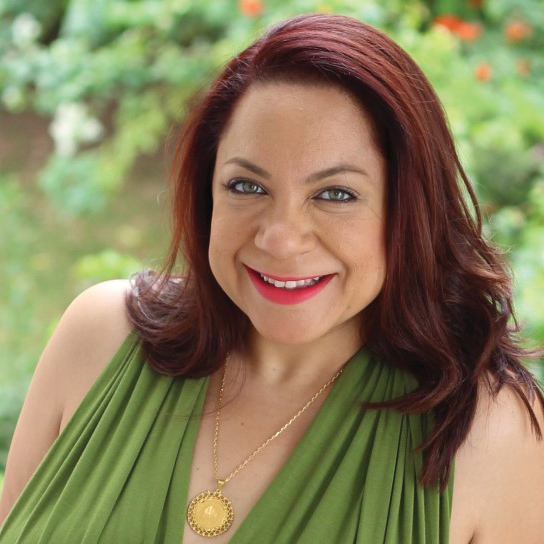
Riley Chitwood (Col class of ’19) is the Northern Virginia regional manager at Capital Area Food Bank (CAFB).
Paul Freedman teaches classes in the politics of food as an associate professor in the UVA Department of Politics and is director of the interdisciplinary major Environmental Thought and Practice. He’s also a member of the UVA Committee on Sustainability and the UVA Sustainable Food Collaborative.
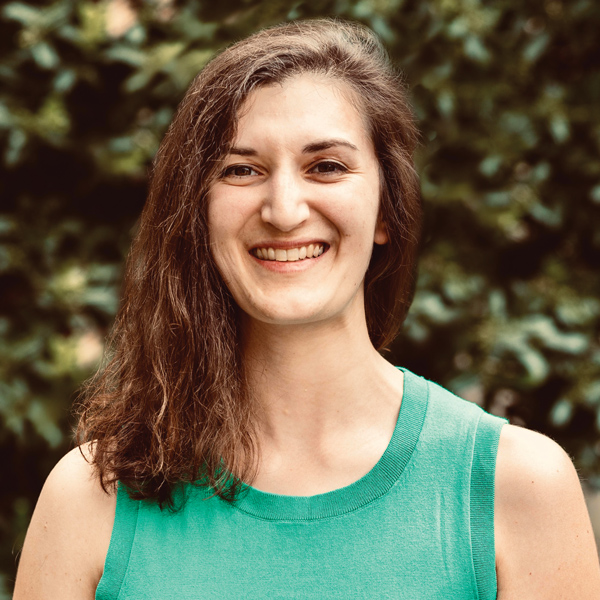
Saoussen “Suzy” Mahjoub (Col class of ’11) is the director of development for FoodRecovery.org, which connects organizations with surplus food to communities in need.
Maggie Mascarenhas (Col class of ’17) is the public policy manager for Sustainable Agriculture and Food Systems Funders, a nonprofit that convenes, guides and mobilizes funders and provides educational programming.
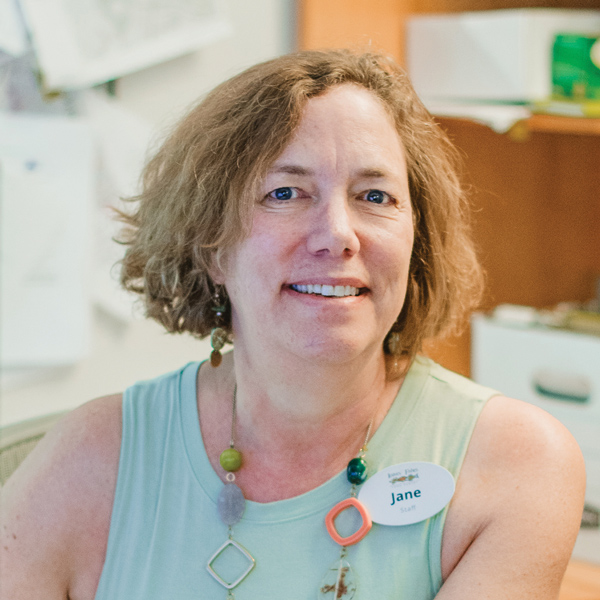
Jane Colony Mills (Col class of ’86) is executive director of Charlottesville’s Loaves & Fishes Food Pantry (L&F), which serves 500 households each week.
Remarks have been edited for length and clarity.
What is the scope of hunger and food insecurity? Whom does it affect?
Freedman: In 2023, the U.S. Department of Agriculture measured Americans who were fully food secure at 86.5 percent, or 115 million households of 283 million people. Those with “low food security”—just getting by, with help—were 8.4 percent, or 11 million households of 31 million people. And “very low food security,” who are disrupted substantially, were 5.1 percent. Sounds low, but that’s 7 million households of around 16 million people.
Mahjoub: Food insecurity touches a range of people: the lower middle class, the underserved, people with disabilities, veterans, homeless communities. With inflation and the high cost of food, the problem affects an ever-wider population.
Freedman: Having children at home makes you more likely to be food insecure. More than a third of households with children headed by single women are food insecure.
Chitwood: Plus people of color and a range of income and education levels. Having a college degree makes it less likely we’ll see you [at a food bank], but close to two-thirds of food-insecure people have completed at least some college classes.
Mills: At Loaves & Fishes, we have college grads, Ph.D.s who don’t have enough work. During COVID, when the university paused elective surgeries and laid off a lot of health care workers, they came to us. I expect to see that from local military installations, too.
Mascarenhas: Let’s not forget seniors; Meals on Wheels can be a lifeline. Another overlooked subset includes those who harvest our food, stock grocery stores and prepare meals in restaurants. According to the recent Food Chain Workers Alliance report, in 2022 almost one in five frontline food workers was food insecure.
Mills: A large grocery chain nearby is a source of some food L&F gives out but also a source of some people we feed. Former employees of ours worked there and said they never, ever got full-time hours.
Chitwood: Capital Area Food Bank serves the District of Columbia, two counties in suburban Maryland and four jurisdictions in Northern Virginia. As of last fall, 37 percent of those regional residents were food insecure—up from 32 percent the year before. Food insecurity reaches throughout our NOVA service area, from a low of 23 percent in Arlington to 43 percent in Prince William County.
Tell us about some myths and realities about food and hunger.
Chitwood: A common myth is that everyone hungry is unemployed. Actually, from CAFB’s latest hunger report, 76 percent are working. In fact, one in five is working more than one job.
Mahjoub: SNAP [the federal Supplemental Nutrition Assistance Program, formerly known as food stamps] requires recipients to be either working or looking for a job. It’s also hard to afford rent and day care on a full-time minimum wage. Day care, housing, food—these are choices people are having to make.
Mills: Housing prices locally are driven up by UVA, by students. Families often come to L&F for food just trying to keep a roof over their heads.
Mascarenhas: Another myth is that hunger is an individual failing. In fact, it derives from societal factors like wage stagnation, wage theft and crippling medical debt. Longtime policies play a part as well. People should know about the Robinson-Patman Act of 1936, which banned price discrimination by retailers. The law made it illegal for suppliers to arrange discounted deals with larger retailers and for retailers to demand them. Wonky, but it was enforced in the 1950s and ’60s and significantly less since the ’80s, even though it’s still on the books, which is a large reason why small, local grocery stores are essentially priced out of the market.
Freedman: A myth is that everyone in need is living in poverty. Actually, with this problem touching 13.5 percent of all households, you probably know someone who’s food insecure. The problem can certainly be present in households making more than 130 percent of the poverty line, even 200 percent.
Mills: Sometimes you see Mercedes and Hummers in the food line. We tell volunteers, you don’t know if they’re living in that vehicle. It may be their only asset right now.
Freedman: It might not even be their car! Maybe a neighbor drove.
Mills: Another myth is about greedy people and free food. Trust me, they don’t want to be here. It’s painful and embarrassing and difficult.
Chitwood: There’s also a myth that food banks just hand a bag of canned goods to people in line. Last year 40 percent of what CAFB provided was fresh fruits and vegetables, which are crucial to health and hard to access, often because of cost. Plus, we work with 400 nonprofit partners, and many are switching to a client-choice model where clients “shop” for their needs. This reduces food waste and increases the dignity of the experience.
What does this hunger problem mean to America’s social safety net, and to our social contract generally?
Mahjoub: Would you be able to concentrate in school on an empty stomach?
Mills: L&F does a feeding program with an elementary school in Albemarle County; a high number of students rely on us for two meals a day on weekends. We always think about those kids when school is on break.
Mascarenhas: There’s a lot of research about hunger and students’ ability to learn. And not just kids; it’s really hard to work when you’re hungry. Ultimately, it affects your ability to have a satisfying life.
“Food-insecure people are over twice as likely to suffer chronic illnesses related to diet such as diabetes, hypertension or heart disease. When everyone has enough to eat, everyone benefits.”
Chitwood: Food-insecure people are over twice as likely to suffer chronic illnesses related to diet such as diabetes, hypertension or heart disease. When everyone has enough to eat, everyone benefits.
Freedman: Because of its size—in fiscal 2023, the SNAP program was $113 billion—SNAP is always politically contentious. It’s part of the farm bill. But a big problem is that America has set up an emergency food system as a response to systemic problems in our society.
What programs are helping to increase food options in Virginia and beyond?
Mascarenhas: A holistic example is the Detroit Black Community Food Sovereignty Network, which includes a grocery store, a food co-op, a farm and community education. All of these work together democratically.
Chitwood: CAFB has two “curbside groceries”—food trucks that circulate in D.C.’s Ward 8 and in Maryland’s Prince George’s County in high-need areas where there’s no full-service grocery store. They bring fresh produce, proteins and such to gathering spots like churches and schools, and people can choose what they like. We make things as affordable as possible and accept SNAP benefits. As funds become available, we plan to expand the program.
Mahjoub: FoodRecovery.org, where I work, moved 82 million pounds of food in 2024 alone. Someone has a truckload of bananas; they can call us, and we connect and direct it to a shelter, food bank or other nonprofit helping people in need. We act as matchmakers in every state, Canada and Mexico.
What is the role of business leaders; federal, state and local government; nonprofits; neighbors; and so on in hunger?
Mahjoub: Everyone has a part to play. Policymakers, organizations like us, individual donors who sustain nonprofits. Corporate partners allow
us to do more on a large scale. Churches and nonprofits can’t do it all. Neither should policymakers be making unilateral decisions.
Chitwood: Remember local farmers among those groups. Those that CAFB works with both donate and sell us food, and some offer gleaning opportunities.
Mills: Our recipients may believe we are federally or state funded. We are not. Most nonprofits like L&F were started as church-based missions. We rely on the regional food bank for 50 percent of the food we offer, and it relies fully on the U.S. Department of Agriculture. When their supply decreases, so does ours. Another 35 percent comes from grocery stores. When prices rise, our donations fall because they’re doing everything to sell products before they donate. Private industry [individual and corporate food donations] cannot pick all this up.
Chitwood: Some corporations and other businesses formally volunteer their time, though, which is a vital support. We welcome businesses of all sizes, government and military groups, students, and so on to sort donations and pack boxes.
Freedman: One of the last Charlottesville supermarkets that people could walk to, Reid Super-Save Market on Preston Avenue, recently closed after 40 years. A group is trying to get a grocery store to return to the Fifeville neighborhood. So there’s a role for local government and community organizations to work with business leaders to get grocery stores into food desert areas.
What other creative solutions are helping now?
Mascarenhas: School gardens and farms are awesome examples of important opportunities for children to participate in the food system. They really learn where produce comes from, how nature works, and provide healthy local foods that they grow themselves for their families. In neighborhoods, community garden spaces and composting can help people think about food and food waste while harvesting their own and not having to use the grocery store for everything. As we saw at the height of COVID, the supply chain can be fickle and disrupted. It’s important to maintain this tradition for resilience and sustainability.
Freedman: The nonprofit Cultivate Charlottesville has a program, Urban Agriculture Collective, that works with residents of low-income housing to grow and harvest produce. They’ve grown as much as 17,000 pounds of fruits and vegetables a year and shared it with hundreds of neighbors. Unfortunately, development has taken away some of the available land. They’re trying to identify new sites, maybe even on rooftops.
Mahjoub: Community fridges operate like those Little Free Libraries but are refrigerated and well kept. We are seeing more and more of these. And a plug: Organizations like FoodRecovery.org are a lifeline for many communities in desperate need. A $32 donation feeds a family of four for a month. That’s the power of scale.
Chitwood: Often nonprofits work together, pairing food with other services. For instance, a CAFB partner, Mother of Light Center in Alexandria, Virginia, offers a literacy program for children whose first language isn’t English and a sewing school for single mothers to learn a marketable skill. As another example, hospitals and clinics screen for food insecurity, and some have a “food pharmacy” that then fills prescriptions for groceries medically tailored for the patient’s condition. Say a parent brings a child with diabetes to Children’s National Hospital in D.C. At every appointment, they can pick up 30 to 40 pounds of proteins, produce and whole grains in reusable bags and get connected to other food services in the area.
Mascarenhas: The Federation of Virginia Food Banks is expanding its “Food Is Medicine” programming, such as the Virginia Healthy Pantry Initiative, to improve nutritional content and client choice. The focus is on healthy, fresh, local, culturally relevant food and focused on choices and nutritional education.
Chitwood: CAFB also works with Northern Virginia Community College and George Mason University, for instance, offering food-insecure students grocery gift cards. Without having to choose between going to class and finding food, they can stay in school and on the path to financial stability and economic mobility.
Freedman: We have no shortage of solutions. Policymakers, nonprofits and community organizations on the ground know what works when it comes to food insecurity. The question is whether we have the collective political will and political leadership to address these addressable challenges.