Ding! Ding! Ding!
A quick look at how UVA is experimenting with ways to help students disconnect
Editor’s note: This is a condensed version of a story that was published in the Fall 2024 edition. Click here for the full version.
Distraction and isolation are common laments among students who’ve come of age in a hyper-connected world. And some experts agree that that constant connectedness—with many teens reporting being online “almost all the time”—has negative cognitive and emotional effects. While some students are trying to limit their personal use of technology, some administrators and professors at UVA are looking at how to mitigate the issues in other ways.

There appears to be general agreement that “spending time away from technology and social media has psychological and cognitive benefits,” Vice Provost for Academic Affairs Brie Gertler wrote in an email.
Indeed, putting down phones or closing computer screens makes it easier to concentrate, a half-dozen students interviewed by Virginia Magazine said. Unplugging during class leads to more engagement and participation, as well as a better grasp of material, they said.
Conversely, scrolling social media too long can cause feelings of anxiety, inadequacy and loneliness.
Nicole Ruzek, chief mental health officer at UVA Student Health and Wellness, says her office does not track how many students report feeling overwhelmed by or addicted to phones and social media. But she’s aware that many feel it’s a problem.
“I think it’s complicated. I don’t know that we can only point to technology as the cause of young people’s mental health concerns. But I definitely think it’s one thing to look into more deeply.”
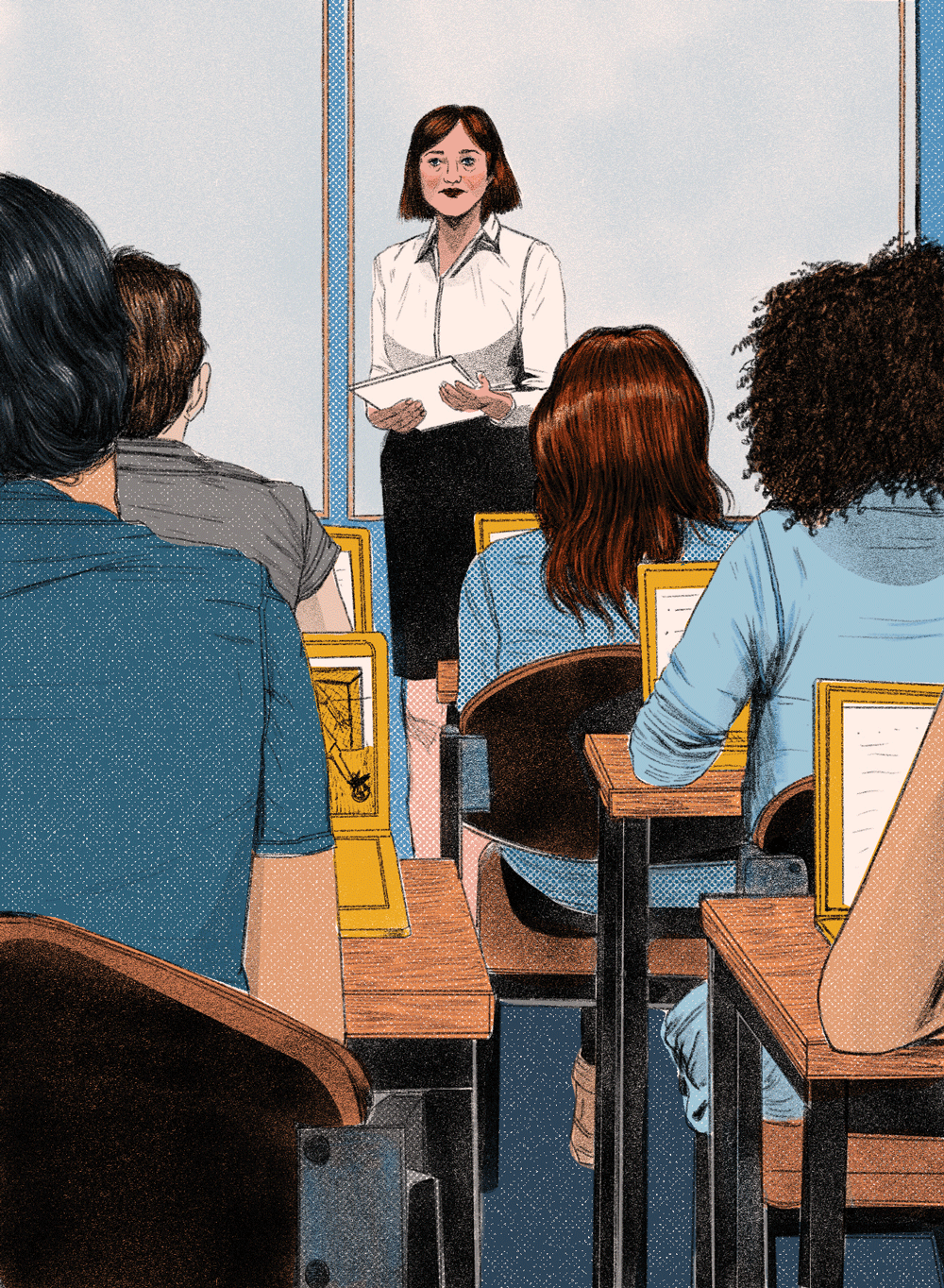
How about a break? UVA offered students a hiatus over the summer, in the form of “tech sabbatical” courses requiring students to put away their phones and laptops as part of their coursework inside the classroom and to commit to screen-free hours outside of it.
Adema Ribic, an assistant professor of psychology, developed the course Neural Mechanisms of Behavior, focused on understanding high-level concepts in behavioral neuroscience.
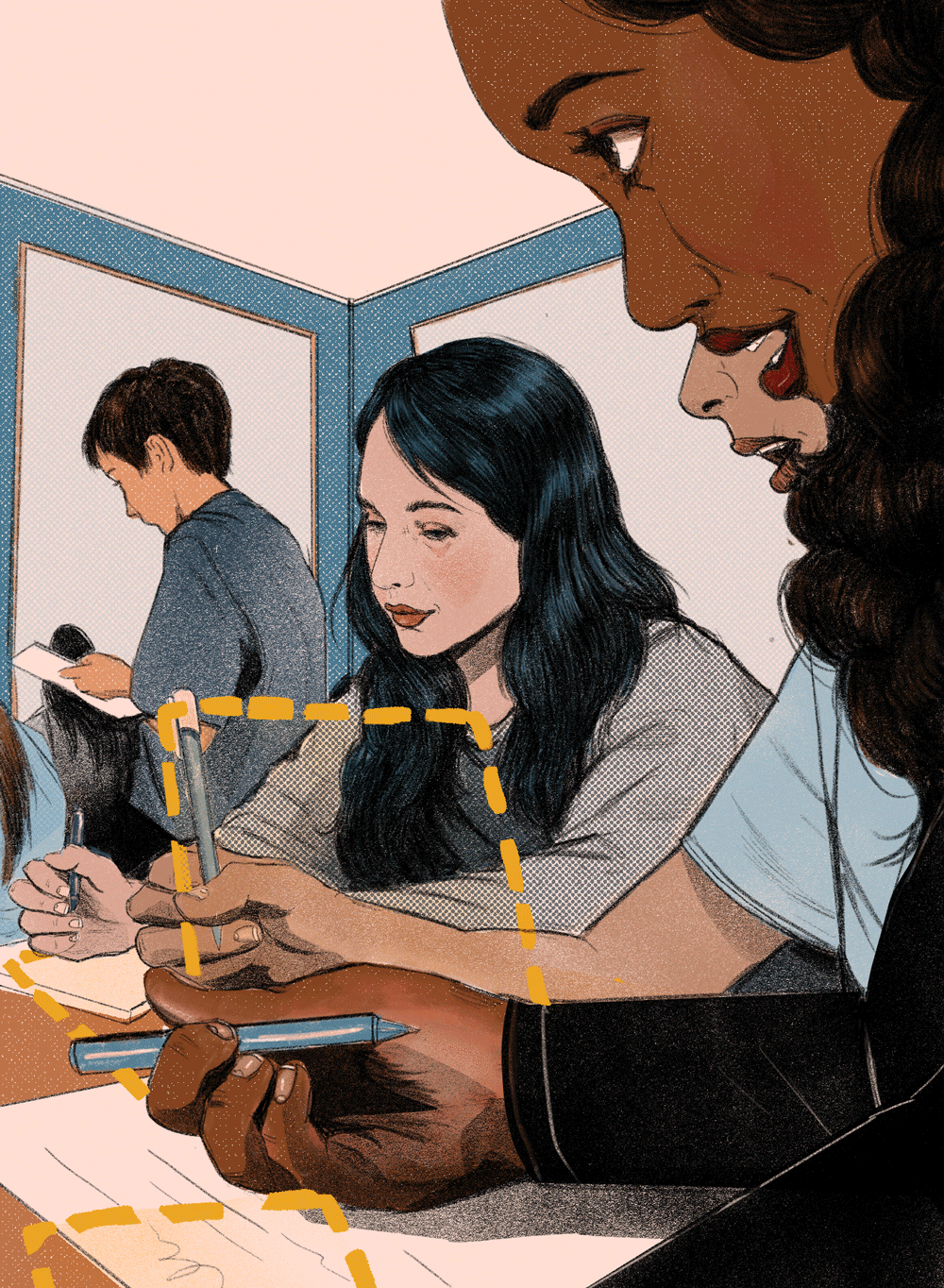
Instead of using computers, students were to conduct old-school experiments using analog props: “Glass prisms for discussing brain plasticity, stopwatches for discussing myelination, yarn for understanding sound localization,” per the course description.
In her tech sabbatical course, Studies in Modern and Contemporary Lit, Assistant Professor of English Adrienne Ghaly sought to address a problem seen in her field: a lack of reading stamina among students. It’s a concern among academics like her, whose primary genre is the novel.
“For many students, increasingly, reading very long stretches of text at a time is challenging,” Ghaly says.
Blame the constant pings and notifications that come with reading on a laptop or phone. Given that students must be online so much to complete their work, it’s unfair to fault them for reading distractedly, Ghaly says.
For John T. Casteen IV (Col class of ’93), his course, The Contemporary Essay, is a continuation of his practice of keeping devices out of his classrooms.
Casteen is not anti-tech, he says. But he discovered while teaching during the Semester at Sea program, when an internet connection was unreliable, that unplugging elevated the experience.
“What I noticed is that students were paying more attention to one another. The class discussions got better. There were fewer conversations where they would ask me a question and I would answer it. They would ask another student a question about something that student had said. So a lot of the learning became more lateral, which is what anybody wants out of a seminar.”
The tech sabbatical courses are intended to show students other ways to experience college, he says.
“It’s meant to offer something they didn’t know college could give them, which is: You can decide to disengage.”