Charles Dickens in Love
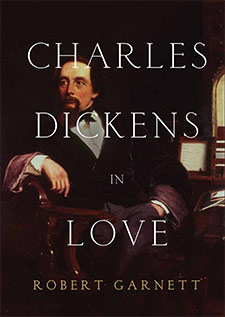
Robert Garnett (Col class of ’76) had written and read plenty about Charles Dickens in academic journals throughout his career as an English professor. But he found very little had been written about Dickens’s fascination with three women: Maria Beadnell, Dickens’s first love; Mary Scott Hogarth, his sister-in-law who died at an early age; and Ellen Ternan, his mistress. Garnett thought how those women impacted Dickens’s stories was an angle that deserved more attention – and that it might interest an audience far beyond the ivory tower. His new book, Charles Dickens in Love is the result.
Excerpt
“. . . after stating that there were fourteen mourners at Dickens’s funeral, The Times named only thirteen.
Who was the mysterious fourteenth, silently omitted?
Surely none other than his mistress Ellen Ternan—the privacy dictated by Dickens’s will allowed her to attend his funeral inconspicuously. In his death, as in his life, she was an essential but shadowy presence.
Yet how attentively did she listen at the graveside as “the service was most impressively read by the Dean”? Thirty-one years old, she had been virtually widowed. Looking back on her dozen years with Dickens, reflecting on her suddenly altered situation, musing on the next chapter of her life—she had much to occupy her thoughts.
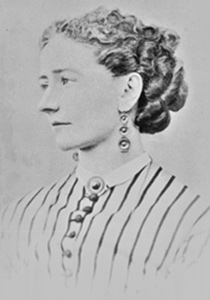
Eventually Ellen married, and had a son and daughter. Many years later, her daughter-in-law testified that she was “a most devoted wife and mother and a charming personality.” She survived Dickens by more than four decades, dying on the eve of the First World War. While his bones lie beneath Westminster Abbey pavement, sifting into dust as sightseers shuffle by overhead, Ellen’s ashes lie far off the tourist rounds, in Highland Road Cemetery in Southsea, near Portsmouth. Close in life, the Ternan sisters are close in death: Ellen’s beloved sisters Mia and Fanny share a grave just a few yards from hers. At the end of their lives, Ellen and Fanny had lived together in Southsea. Ellen’s grave is scarcely two miles from the terrace house in Portsmouth where Dickens had been born a century before her death; in the house, now a museum, is the couch on which he died at Gad’s Hill.
By a curious coincidence or mysterious providence, Maria Beadnell had also moved to Southsea with her clergyman husband, and died there in 1886. She too is buried in Highland Road Cemetery; so that the first and last women Dickens loved, who never met and probably never heard of each other, now lie only a few yards apart. In a quiet provincial cemetery, the beginning and end of his amorous pilgrimage have come together.
Rejecting “any monument, memorial, or testimonial whatever,” Dickens stated in his will that “I rest my claims to the remembrance of my country upon my published works.” But his novels are memorials, too, to the three women he loved well, if not always wisely—his muses and teachers in the school of love. No one taught him more; no one stirred his feelings more powerfully, or enriched his imagination more generously.