In Memoriam: Sheila Jackson Lee
Congresswoman was ‘arguing consistently for change’
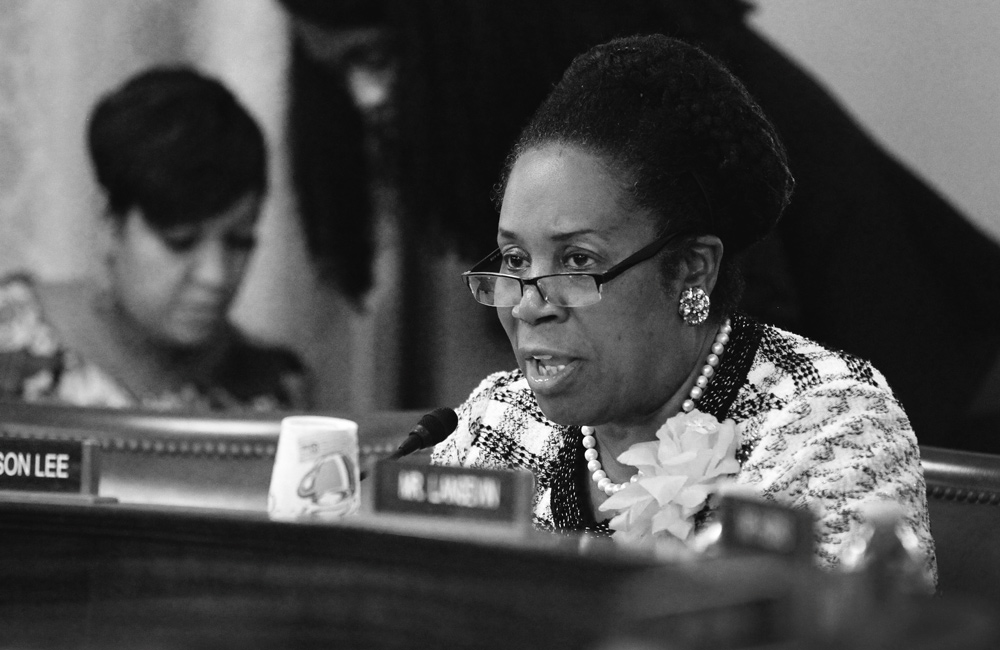
Visiting a gay bar during the 1980s AIDS epidemic came with plenty of stigma, but Sheila Jackson Lee (Law class of ’75) was undaunted. The longtime Democratic congresswoman from Houston spent her career speaking out about social justice and equity issues.
Jackson Lee, who was first elected to Congress in 1995, wasn’t worried about backlash from a visit like that, her daughter Erica Lee Carter said. Jackson Lee’s message to anyone who might object: “We’re not free until we’re all free,” Lee Carter said.
So as Lee Carter leafed through sympathy cards after her mother died this summer, one seemed emblematic of her long service. “I first met your mom in a gay bar in the ’80s,” the sender wrote. “She was a force of nature for civil right[s].”
Jackson Lee was running for a 16th term in Congress when she announced in June that she was in treatment for pancreatic cancer. She died July 19 at age 74 after being immersed in civic activities in Houston for decades—as a lawyer, judge, city council member and ultimately U.S. representative.
“The presence, from a family side, could be frustrating sometimes,” Lee Carter said of her mother’s constant community involvement. “But I see the circles where that really meant something to everybody she was present for.”
Growing up in the Jamaica neighborhood of Queens, New York, Jackson Lee challenged the status quo from a young age. After her high school guidance counselor told her she’d make a great secretary, she refused to learn to type, Lee Carter said. “My dad has a lot of stories of paying people to type or typing her work.”
Instead, she helped make history at top universities. In 1972, Jackson Lee was one of the first women to graduate with a degree from Yale. She then became part of the largest class of Black students to enter UVA Law School at the time. The 17 students formed a close-knit group built on a shared experience of growing up during segregation and coming of age during the Civil Rights Movement.
Early on it was clear “this girl was going somewhere,” remembered classmate and friend Delores Boyd (Law class of ’75). Jackson Lee was confident and outspoken, often talking about Shirley Chisholm, the first Black woman to be elected to Congress and, in 1972, the first woman and African American to campaign for a nomination for president.
“Sheila had opinions and didn’t mind articulating them,” said Boyd, a retired U.S. magistrate judge for the U.S. District Court for the Middle District of Alabama.
When friends learned that Jackson Lee was running for office, “It was like, ‘Oh, Sheila’s running for office,’ and the undercurrent was, ‘just like we knew she would,’” said John Charles Thomas (Col class of ’72, Law class of ’75), the first Black justice on the Supreme Court of Virginia.
After her death, Democratic leaders remembered Jackson Lee. President Joe Biden called her “a towering figure.” Vice President Kamala Harris called her “a tenacious advocate for justice.” They both credited her for her role in reauthorizing the Violence Against Women Act and making Juneteenth a federal holiday.
Jackson Lee had a lighter side, Lee Carter said. She loved to dance and listen to R&B and gospel music. But “bulldog” and “intense” are good words to describe her too, her daughter said.
Jackson Lee would sometimes take flak for being too vocal. She told The New York Times it was just her way of ensuring that her constituents’ concerns were heard. “I don’t have wealth to write a check,” she said. “But maybe I can be a voice arguing consistently for change.”
Jackson Lee is survived by her husband, Elwyn Lee; Lee Carter; a son; and two grandchildren.
—Sarah Lindenfeld Hall