In Memoriam: James Randolph Roebuck Jr.
Calm amid the storming of Carr’s Hill
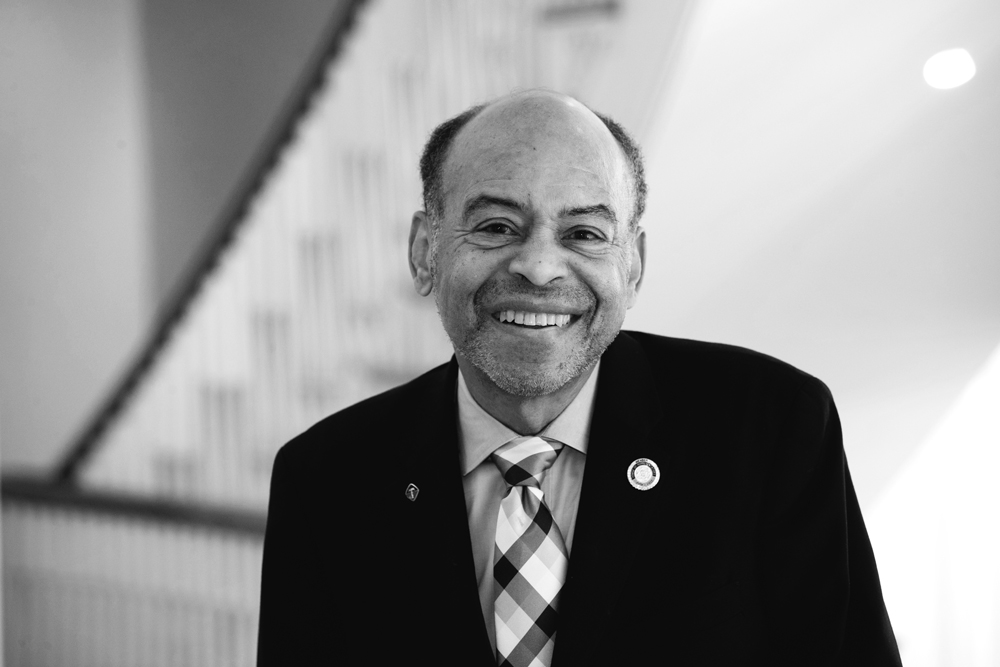
James Randolph Roebuck Jr. (Grad class of ’69, class of ’77), the University of Virginia Student Council’s first Black president, who helped moderate the antiwar turmoil of May Days 1970 and went on to a 35-year career in the Pennsylvania legislature, died in May. He was 79.
The last Student Council president selected by the other representatives—he passed reforms that opened the office to direct student elections—Roebuck headed student government for just one semester. But not just any semester.
Rising fervor on college campuses against the Vietnam War boiled over on May 4, 1970, when Ohio National Guardsmen opened deadly fire on unarmed Kent State University protestors. At UVA the next day, the Student Council endorsed calls for a student strike. Roebuck cast the tie-breaking vote.
In an iconic moment on the steps of then-Alderman Library, he presented President Edgar F. Shannon Jr. with strike ultimatums. A Ph.D. candidate studying diplomacy, Roebuck recited them with trademark calm and in the reassuring style of a moribund tradition, coat and tie.
The week’s events, known as May Days, continually thrust the two presidents together. They led the Old Cabell Hall memorial service for Kent State’s fallen. When the Chicago Seven’s Jerry Rubin and lawyer William Kunstler incited a University Hall crowd to storm Carr’s Hill, Roebuck raced ahead and huddled with Shannon inside the residence. After Shannon’s career-defining speech denouncing the war, in which he urged students to sign a letter to Virginia’s U.S. senators, Roebuck headed the delegation that delivered it to them.
“We didn’t always agree,” Shannon said later, “but we had confidence in each other as human beings.”
“Both of them were under tremendous pressure in different ways,” says Kevin Mannix (Col class of ’71, Law class of ’74), Roebuck’s vice president and self-described wingman that night. “I always saw Jim Roebuck as someone who was trying real hard to fulfill his role as a Student Council president but also be a reasonable participant in the process.”
Arthur H. “Bud” Ogle (Grad class of ’71), the more confrontational predecessor student president, remembers the personal strain Roebuck endured: “He was a very gentle person who did not like to have fights.”
The Philadelphia native did his undergraduate work at the historically Black Virginia Union University, where he also served as Student Council president. Roebuck’s first taste of activism came freshman year. In an oral history, he told of how Virginia Union students in 1963 crowded ticket lines at whites-only Richmond movie theaters. Knowing they would be refused, they ensured that the businesses’ favored patrons experienced some frustration in the queues themselves.
Roebuck earned his doctorate in history in 1977 and taught at Drexel University for six years. When Drexel denied him tenure, he contested it in the federal courts, then moved on to focus on politics.
In 1985, Roebuck won a special election to the Pennsylvania General Assembly, where he later became the Democratic Party chair of the Education Committee and longtime leader of the Black Caucus. As at UVA, he earned a reputation for seeking consensus. In 2020, Roebuck, then 75, lost to a much younger, more liberal primary challenger.
In the oral history, recorded in 1994, Roebuck reflected on his time at UVA, when calls for integration, coeducation and opposing the Vietnam War all converged. “I would like to believe I was … part of a group of individuals … who were committed to making change at Virginia,” he said. “We tried to help the University see that those things were right to do.”
—Richard Gard