In Memoriam: Eli Watson Tullis
New Orleans cotton trader shaped Jefferson Scholars program
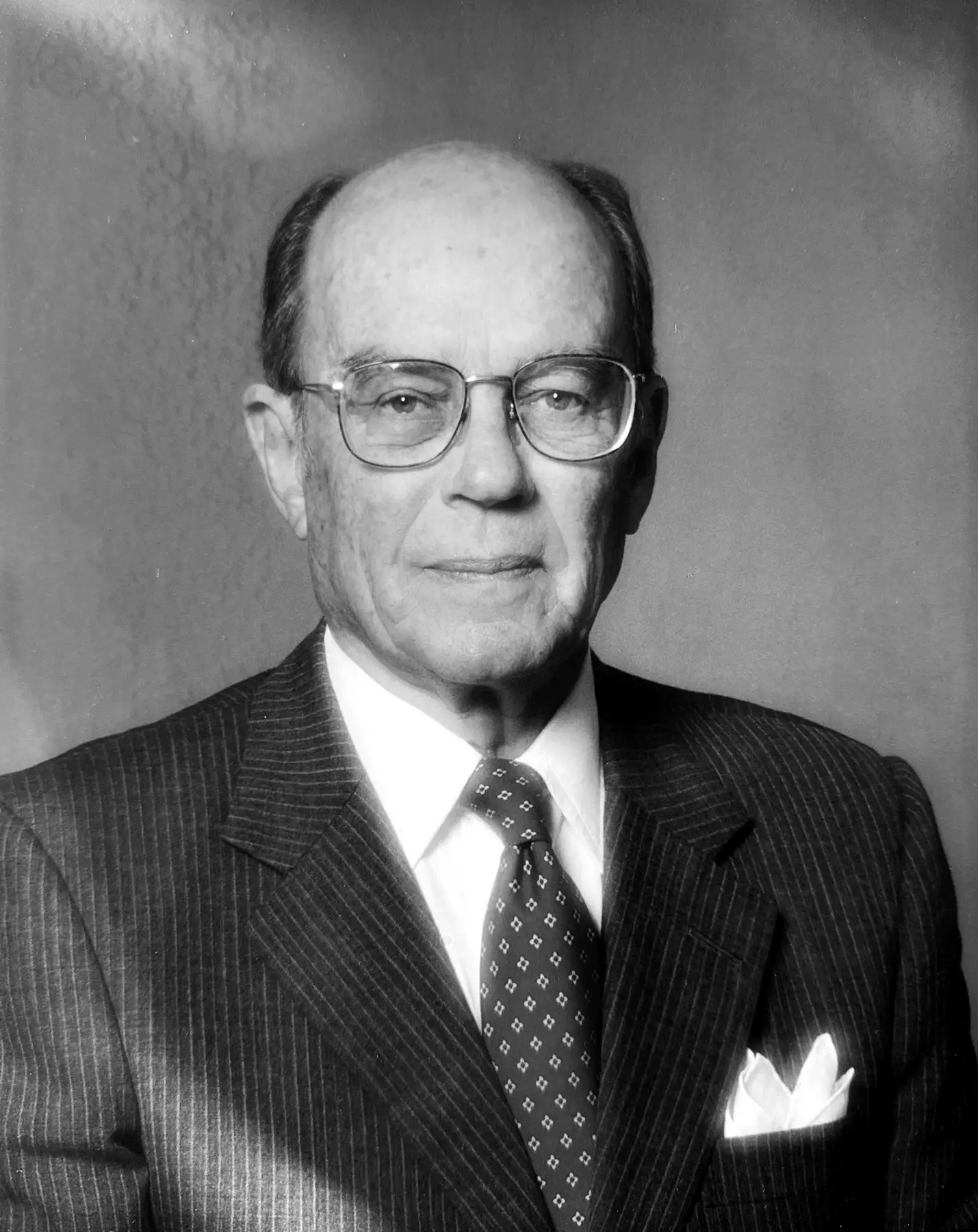
Legendary cotton trader Eli Tullis (Col class of ’51) made his bones betting on the future, and in the 1980s he spotted a transformational idea at the University of Virginia.
Tullis, who died Sept. 30 at age 96, was among a small group of alumni who saw enormous promise in a fledgling merit-based scholarship program called Jefferson Scholars, designed to lure top students who might otherwise choose elite universities such as Harvard or Yale. Enrollment at UVA had surged between 1965 and 1980 as the university attracted large numbers of female and minority students for the first time, according to the Jefferson Scholars Foundation. Tullis believed the moment had arrived to propel Virginia into the upper echelons of American higher education.
The idea was bold, but the finances were shaky. When Jimmy Wright arrived as president of the foundation in 1985, the full-ride scholarship program was struggling to stay afloat.
“We needed to raise $500,000, which in 1985 was a ton of money, and Eli agreed to help do that,” Wright said.
A fierce competitor on the athletic field and the trading floor, Tullis set to work making personal appeals to potential donors. The money followed. Today, the Jefferson Scholars Program has awarded more than 1,000 scholarships to high-achieving students.
“Eli is a force of nature,” Wright said. “Once he decides something needs to happen, he’s not quitting until it does happen.”
When Tullis enrolled at UVA in 1947, he struggled with severe dyslexia, according to daughter Rachael Gambel. The headmaster at Woodberry Forest School in central Virginia, the all-boys boarding school Tullis attended, had seen his potential and made a direct appeal to UVA. He was admitted—and he thrived.
“I think at the heart of his love for Virginia was that they accepted him,” Gambel said.
After graduating with a degree in economics, Tullis began trading on the New Orleans Cotton Exchange for his father’s firm, Tullis, Craig & Bright. After the exchange closed in 1964, he worked as a commodity broker for E.F. Hutton and Kohlmeyer & Co. and became a well-known figure on the New York Cotton Exchange. He eventually started his own firm, Tullis Trading Co., Inc.
In 1976, Tullis hired UVA economics grad Paul Tudor Jones (Col class of ’76) and taught him the fundamentals of trading cotton futures. Tullis later fired Jones for falling asleep at his desk after a night out in New Orleans, an episode that the hedge fund billionaire recounted in a 2009 commencement address and described as pivotal to his success.
“I never would have achieved a fraction of what I did without him as a role model, mentor and teacher,” Jones said in a statement to Virginia Magazine in December.
By all accounts, Tullis’ life was large and consequential. But his work with the Jefferson Scholars Program ranked among his most meaningful accomplishments, Gambel said.
Over the years, Tullis and his wife of 48 years, Deborah Beaird Tullis, endowed two Jefferson Scholarships and served on numerous committees and boards for the foundation. Tullis also served on the Alumni Association Board of Managers and as its president.
As a student, Tullis played varsity basketball and tennis and was a member of St. Anthony’s Hall fraternity and the Z Society, as well as other clubs and committees.
“He felt you were supposed to excel and give back at every level because you had the privilege of being there,” said daughter D. Ashbrooke Tullis (Col class of ’89).
Tullis was also an avid golfer, tennis player and dancer, and he remained active in New Orleans civic life as a member of the Rex Organization, among other groups. In 1997, he reigned as King of Carnival, a rare Mardi Gras honor.
Tullis was preceded in death by his first two wives, Mary Ferrell “Molly” Reily and Deborah Tullis.
He is survived by his third wife, Judith T. Tullis; six children; a stepson; 19 grandchildren; 15 great-grandchildren; and two great-great-grandchildren.
—Martha Carr