The Class of the Classroom
From the beginning, teaching has been part of UVA’s DNA. Here are some of your favorite professors through the years.
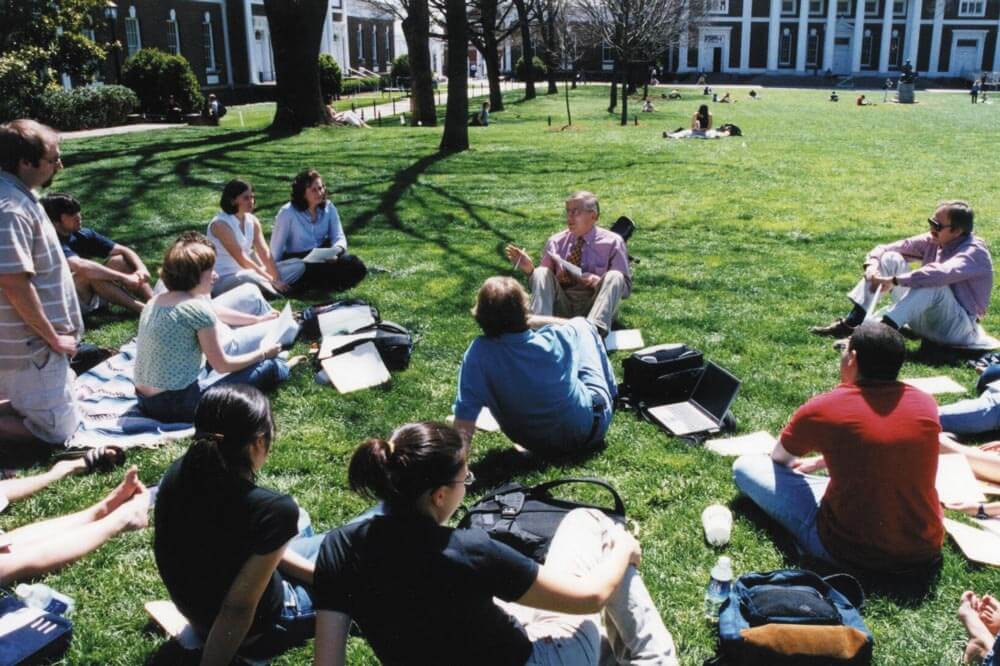
We asked, and you answered. Boy, did you proud ’Hoos answer.
For this issue, we invited alumni to tell us about their favorite professors. Several hundred of you responded via email, suggesting hundreds of professors (often several professors in one response).
Some of the emails were simple memories: “Amazing and captivating lectures.” Others were heartfelt sentiments about women and men who were brilliant and who loved teaching, yes, but who also instilled a desire to make an impact on the world.
Again and again, certain themes surfaced: Some alumni told stories of how one professor influenced their entire career. Others thanked their mentors for sharing their incredible scholarship and fostering a love of learning. And repeatedly, alumni spoke of instructors’ warmth, kindness and personal interest—often at what became a critical juncture in their lives.
Elias Naegele (Col class of ’15) has fond memories of how Jon Lendon, professor of history, both enraptured and appreciated his students. Naegele once wrote an essay in the form of an epic poem with Lendon as a character. “I’ll never forget that he chased me down after I turned in my final exam to thank me for being in his class.”
Victoria Kelley (Col class of ’15) learned from American Studies professor Carmenita Higginbotham how to use her analytical thinking both inside and outside the classroom. As a result, she said, Higginbotham “has continued to influence me to be greater than I am.”
Similarly, Sally Drayer (Col class of ’73, Grad class of ’76)—among the first women to graduate from the College of Arts and Sciences—thanked George Black, in the drama department. One of the founding directors of the Heritage Repertory Theatre, Black cast Drayer as the lead in her first play. “Words fail to express,” Drayer said, “how much his guidance and confidence in my talents as an actress lifted me up into the person I became.”
Dr. Chris Mitchell (Col class of ’04) praised chemistry professor W. Dean Harman for his ability to make students love the intricacies of science. “He was the first teacher I had in my life that truly challenged me and forced me to work hard to become a better student,” said Mitchell, now an Army emergency physician. “I am eternally grateful to him and attribute much of my success in medical school and as a physician to his efforts.”
Kelly Organski (Col class of ’13) was a member of the Cavalier Marching Band when she was sexually assaulted in the spring 2010 semester. She was ready to leave UVA and told William Pease, the band director. He believed her, but he also encouraged her not to transfer because he’d seen her remarkable growth at UVA. He then offered her a job in the front office so that she would always have a “place to go without judgment and to feel safe.”
That support allowed Organski to become a student activist against sexual assault. She is now assistant director for regional advancement at the College of William and Mary. “I would not have graduated from the University without him,” Organski said. “He was like a father figure and he continues to be so today.”
Over the decades, faculty members like these have mentored students, studied diligently to be the best in their field and, often, been recognized nationally and internationally. Together, these instructors past and current have built an enriching culture—one that Thomas Jefferson desired when he established his University 200 years ago. And one that will enrich future students for generations to come.
Read on to meet a few more of the professors who you told us have shaped both your learning and your life.
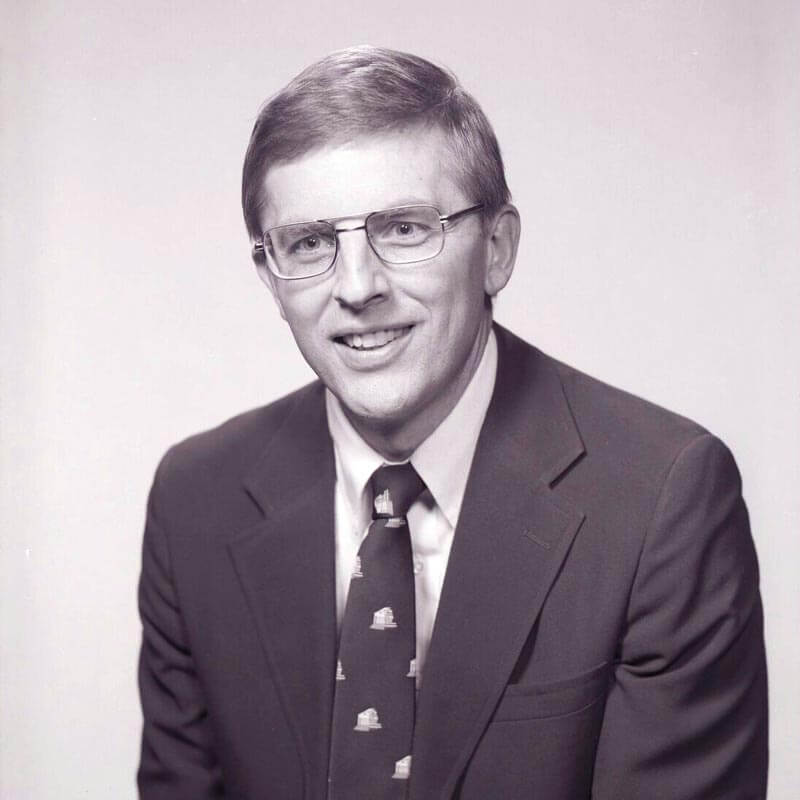
Kenneth Elzinga, the Robert C. Taylor Professor of Economics, received the highest number of responses from students—both current students and those who studied under him as far back as the 1960s.
His students sent in long emails of acclaim about his teaching, his grasp of subject matter and his warm personality. Elzinga was the first recipient of the Cavaliers’ Distinguished Teaching Professorship. He also received the Alumni Association’s Distinguished Professor Award in 1979 and the Thomas Jefferson Award in 1992.
A few alumni recalled how he invited students to his home for Thanksgiving dinner if they were orphaned during the holiday. Chris Bolster (Col class of ’86) said Elzinga’s concern for student success was a sign that teaching was more of a calling than a job. “He was very generous in spirit,” Bolster said. “He stayed as long as required to meet with every student waiting outside of his office door.”
Randall Hartman (Com class of ’80) praised his intellect, creativity and passion, calling him “the complete package, a true servant-leader.”
“Had I been able to handle the high-level math,” Hartman added, “I might have majored in economics as a result of his influence. I took more from his class that I can apply to daily life than any other.”
When he arrived at UVA in 1967, Elzinga discovered a nurturing culture of teaching. Other professors gave him counsel, to help him avoid rookie mistakes. And he befriended senior professors outside his department—Henry Abraham, Ray Bice and Norman Graebner (each of whom came highly recommended by alumni)—who were giants to Elzinga and served as role models.
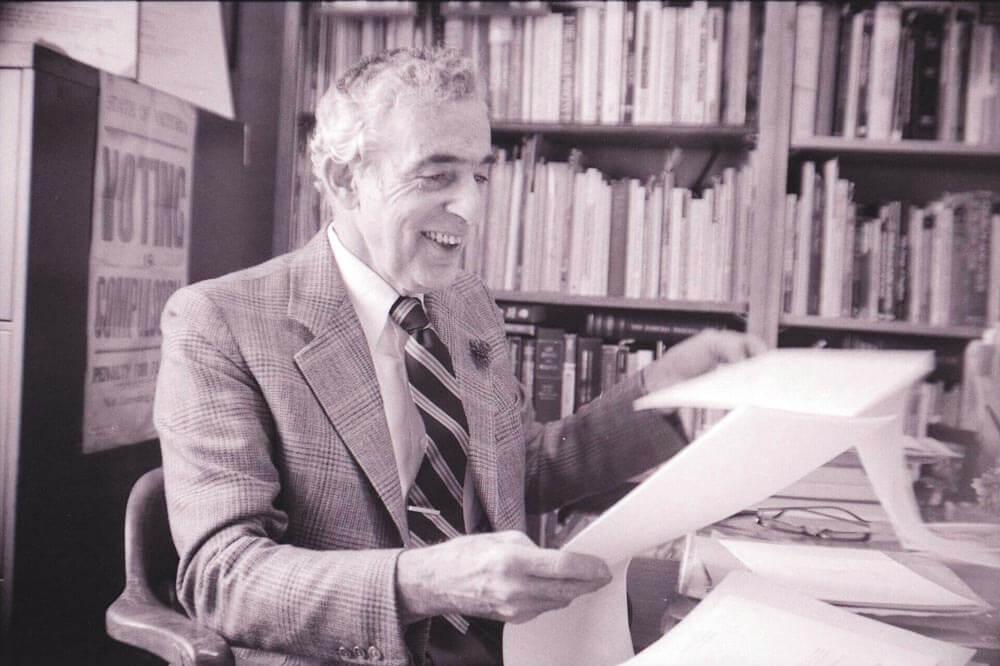
Henry Abraham, the James Hart Professor of Government Emeritus, retired from full-time teaching in 1997 after 23 years at the University of Pennsylvania and then 25 years at UVA. Abraham is an authority on constitutional law, civil liberties and the U.S. Supreme Court and served as a Fulbright Scholar. He was awarded UVA’s most prestigious honor in 1983, the Thomas Jefferson Award, and the School of Law named an annual distinguished lecture in his honor.
Devotees of the professor call themselves the “Tribe of Abraham.” And he is also respected for his personal story: As a Jewish teen, Abraham escaped to the United States from Nazi Germany in 1937 and built a life studying civil liberty in society.
“His constitutional law class was fascinating, and his mastery of the topic was legendary,” remembered Susan Lagon (Col class of ’79, Grad class of ’81). “His lectures were inspiring. On a personal level, Mr. Abraham’s quick wit was exceeded only by his charm. Every day he wore a different fresh flower on his lapel.
“After I wrote my M.A. thesis under his direction, he agreed to direct my dissertation even though I was at a different university by then. Next to my parents, there’s no one who’s had a more profound impact on my life.”
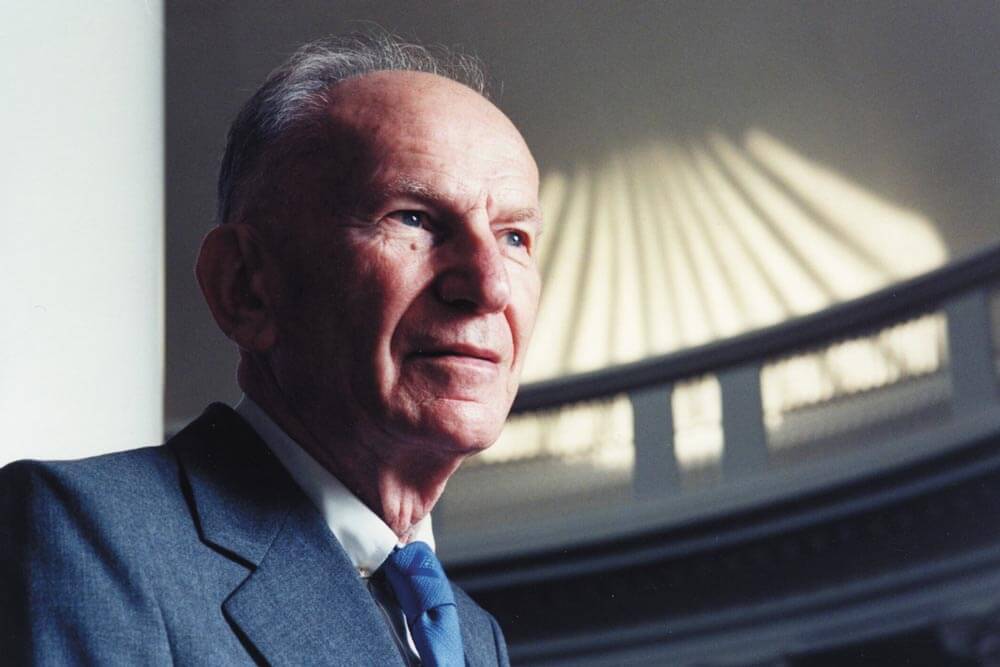
Raymond Bice Jr. died in 2012 at age 93. During his 50 years at UVA, he taught psychology and also held several administrative positions (including associate dean of the College and University history officer), and was recognized in 1978 with the Thomas Jefferson Award. He was famous for his “Bice devices”—handmade inventions that illustrated his lessons.
His classes typically had a waiting list, and students were known to send him letters and gifts in hopes he would squeeze them in. Wesley Steen (Col class of ’68) took Bice’s introductory psychology class in the early 1960s. “Even though I became a lawyer not a psychologist,” Steen wrote, “I used what I learned in that one introductory course for my entire career.”
Bice taught that class at 8 a.m. on Tuesdays, Thursdays and Saturdays, Steen remembered. On “Big Weekends” when women came to town for football games or parties, fraternities sometimes sent pledges to Bice’s class by 6 a.m. to reserve seats for the men and their dates.
It wasn’t easy to get up early on Saturday after a night of drinking, Steen said, “but we did it, dressed in coats and ties, and went to an 8 a.m. class with dates! He was that good.”
Charles Julian Bishko, who died in 2002, taught at UVA for almost 40 years and was admired for his scholarship on the histories of Spain and Portugal. He had an international following: In 1986, Bishko received one of Spain’s highest honors, the Order of Isabel la Catolica. Bishko was also a Fellow of the Medieval Academy of America and an elected member of the Spanish Royal Academy of History. When he retired from UVA in 1977, he received a special tribute from the Spanish Embassy in Washington, D.C.
“I always looked forward to Mr. Bishko’s classes in medieval history,” wrote Oscar Aylor (Col class of ’62). “What on the surface seems like a very dry subject became both entertaining and informative. …
“I will never forget a class where he was talking about the Crusades and the growth of Islam in the Middle East. This was when we knew very little about this ancient religion. He took off his jacket, climbed up on his desk, creating a homemade minaret, and gave the Muslim call to prayer from start to finish. He was always very interested in his students, and his door was always open. He loved his subject matter, and he loved sharing it.”
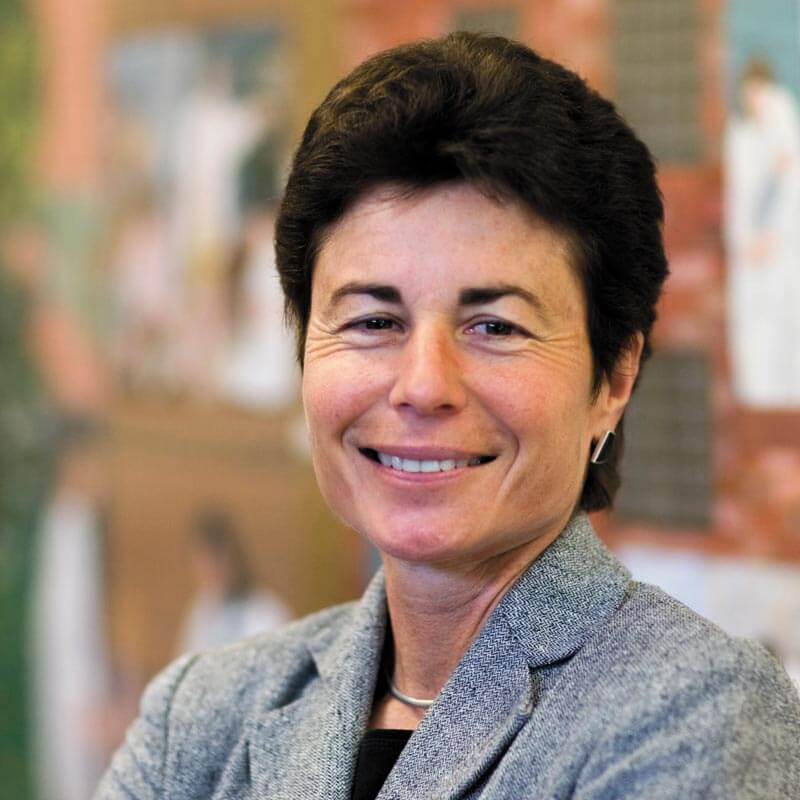
Valentina Brashers (Med class of ’82, Res class of ’85) is a professor of nursing emerita and founder of the ASPIRE center, which trains nursing students to reduce medical errors and improve patient services and staff engagement. “Her incredible love, compassion and immense knowledge of pathophysiology/immunology inspired me and made me thirst for more,” wrote Jennifer Thomas (Nurs class of ’11). “The education I received in her lecture hall still guides my clinical practice even seven years after graduating!”
Ming-Jer Chen is the Leslie E. Grayson Professor of Business Administration. He is the author of Inside Chinese Business: A Guide for Managers Worldwide, among other publications, and is considered an authority in East-West dialogue. As such, he often serves as a keynote speaker at various international symposia.
Ramon Serrallonga met Chen as a foreign exchange student at Darden in 2016. And he experienced Chen’s passion for East-West understanding firsthand: When Serrallonga became engaged to a fellow MBA student who is Taiwanese, like Chen, he told the professor. Chen immediately invited Serrallonga to sit in on his East Meets West course—to better help Serrallonga prepare for the cross-cultural differences of the relationship.
“Professor Chen was just special,” Serrallonga said. “Knowledge, plus wisdom, plus life experience, plus critical thinking, plus passion for teaching. … I owe him a lot for the world citizen I am right now.”
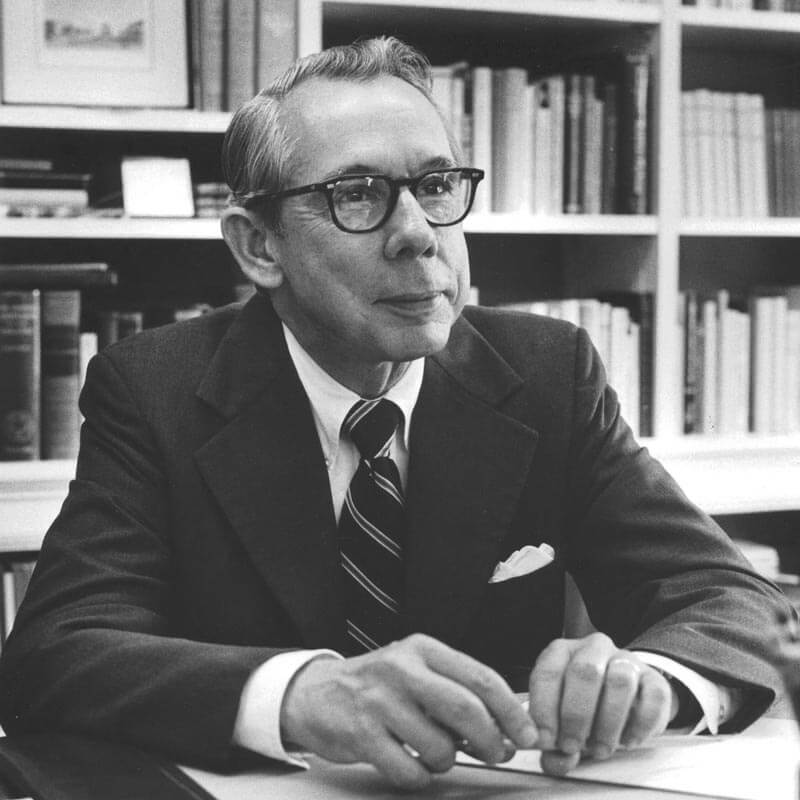
Irby Bruce Cauthen Jr. (Grad class of ’42, class of ’51) was a professor of English known for his classes on John Milton and William Shakespeare. He died in 1994. During his time at UVA, he received the Thomas Jefferson Award in 1977 among other honors and served as dean of the College of Arts and Sciences from 1962 to 1978.
“He was a great teacher, a true ‘gentleman and scholar,’ and had a wry sense of humor,” wrote James Williams (Col class of ’75). “He’d quote a few sentences from some critic, make a rueful smile, and then say, ‘Wish I’d said that.’”
But there was something more to the English professor’s popularity. Lester Wilson (Col class of ’70) took Cauthen’s Shakespeare course in 1968 and still remembers the experience fondly. “How can one choose among Mr. Cauthen, Norman Graebner, and Kenneth Elzinga? Impossible—but I chose Irby Cauthen because he steeped his students in the glorious passages of William Shakespeare—and because we loved him.”
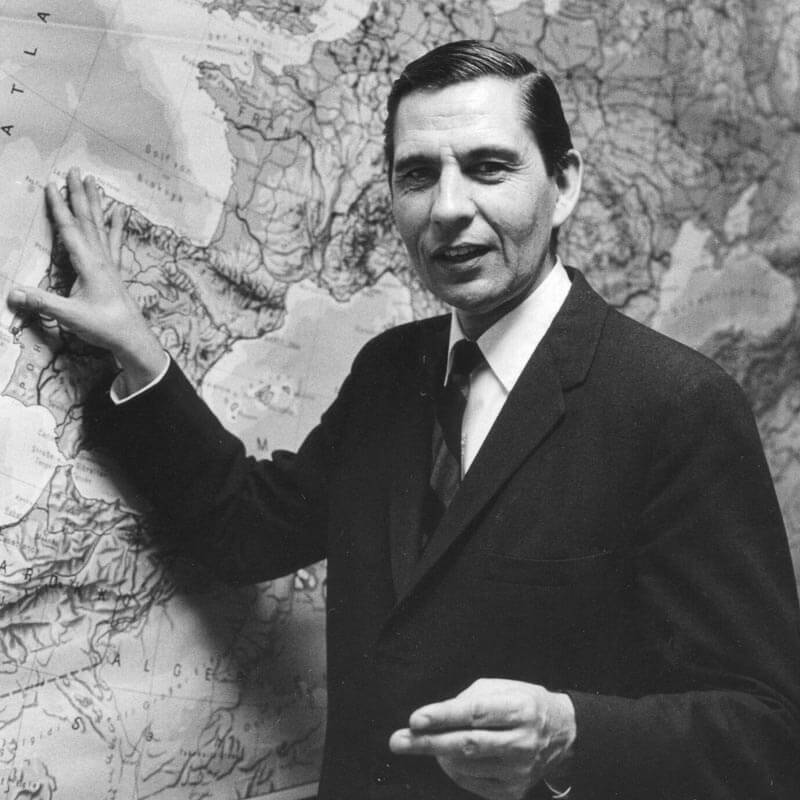
Norman Graebner, who died in 2010 at age 94, was known for his scholarship on American diplomacy. He joined the University in 1967 as the Edward R. Stettinius Professor of Modern American History and became the Randolph P. Compton Professor in 1982, then receiving the Thomas Jefferson Award in 1985.
Students clamored to get into his classes, where he was known to wear wigs and costumes during lessons and convinced students who swore they hated history not to miss a class. He was also referred to as “Stormin’ Norman Graebner” for his electrifying lectures. “He spoke without any notes for the entire class period,” said Patti Fralix (Nurs class of ’74). “I was spellbound!”
“Professor Graebner inspired me (and so many others) with the story of America,” said Jim Mackay (Col class of ’83) “Who we have been, who we are, and who we strive to be.”
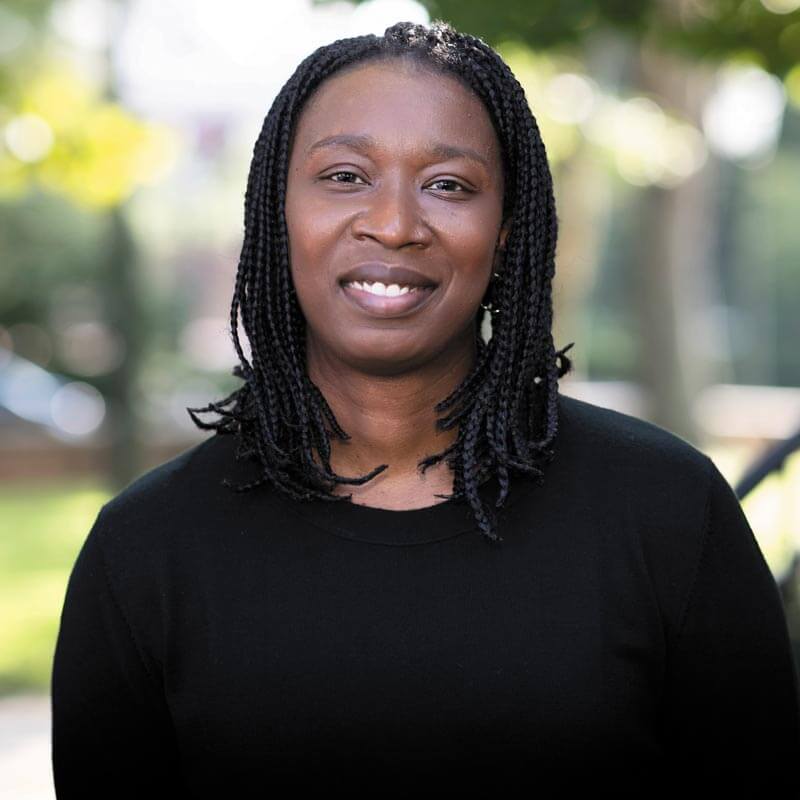
Claudrena Harold is professor of African American and African Studies and History. In addition to her teaching, she has written, produced and co-directed six short films that have been screened at international film festivals; and authored or co-written several books, including Charlottesville 2017: The Legacy of Race and Inequity.
According to Brittany Taylor (Col class of ’10), “Professor Harold has for over a decade been offering a thrilling and more honest view of history in her African-American studies classes.” Those classes create comfortable settings for students from all backgrounds to speak about their experiences.
“Additionally, she continues to share her knowledge in the wider community by leading discussions and panels aimed at offering Charlottesville, at large, those same alternate perspectives and insights. She is a true gem and her legacy at UVA is very real.”
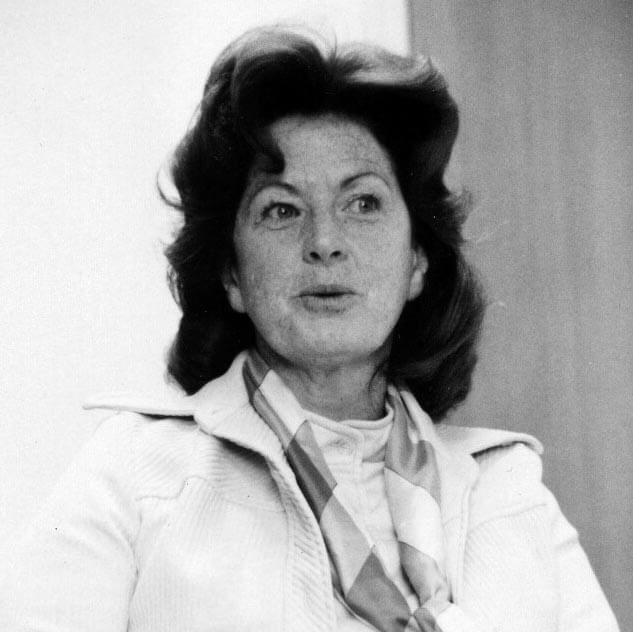
E. Mavis Hetherington joined the faculty in 1970 and served as the James M. Page Professor of Psychology beginning in 1976. She received the Thomas Jefferson Award in 1987 and retired as professor emerita in 1999. Hetherington was known for her work on child development in remarriage and divorce, on stress, and on childhood psychology. After leaving UVA, she started groundbreaking research on the influence of fathers on their children and on sex-role stereotyping in families.
“Dr. Hetherington held an amphitheater of students enthralled throughout every lecture,” said Mary Pat Ryan (Col class of ’76). “Her contributions to the field of psychology and to the UVA psychology department made her a ‘rock star’ to us psych majors. What I learned from her inspired me to pursue a career working in mental health with children and families.”
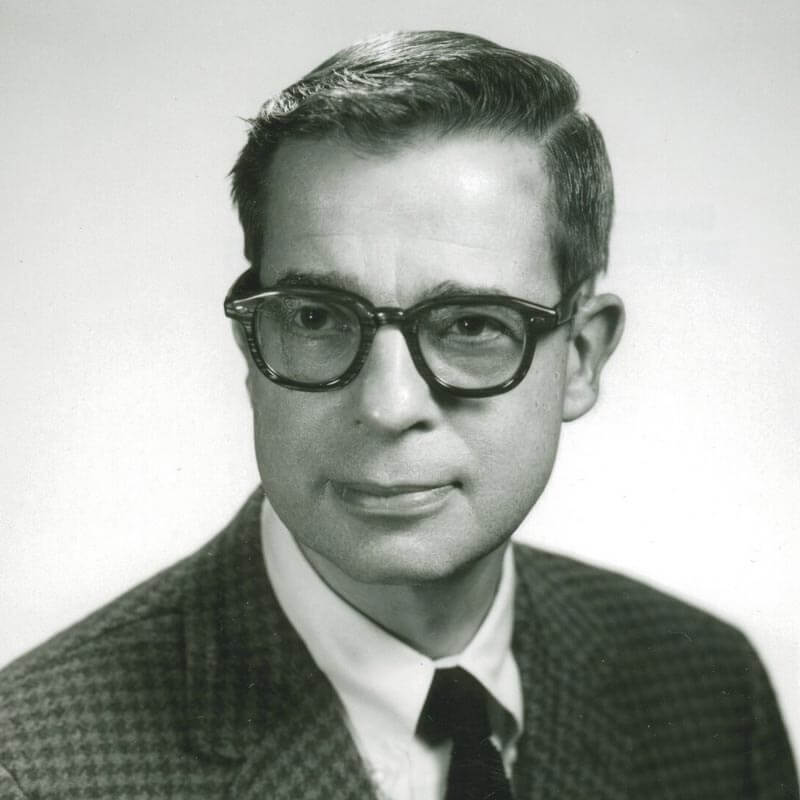
Ernest “Boots” Mead (Col class of ’40), a professor of music, taught his last liberal arts seminar a few months before his death in 2014 at age 95 (having “officially” retired in 1996). Mead himself studied at the University in the late 1930s, joining the faculty in 1953 and receiving the Thomas Jefferson Award in 1989. His close work with students was legendary. Mead created a popular fourth-year liberal arts seminar, and when he retired, hundreds of his students established an endowment in his name.
“I flunked my first course with him, and he called me into his office to say that he wanted me to take the class again,” remembered Charlie Pastorfield (Col class of ’75). “When I replied, ‘No way in hell,’ he said that he was aware that I was a musician and he felt like he had failed as a teacher. I took the class again, and totally got it the second time around. He was a beautiful human being.”
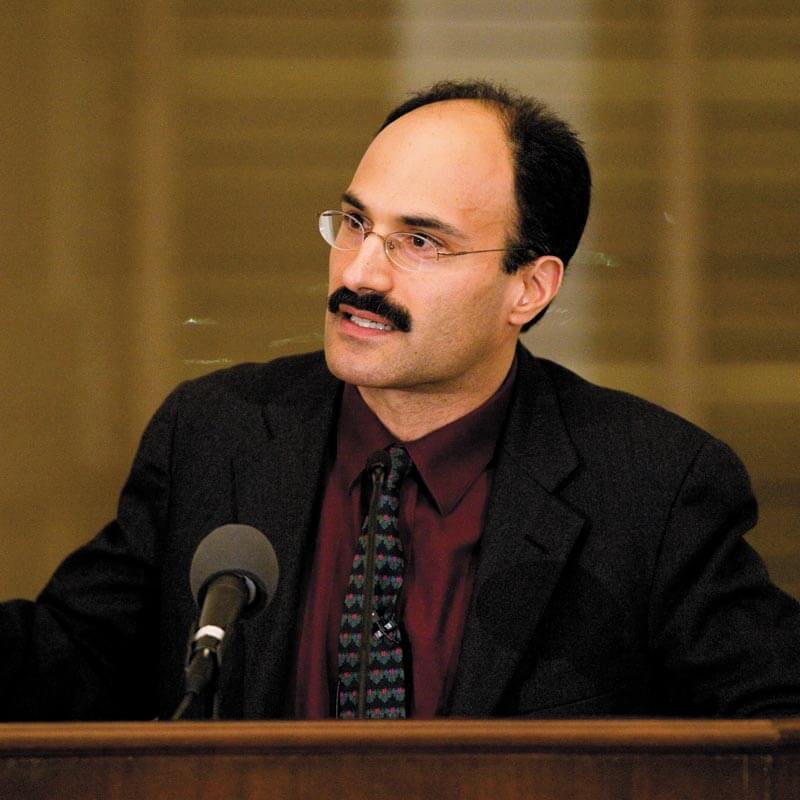
Jahan Ramazani (Col class of ’82) is the Edgar F. Shannon Professor in the Department of English. He is considered one of the world’s leading literary scholars and has taught at the University since 1988.
His late father, Ruhi, taught Iranian and Middle Eastern politics for 45 years at UVA and was also recommended as a favorite professor. Jahan Ramazani’s books have won honors, and he has collected numerous accolades for his teaching, including the Thomas Jefferson Award in 2011.
Kelsey Gehr (Col class of ’15) said that Ramazani “took the subject of contemporary poetry to a whole new level.”
“Not only was Professor R. a compelling speaker, but he found a way to make each student in the class feel heard and valued. … The pinnacle of the semester was when he invited us all to his home just outside of Grounds for tea and discussion during finals.”
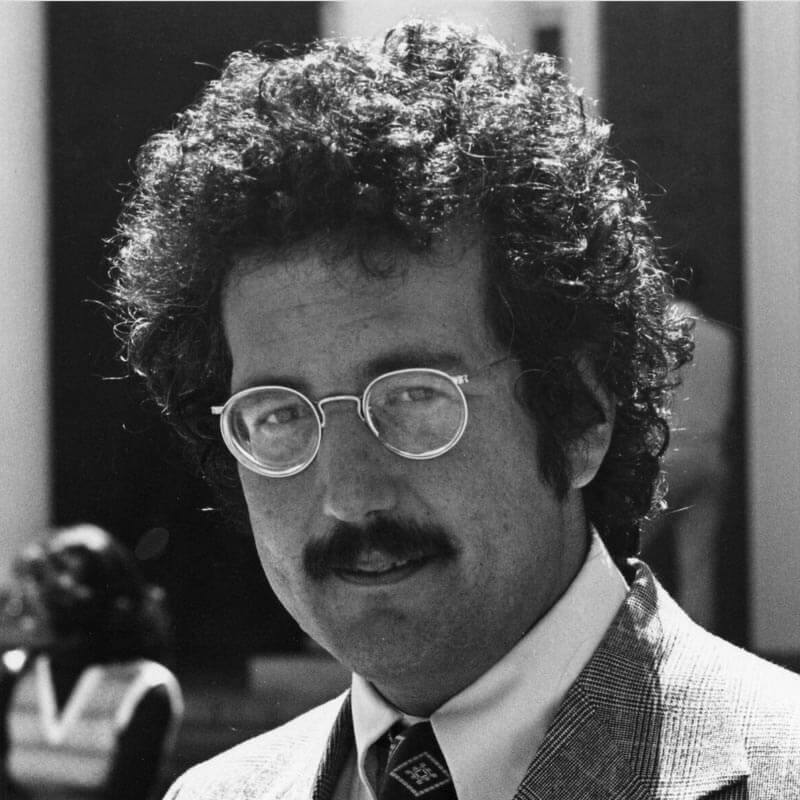
Charles Whitebread, who died in 2008, was an expert at criminal law, teaching at the law school from 1968 to 1981 and twice receiving the Distinguished Professor Award. As a keen observer of the U.S. Supreme Court, he produced a widely read annual booklet on the court’s decisions.
He also focused on the juvenile justice system—one of the first law professors to do so—and the need for juveniles to have the same rights as adults.
“Charlie Whitebread made the law, and our study of it, real: imminently relevant to our everyday participation in the world around us,” wrote Scott Reed (Law class of ’79).
“His Law and Society seminar, in which he selected students and assigned the reading of novels, plays, and other literature, opened my eyes to the law as so much more than a set of rules. The law is the ever-changing core of how we collectively have decided to live together.”
But Whitebread’s lectures were more than eye-opening. According to Dennis Klein (Grad class of ’78, Law class of ’81), the professor was also entertaining and witty. “Every class was like a Johnny Carson monologue.”
Who was your favorite professor, and why? If you haven’t already told us, please add your personal story online at uvamag.com/professor.
Award-Winning Professors
UVA faculty members excel at the craft of teaching, and it shows. The Alumni Association Distinguished Professor Award recognizes faculty with at least a decade at the University who are outstanding in the classroom and demonstrate a commitment to the success of their students. Those noted with an asterisk have also received an All-University Teaching Award, issued by the Office of the Executive Vice President and Provost. This award emphasizes excellence in teaching, with an additional consideration of research and service accomplishments.