Space Odyssey
Alumni who have “the right stuff”
Courtesy of NASA
When the space shuttle passes the 50-mile altitude mark, the rookies on board often break into cheers. Streaking across that invisible threshold, they have officially become astronauts. Only about 350 Americans have earned that designation since the first U.S. manned space flight in 1961. Such an elite corps must have a special something in common. Kathryn Thornton, one of eight UVA alumni to have left the planet, argues that they are “just regular people,” but astronauts share the kind of experience that often seems, to earthbound folks, closer to science fiction.
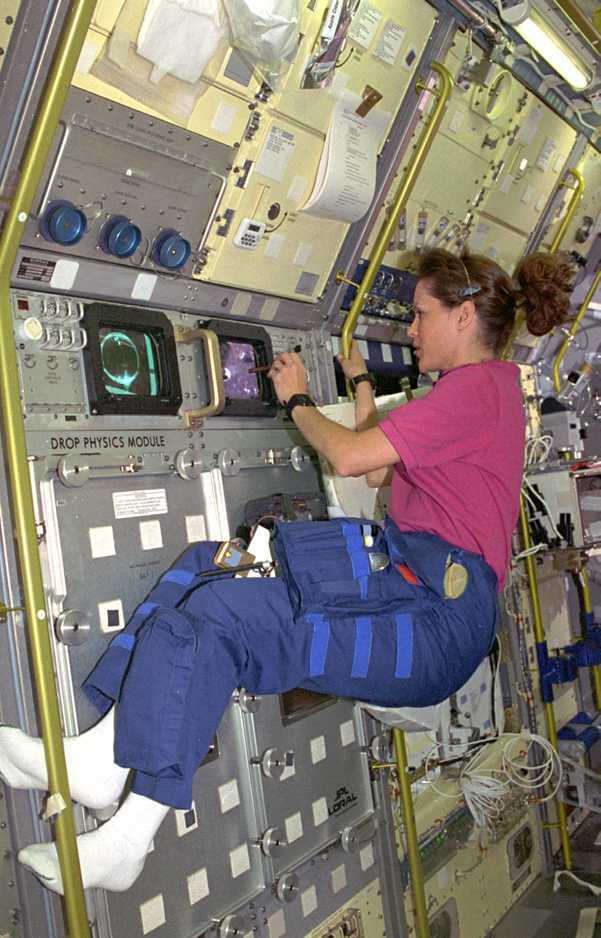
“It’s intense in that you know you have jobs to do and you have to get them done; the time is so precious, and you want everything to go right,” says Thornton (Grad class of ’79), whose 1993 mission entailed several space walks to repair the Hubble Space Telescope. “But the feeling of just being out there alone is really neat. A couple of times, they had trouble with the communications and I could only hear my space-walking partner. I couldn’t hear the ground, I couldn’t hear the guys in the orbiter, and I couldn’t hear the static you sometimes pick up over parts of the earth. So unless my partner was talking, I was in total silence, which was cool.”
There is no single or straight path to NASA. Karl Henize (Col class of ’47, Grad class of ’48), an astrophysicist and mountaineer, left a professorship at Northwestern University to join the Apollo astronaut corps in 1967. Patrick Forrester (Engr class of ’89) graduated from West Point with the sole ambition of following in his father’s steps as a career Army officer, becoming an experimental test pilot. Thomas Marshburn (Engr class of ’84) trained as an emergency room physician. Jeff Wisoff (Col class of ’80), an engineering professor at Rice University, was pursuing research in vacuum ultraviolet and high-intensity laser sources. Leland Melvin (Engr class of ’91), a chemistry major and star wide receiver at the University of Richmond, had a promising NFL career ahead of him. Thornton was working as a physicist for the U.S. Army Foreign Science and Technology Center. “I saw an announcement that they were selecting the next group,” she says. “I thought, ‘Why not?’”
NASA selects a new class of about 20 astronauts every few years, for which it receives some 5,000 applications. Forrester persisted for 11 years, through five rejections. Being a NASA employee does not guarantee an inside track; Marshburn, a flight surgeon and the medical operations lead for the International Space Station (ISS), was turned down three times.
Melvin says he had to be coaxed to apply. The first of several serendipitous encounters occurred in 1986, after a pulled hamstring derailed his bid to earn a spot on the Dallas Cowboys roster. He bumped into one of his old professors, who said, he recalls, “Why don’t you talk to Glenn Stoner at the University of Virginia in the materials science department. And I said, ‘Why would I do that?’ And he said, ‘Just go do it.’ And I listened.” Melvin took a short-term research job with Stoner and, when another hamstring injury during Cowboys training camp the following year ended his football career, he returned for graduate school.
On the day of the first lunar landing, July 20, 1969, most of UVA’s astronauts were awestruck youngsters glued to grainy images of Apollo 11 on their family’s black-and-white television. It was the era of the space race with the Soviet Union.
These days, cooperation is the winning strategy. The ISS, clearly visible in the night sky, represents the unified effort of five space agencies. Since 1998, shuttle missions have ferried payload after payload to this orbiting research outpost, considered one of the most complex scientific and technological endeavors ever undertaken.
As NASA’s work in space has changed over the years, so has the makeup of its astronaut corps. It is no longer newsworthy when a woman goes to space; 43 women have flown with NASA. And during Forrester’s mission in September, the media spotlight was drawn not to an astronaut but to a new piece of equipment—a specially modified treadmill, named after comedian Stephen Colbert (the Combined Operational Load Bearing External Resistance Treadmill, or COLBERT), to help the space station’s residents combat the physiological effects of living in space.
While each mission differs from the one before, the heart of astronaut training remains a study in contingencies. Every procedure and conceivable malfunction has been thought out in advance and simulated in lengthy training sessions. Every minute in orbit is planned in advance, repeatedly rehearsed, and put into a written chronological checklist that the crew must follow to the letter.
“The training is so mature and so good that by the time you get to space, you feel like you’ve already done the mission,” says Melvin.
In nearly every aspect, their instruction duplicates the space experience. They undergo underwater training in a neutral buoyancy lab at Johnson Space Center in Houston to simulate weightlessness, maneuvering around a full-scale mockup of the space station. A replica of the orbiter is used for onboard systems orientation and habitability training. Perhaps the least popular simulator is the KC-135 jet aircraft. Cruising at 26,000 feet over the Gulf of Mexico, the pilot does a sequence of parabolas, repeated up to 40 times. The violent rollercoaster movements have earned it the nickname “the vomit comet”; the tradeoff is 20 seconds of weightlessness.
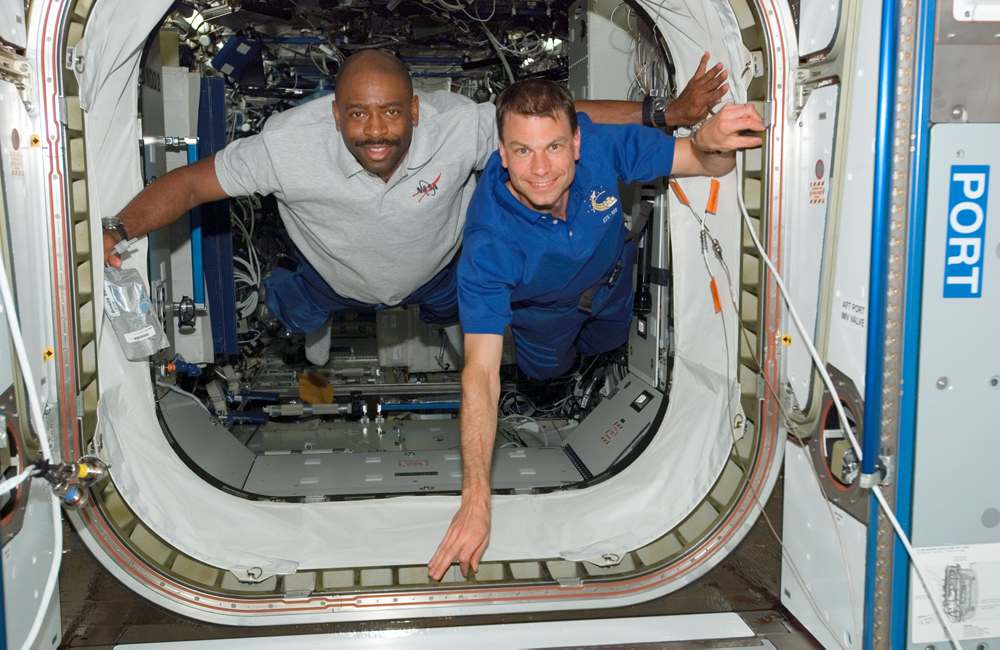
Their time in Houston also gives astronaut candidates the chance to gauge the personalities of their future crew members. “You get to know people really well in the year or more you train with them,” says Thornton, now a professor and associate dean in UVA’s School of Engineering and Applied Science. “We all have quirks that other people just have to work around, and you get to know that and what to expect from people. Everybody is motivated. There are no slackers.”
The camaraderie leads inevitably to inside jokes. Thornton was a member of NASA Group 10, a class of 17 who preferred to call themselves “The Maggots,” a reference borrowed from the comic strip Shoe. In a photo taken aboard the Discovery during her first mission, she and fellow classmate Sonny Carter are holding up a “Maggot on Board” placard to the camera and smiling broadly. The sign was stowed aboard all the rookie missions from that class.
For a period in the mid-1980s, NASA decided to give a few seats on its shuttle missions to private citizens. As chairman of the House Subcommittee on Space Science and Applications, now Sen. Bill Nelson (Law class of ’68) leapt at the invitation, later providing an insider’s account from an outsider’s wide-eyed perspective. Strapped in and awaiting countdown at the Kennedy Space Center on Jan. 12, 1986, Nelson likened the rocket to a huge resting animal. “I could hear its body sounds—the circulation of the fluids, the groaning and creaking of the skeleton, the slurping sounds of liquids and gases moving through the miles of pipes and tubes,” he writes in Mission: An American Congressman’s Voyage to Space. “The ship seemed to be breathing deeply, as a runner at the block inhales and exhales to prepare his lungs for the race.”
As the world watches, the last decision-maker before the shuttle engines and boosters ignite is Michael Leinbach (Arch class of ’76, Grad class of ’81), the launch director. Since 2000, he has conducted the countdown at the Kennedy Space Center, leading a band of 460 engineers and technicians who check and recheck shuttle systems before liftoff. If anything doesn’t look or feel right, it’s Leinbach’s job to scrub the launch. (“The launch director’s job is to not launch the space shuttle,” he says.)
Hurtling toward space, at two minutes and eight seconds the shuttle passes the sound barrier. Nelson recalls being puzzled at the lack of noise. “Then I remembered we were flying faster than the speed of sound and the exhaust of the main rocket engines was behind us.” Reaching orbital velocity, the main engines cut off and the intense G forces disappear, replaced just as suddenly by weightlessness.
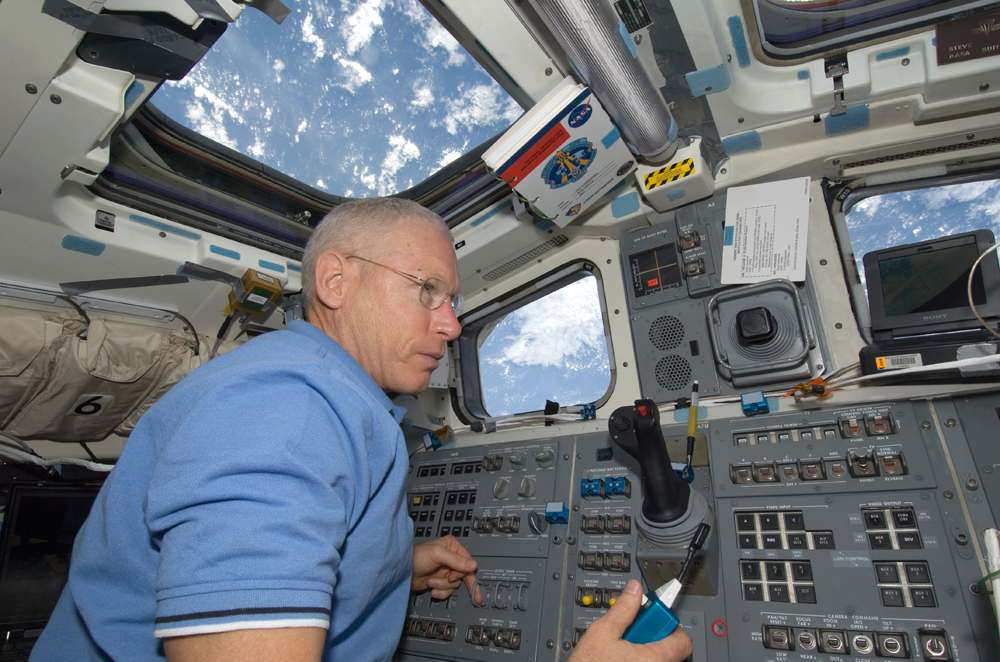
The orbiter, cruising at 17,500 mph, circles the earth 16 times a day. Brilliant sunrises and sunsets occur every hour and a half. If there are no clouds, you can see 1,000 miles inland, astronauts say, and the sprawl of lights from major cities. Without the interference of the earth’s atmosphere, one can see the Milky Way very clearly and the colors in the stars, which do not twinkle. But with time so critical and every step of the mission mapped out, there’s little opportunity to enjoy the view.
Perhaps that is why space walks—either despite or because of their enormous challenges—are considered the peak experience of any mission.
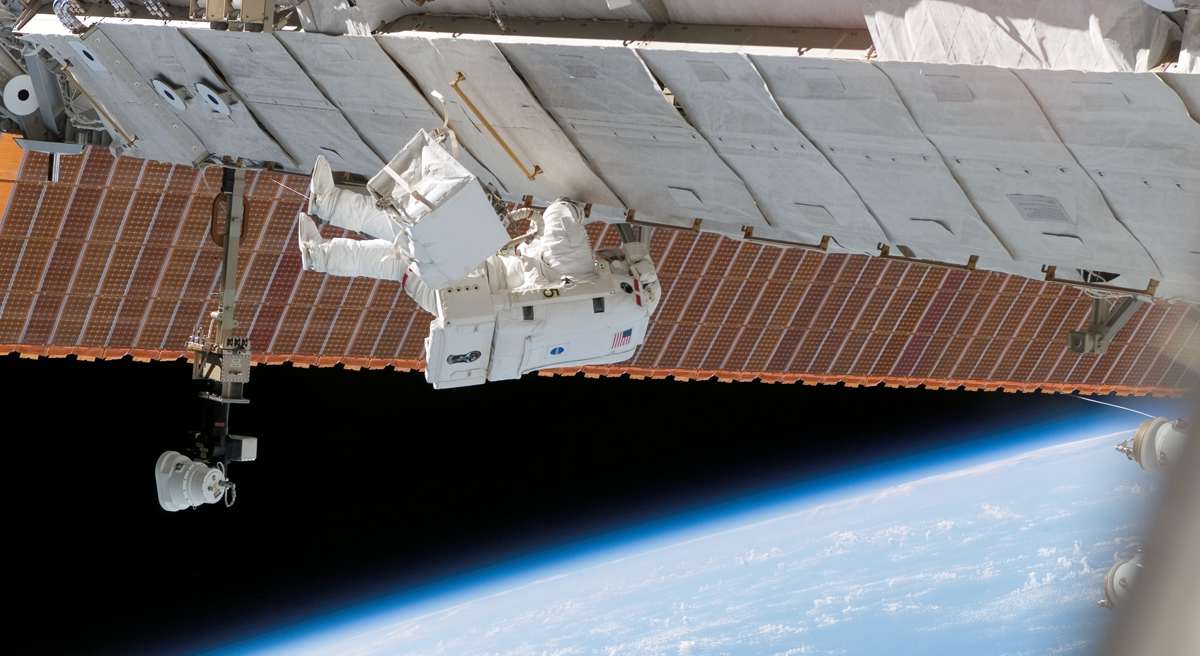
“As with a lot with space flight, it’s far beyond your expectations,” says Marshburn, who returned from his first mission in July. He also accomplished his first space walk, replacing six 360-pound batteries on the space station’s solar array. Preflight training cannot reproduce actual zero gravity, so there is a steep learning curve when the hatch opens. “It’s not so easy to stop yourself,” he says, and in the strange world of weightlessness, things get done faster by going slower.
“They also can’t train you for the view,” Marshburn adds. “It’s always there.”
Having accumulated millions of miles and a certain celebrity status, returning astronauts make time for educational outreach, formally and informally, sharing their experiences and fielding questions in school cafeterias about weightlessness, space food and where they sleep. This younger generation needs to be pulled rather than pushed into science and engineering, says Thornton, and what more powerful pull can there be than the opportunity to explore the universe?
Some argue that space exploration is more worthwhile, a better investment, with robotic craft because they provide much more scientific return than manned missions. But debating the relative merits of humans versus robots misses the point, according to Thornton.
“Think back on what are considered the most significant technological achievements of the last century,” she says. “Landing on the moon is always near the top of that list. Whereas the spectacular unmanned missions we’ve had, like Voyager and the Mars Pathfinder and Galileo and all those incredible missions that have returned tons and tons of data—they are not on that list. I think it’s because the lunar landing affected us, all of us, in ways that an unmanned mission just doesn’t. People remember where they were when we landed on the moon. Where were you when the Mars Pathfinder landed?”
A Flight to Remember
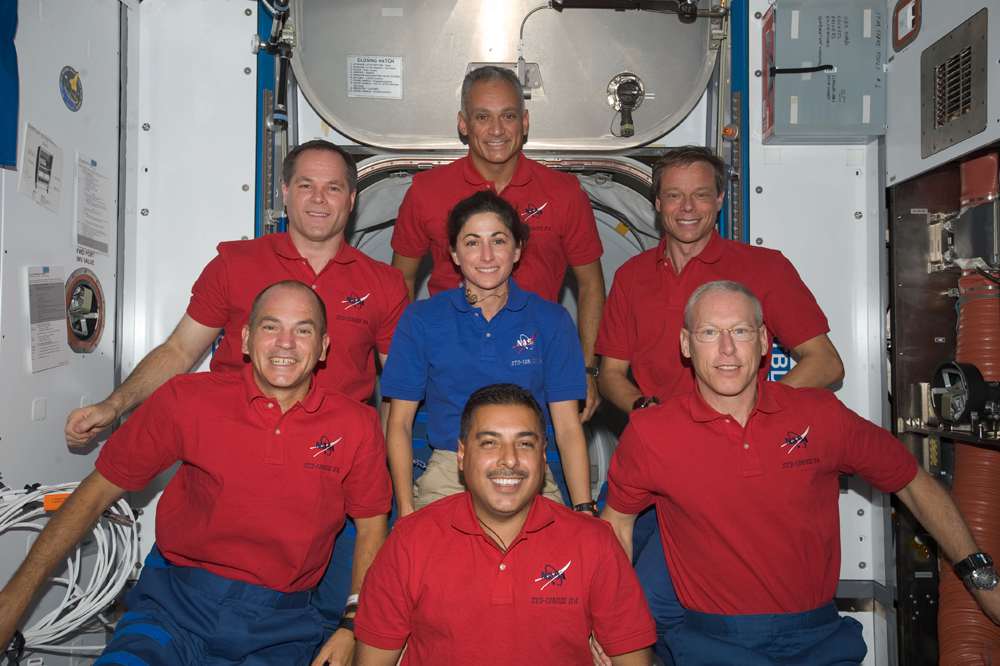
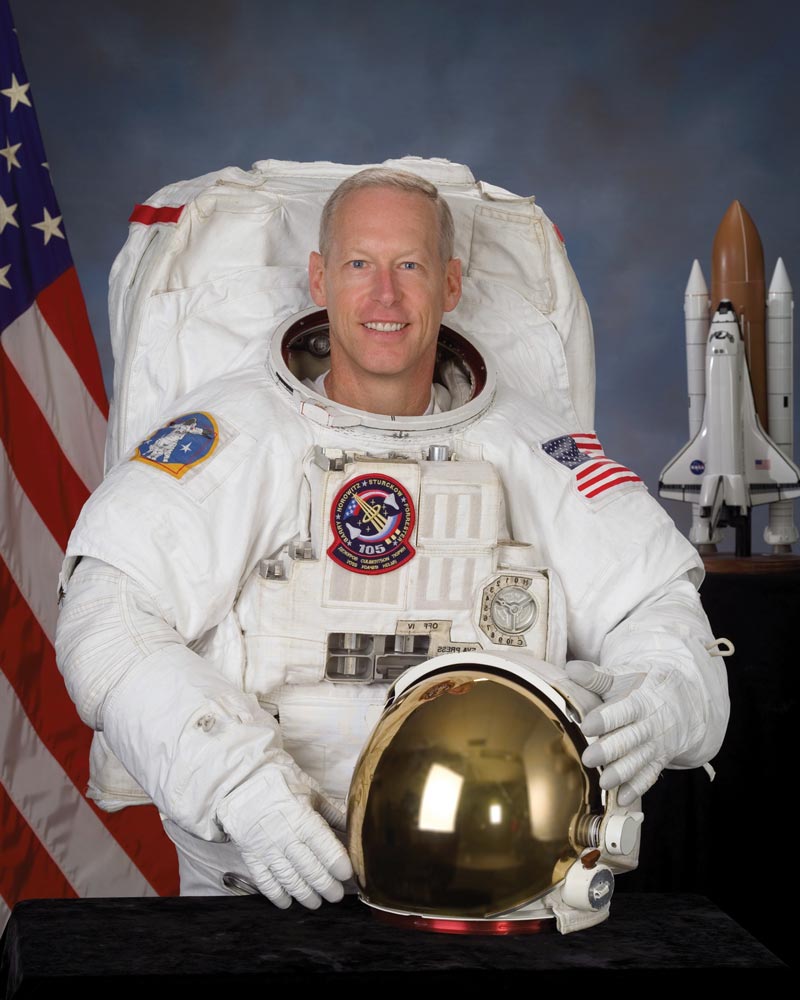
Before his first mission, Patrick Forrester heard this candid appraisal of the astronaut experience from veterans: “For your first flight, you don’t care what you’re doing or who you’re doing it with, as long as you get to fly to space. After your first flight, what you do—the mission—becomes very important. And if you get the opportunity to fly a third time, even the mission isn’t as important as whom you go flying with.” Back from his third mission to the International Space Station (ISS) in September, Forrester says he has to agree with that assessment: “It was the crew that made it worthwhile.” Still, all 5.7 million miles of this latest journey were bittersweet; it is probably the last time he will get to fly. Just six more NASA missions remain before the shuttle is retired.
Forrester joined the Johnson Space Center before the station’s first piece of hardware was carried into orbit and has played an ongoing role in its construction since his first mission in 2001, serving as lead robotics operator. Between stints in space, he helped the European Space Agency develop its lab modules for the station. The ISS is now about 90 percent complete.
“For me, living in space is fun and launching in space is fun, but completing the mission is the best part,” says Forrester, a retired Army colonel. “They asked us to go do something and we came back having accomplished all of our objectives.”
That sense of achievement is all the finer because he thought his chance had come and gone. In 1996, when he was selected for the astronaut corps, crews were already being named to begin the space station’s assembly. “I remember being so disappointed, thinking, ‘Wow, I missed it.’”
The 14-day mission in September marked the last time the shuttle would be used to swap crew members living at the orbiting lab. Taking a new astronaut aboard and escorting another home after a long habitation may sound fairly routine, but the transfer is a special reunion. “To go up there to the space station is pretty phenomenal to start with, and to open the hatch and see folks from your office that you’ve trained with and that you work with who have been living in space for a long period of time is pretty unique,” he adds.
On this final trip, Forrester also managed to stash a few nonessentials—unofficial but meaningful items to remind him of the distance he’s traveled. Among his gear: a plaque given to him by UVA engraved with the Honor Code.
An Uncertain Future
When the space shuttle is retired at the end of fiscal year 2010, NASA will enter an awkward period known as “the Gap.” The next human launch system, the troubled Constellation program, will not be ready for at least seven years, according to the latest estimate. There hasn’t been a hiatus this long since the U.S. space program began.
At such a crossroads, the space program is struggling with the basic question of what the future holds.
Earlier this year, Rice University’s James A. Baker III Institute for Public Policy recommended that NASA give up its quest of returning to the moon and redirect its energies for a time to pressing environmental and energy projects.
In September, the Review of U.S. Human Spaceflight Committee issued a report criticizing NASA for following an “unsustainable trajectory” and “perpetuating the perilous practice of pursuing goals that do not match allocated resources.” Whatever shape the future program takes, the report said, it must not exceed available resources.
Fortunately, the options today are brighter than in 1961, when President John F. Kennedy challenged NASA to “land a man on the moon by the end of the decade.” Space exploration has become a global enterprise, and the U.S. could leverage resources by actively engaging international partners. The burgeoning commercial space industry could also save NASA money. The committee report recommended that the government consider turning transport service over to the commercial sector to supply cargo to the International Space Station and to transport crew and fuel to orbit, freeing up funds for other priorities, such as technology development.
Should we go back to the moon first, then Mars? The consensus is that it is time to go beyond low-Earth orbit, though opinions differ about the intermediate steps. NASA’s Constellation program has serious technical and budgetary problems.
During Congressional hearings last spring, four-time astronaut Kathryn Thornton told a House committee that the space program needs to remain focused on the goals, not the schedule. “Each of the steppingstones, whichever they may be, should advance the science and technology needed for the next, more ambitious objective and for the eventual human exploration of Mars,” she said, “and none should be considered as permanent outposts that would again anchor us in place for decades.”
Regardless, a UVA-led team of engineers in the National Center for Hypersonic Combined Cycle Propulsion is working on a NASA project—how to manage combustion in a scramjet engine when the air is flowing in at supersonic speeds. The research is funded through a five-year, $10 million grant from NASA and the Air Force.