School Spirits
A quick look at things that have gone bump—or step-thump—on Grounds
Editor’s note: This is an abridged version of a story that was published in the Fall 2024 issue of Virginia Magazine. Click here for the full version.
A place with a 200-year history like UVA is bound to have tales to tell—tragedies, untimely deaths, unsettled lore. And many of UVA’s alumni, faculty and staff have their own tales of the unexplained.
When they tell their goosebump-raising stories, they often temper them with comments like “What I’m about to tell you is crazy” or “This is not who I am.” Ghosts or spirits or apparitions, after all, aren’t real. Or are they? Here are some of their stories.
In 2015, Will Wyatt (Col class of ’17) was a student working at the library, arriving 15 minutes before it opened on a Sunday. As he went about his business, a woman with long, flowing, white hair popped around the corner of the Stacks. “She looks at me and says, ‘This would be a great place to murder somebody,’ and gives me this devilish smile and starts cackling,” Wyatt remembers. “And I’m just like, ‘Uh,’ and I start going faster, flipping the lights on, and she goes back into the darkness of the Stacks.”
The library had been locked overnight, but Wyatt thought maybe the woman had somehow gotten inside. But he found no evidence of her.
From 2005 to 2015, Sherry Aylor (Educ class of ’76) lived in Montebello with her husband, then engineering dean Jim Aylor (Engr class of ’68, class of ’71, class of ’77)—and somebody or something that she came to call Isaac. A few months after they moved in, she heard the sound of footsteps coming up the stairs—“step-thump, step-thump,” she remembers. When she investigated, she found Jim asleep on the sofa.
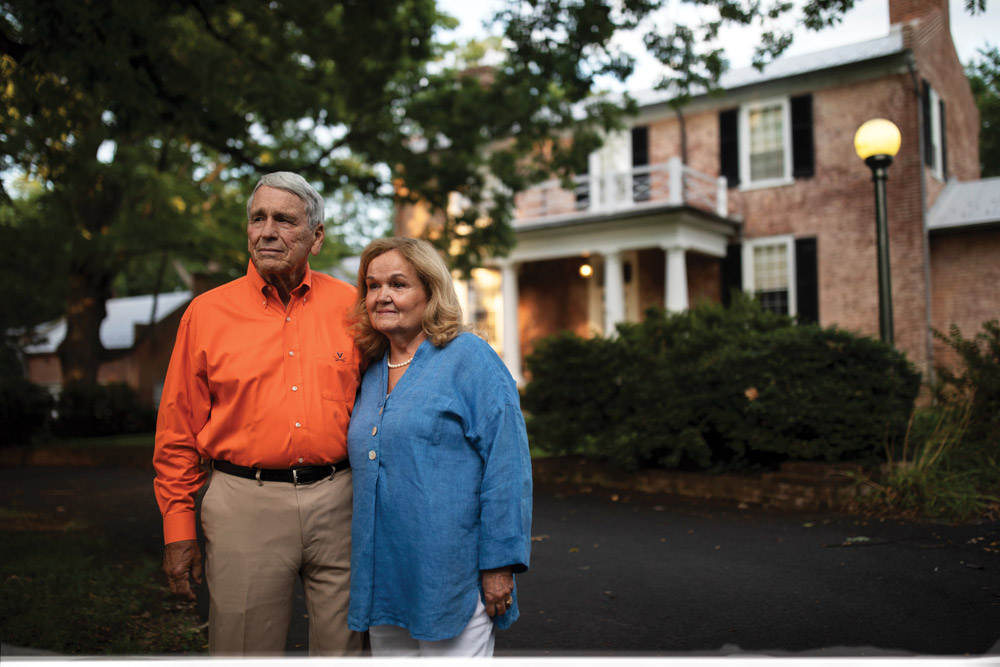
Sherry started doing some research on the house and found that Isaac Kimber Moran, a Confederate soldier who lost his left leg in the war, had lived and died in Montebello.
During the decade the Aylors lived in Montebello, Isaac made himself known to them and their guests a handful of times—through sounds, slammed doors and creepy music.
Old Cabell Hall, home to UVA’s music department, has seen its share of oddities. One night, about 15 years ago, director of music production Joel Jacobus heard “mocking” laughter in the locked building. “I was alone in the building, and I was working in the auditorium, installing some new equipment, when the lights in the auditorium turned off and somebody started laughing,” he says. “This was at midnight. No doors slammed afterwards, and nobody went running. There were no footsteps. It was just lights turned off, laughter and then nothing.”
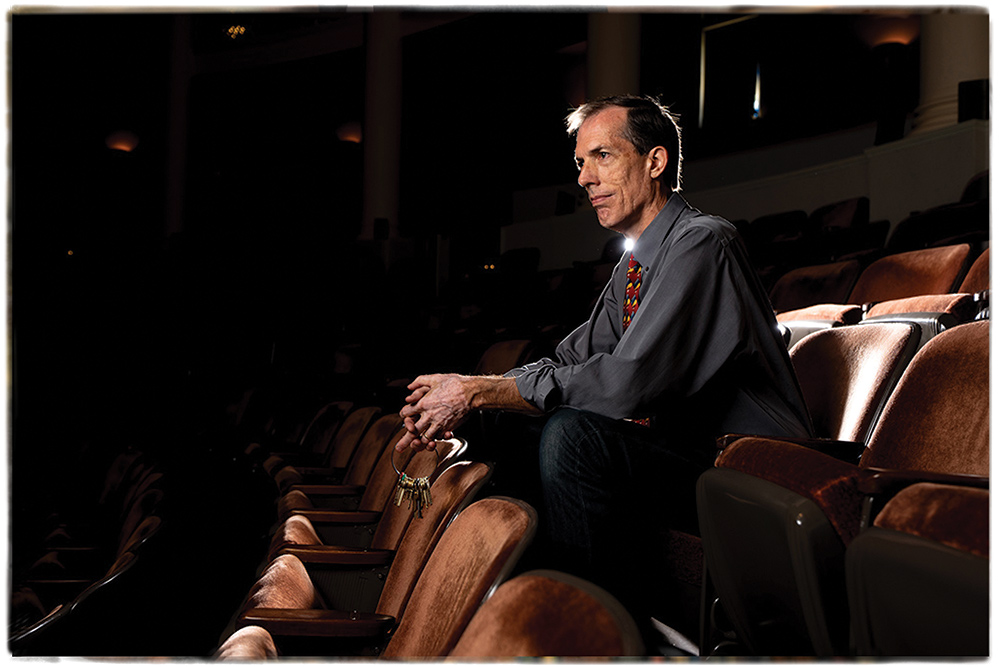
And then there are the unexplained items appearing inside the auditorium. Before and after a concert or talk, house managers walk through each row to ensure that no seats are broken and that no one has left a wallet or cellphone behind. Housekeeping also cleans multiple times a week.
Despite all those efforts, Old Cabell workers have found programs for events five years earlier or items lost years ago. The most impressive, Jacobus says, was a wallet he found, whose owner had died 10 years prior.
Whatever it is, Jacobus calls the phenomenon the “interdimensional trash demon.”
Scientists and skeptics will tell you there are no ghosts—the laws of physics just won’t allow it. And purported hauntings might be explained by a variety of factors, including carbon dioxide poisoning or the power of suggestion.
UVA professor Jack Chen, who taught the 2019 class Concerning Ghosts, considers himself agnostic about their existence. “The funny thing is, I only believe in ghosts when I’m in the basement. In the daylight of my life, I’m not thinking about them,” he says.
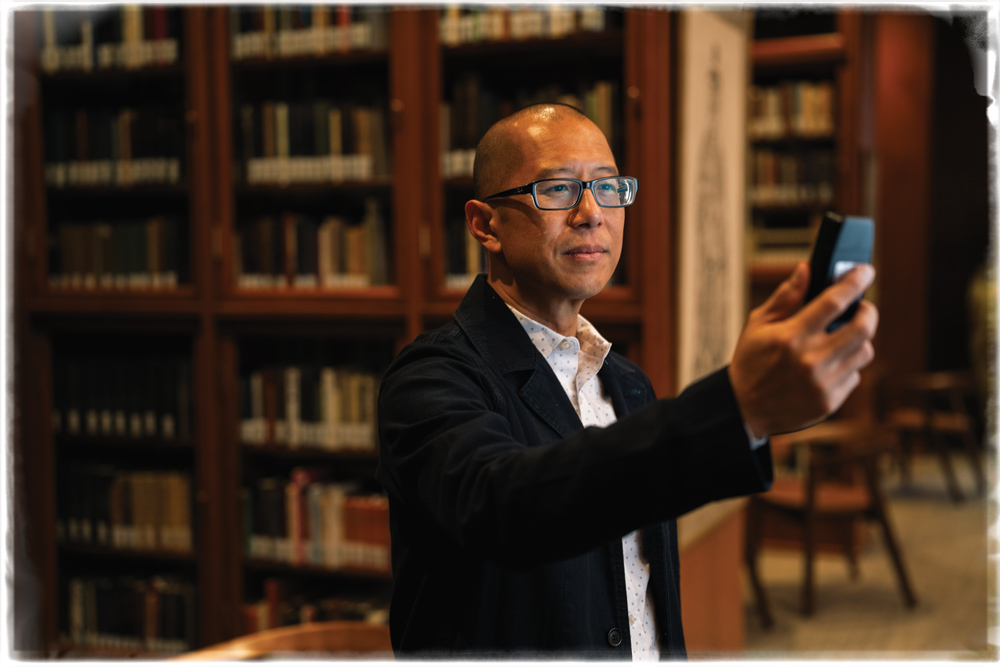
What he does know as a professor of Chinese literature is that ideas of ghosts or spirits have filtered through centuries of culture and beliefs, but in different shapes and forms.
What’s interesting to Chen is that even as we grow more technologically advanced, ghosts remain. “The technologies have changed,” he says. “The ghost itself has not changed in any meaningful way.”
And these encounters break the categories of our knowledge systems, Chen says. “We live in a very nicely settled, ordinary world,” he says. “It is kind of a comfortable place. A lot of the things that we didn’t quite understand, we now understand, or we think we understand. And yet we have these borderline experiences that sort of throw everything that we think is the ordinary right into this state of unknowing.”